
Loading, please wait...
LOT 1108
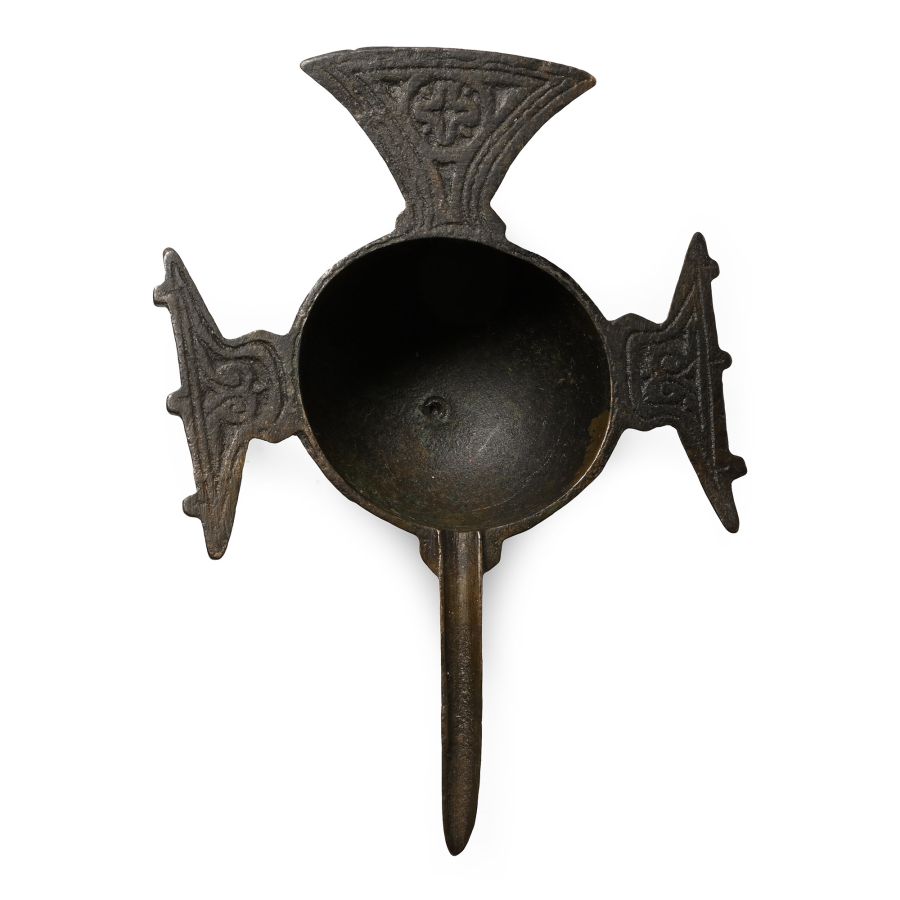
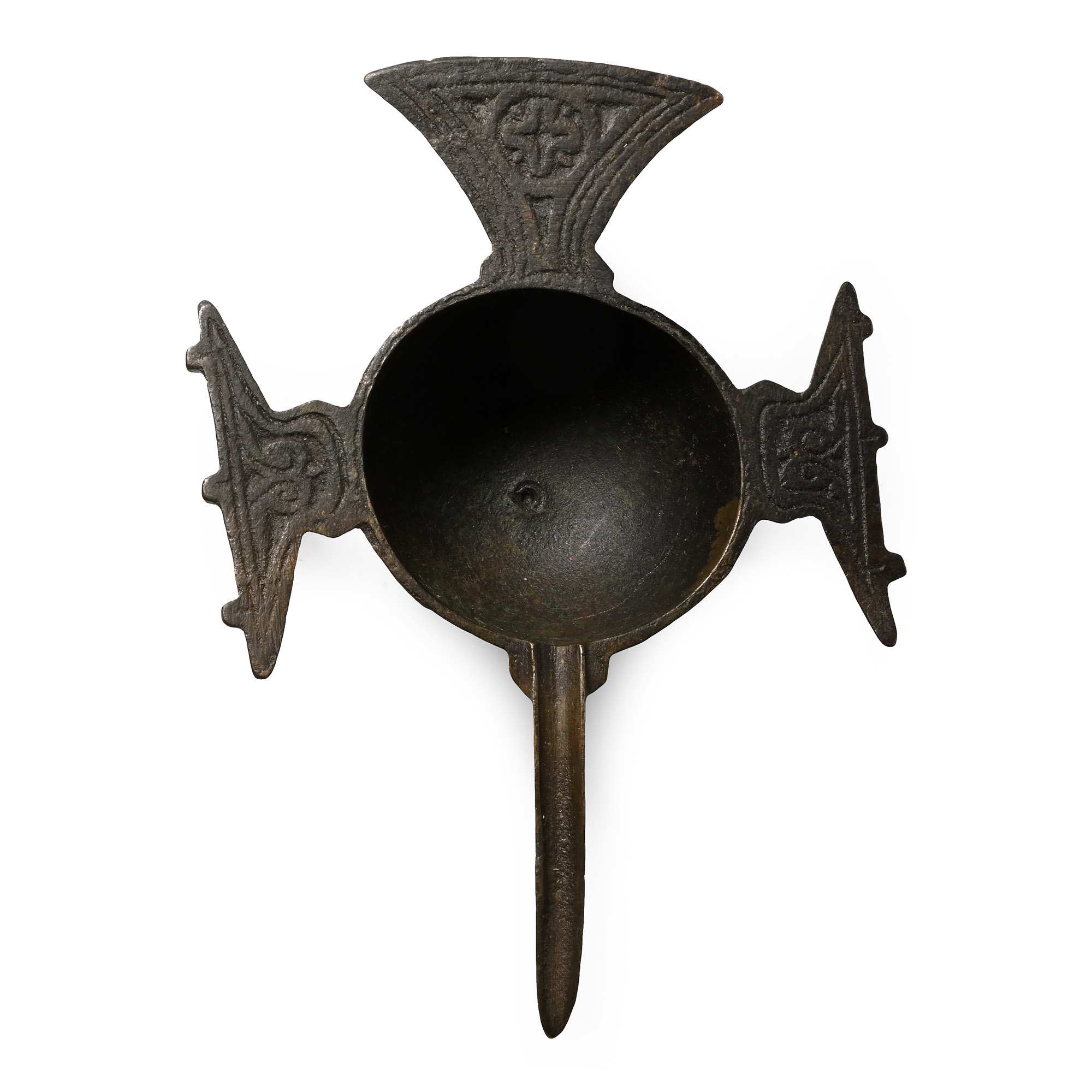
Byzantine Bronze Oil Lamp
CIRCA 7TH-10TH CENTURY A.D.
4 3/4 in. (65.9 grams, 12 cm).
Formed as a stylised bird with a hemispherical body, U-shaped nozzle forming the head, two projecting wings with incised decoration, and a large flaring tail forming the handle with a central cross motif, three stub legs on the underside. [No Reserve]
ProvenanceFrom an important collection of lamps, Germany, 1970s.
LiteratureCf. Lafli, E., Buora, M., 'Roman, Early Byzantine and Islamic Bronze Lamps from Southern Anatolia' in Archiv Orientalni, 82, 2014, pp.431-458, pls.3, no.6, for a similar type of lamp from Adana.
CONDITIONTimeLine Auctions follows a vetting process to ensure the authenticity and legality of all items, reinforcing our commitment to integrity and responsible trading. Each antiquity, antique, and coin lot undergoes thorough examination by a vetting committee of at least ten external specialists, professional trade association members, scientists, and archaeologists: Our Vetting Process
AUCTIONS:
TimeLine is a leading auction house specialising in antiquities, ancient art, collectables, natural history, coins, medals, and books. Our auctions offer museums, collectors, historians, and enthusiasts the opportunity to acquire unique and historically significant pieces.
-
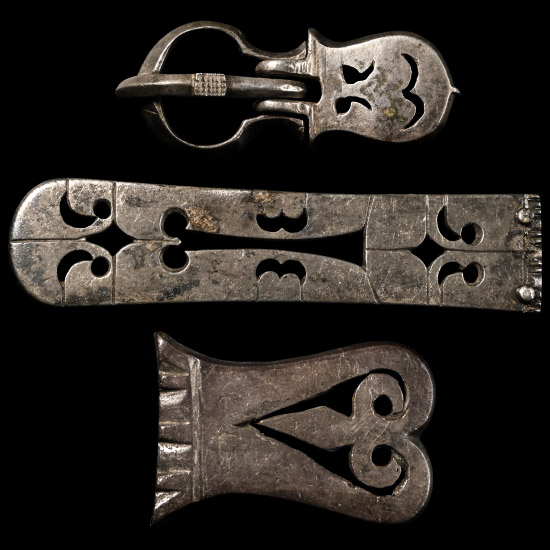
Early Byzantine Silver Belt Fittings with Openwork Decoration
6th-7th century A.D.Estimate: £300 - 400 (+bp*)
Opening Bid: £150
Comprising: two strap ends with openwork decoration of bifurcated scrolls and volutes; a buckle with an arched loop and cast tongue mounted on a shield-shaped plate decorated in a similarly abstract vegetal scheme. 51.5 grams total, 47-89 mm
Acquired on the European art market.
The high quality of execution, formal consistency, and use of silver suggest these fittings once adorned the belt of a military or aristocratic figure within a frontier or provincial context. Their design is representative of the transitional material culture of the early Byzantine world, in which classical motifs were abstracted and reinterpreted through regional aesthetic idioms. This ensemble belongs to the broader category of Early Byzantine personal dress fittings, and is closely related to the Martynivka Hoard—a group of silver artefacts discovered near Kanev (modern Cherkasy Oblast, Ukraine) before 1909. Now divided between the British Museum and the National Museum of the History of Ukraine, the hoard includes strap ends and buckles of closely comparable design and manufacture. While their precise cultural attribution remains debated, the prevailing scholarly consensus situates them within the orbit of Byzantine provincial production, possibly influenced by or intended for Slavic, nomadic, or client populations in the Pontic steppe region. Similar artefacts have been recovered from Kerch in Crimea, further supporting the view that such belt fittings were widely disseminated in Byzantine-controlled or influenced regions along the northern Black Sea during the 6th and 7th centuries. Their function was not merely practical; richly decorated belts of this kind were important signifiers of rank, allegiance, and imperial favour. -
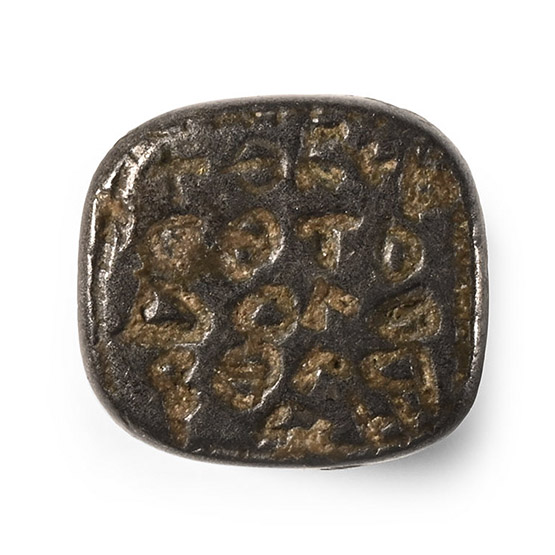
Byzantine Seal Matrix with Inscription
Circa 11th-12th century A.D.Estimate: £80 - 100 (+bp*)
Opening Bid: £44
With inscription '+ΘKEB / OΘTO / ΔΟΛΟ / ΤΘΛΑ' for 'ΘΕΟΤΟΚΕ ΒΟΗΘΕI ΤΩ ΔΟΥΛΩ ΤΟΥ ΘΕΟΥ ΛΑΔΕ' (Mother of God, help Lades, the servant of God). 13.1 grams, 18 mm
From an important collection formed before 1988, London and Geneva.
The stamp seals that have survived in large numbers from Byzantium are objects a few centimetres high and conical in shape, featuring a sealing surface at the lower end and a pendant at the upper end. They served the same function as signet rings and were used to seal everyday objects, primarily for personal purposes, using wax and other soft materials. -
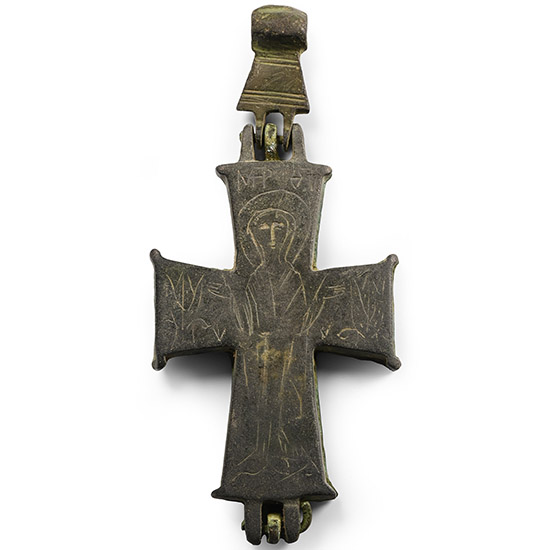
Byzantine Bronze Reliquary Cross Pendant
Circa 10th-12th century A.D.Sold for (Inc. bp): £234
Formed from two hinged plates with a recess to the inner face of each, cast suspension loop to the upper hinge; obverse with four incised equal-arm crosses and 'MIXAHΛ' (Michael) legend; reverse with low-relief image of nimbate Mary in orans pose. 56.8 grams, 10.1 cm
Ex German art market, 2000s. Acquired from an EU collector living in London. From the collection of Surrey, UK, gentleman.
