
Loading, please wait...

LOT 0938
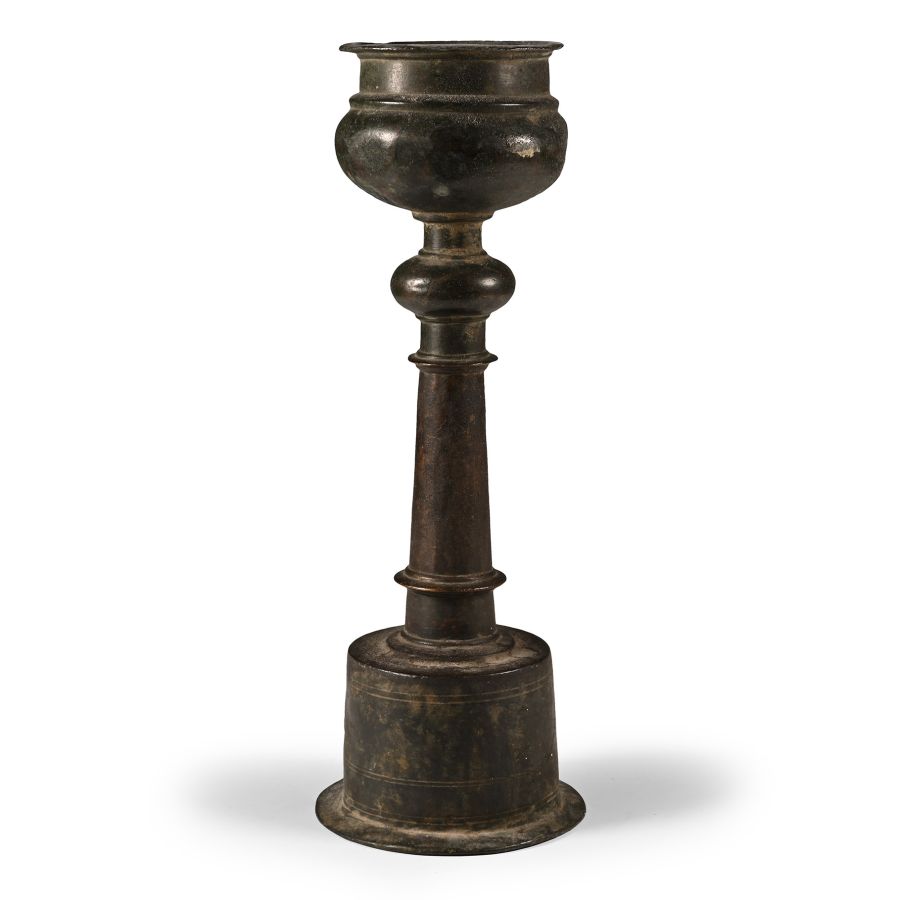
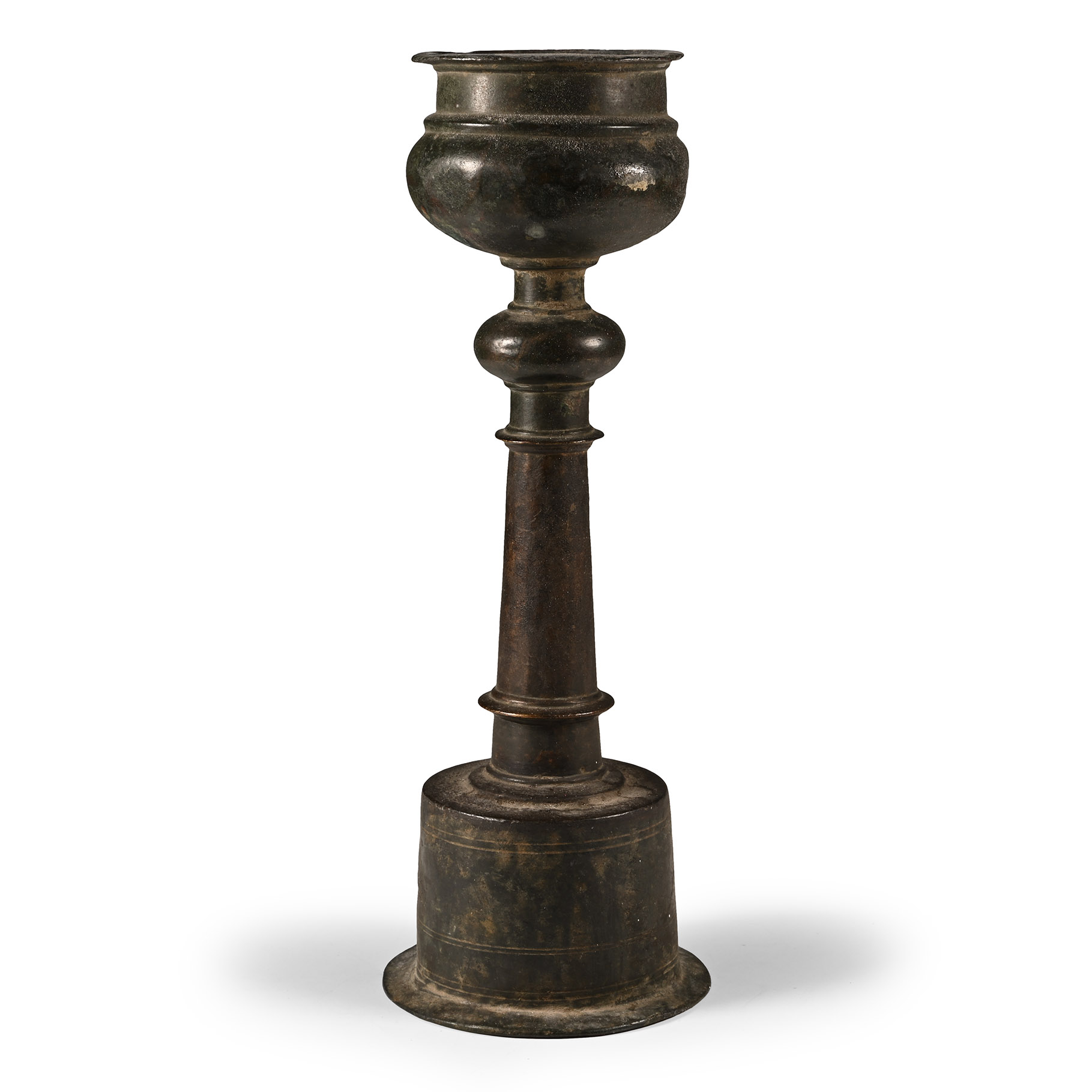
Byzantine Bronze Oil Lamp Stand
12TH-13TH CENTURY A.D.
9 7/8 in. (659 grams, 25 cm).
Comprising a hollow drum-shaped base with flange rim, tapering stem with raised collars, broad bowl with raised neck and gusseted rim. [No Reserve]
ProvenanceEx London, UK, gallery, 1971-early 2000s.
London, UK, collection.
TimeLine Auctions follows a vetting process to ensure the authenticity and legality of all items, reinforcing our commitment to integrity and responsible trading. Each antiquity, antique, and coin lot undergoes thorough examination by a vetting committee of at least ten external specialists, professional trade association members, scientists, and archaeologists: Our Vetting Process
AUCTIONS:
TimeLine is a leading auction house specialising in antiquities, ancient art, collectables, natural history, coins, medals, and books. Our auctions offer museums, collectors, historians, and enthusiasts the opportunity to acquire unique and historically significant pieces.
-
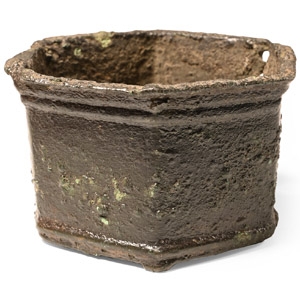
Byzantine Hexagonal Bronze Censer Base
5th-7th century A.D.Sold for (Inc. bp): £130
With flared and stepped rim and foot; pierced for attachment; carbonised accretion within. 194 grams, 80 mm
From a family collection mostly formed in the 1940s-1950s, thence by descent. -
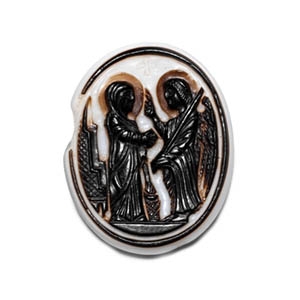
Byzantine Cameo with Virgin Mary and Archangel Gabriel
6th century A.D.Sold for (Inc. bp): £5,720
Ellipsoid in plan with reserved image of the Annunciation and a frond. 2.3 grams, 25 mm
Formerly in the collection of Michael Dennis O'Hara, 1970. From the private collection of the late Alison Barker, a retired barrister, formed 1970-1990. Ex North American collection. Accompanied by an academic report by Dr Raffaele D'Amato. This lot has been checked against the Interpol Database of stolen works of art and is accompanied by search certificate no.12401-226381.
The cameo represents the well known episode of the Gospel of Saint Luke (1.26.38), where the Archangel Gabriel brings Virgin Mary the news of her pregnancy. -
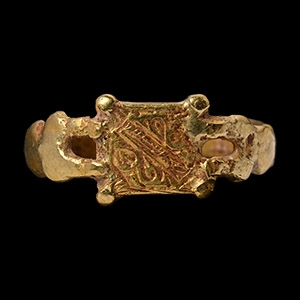
Byzantine Gold Ring with Foliate Motifs
Circa 11th-12th century A.D.Estimate: £1,000 - 1,400 (+bp*)
Opening Bid: £556
Comprising a flat-section hoop with a starburst motif to the base; openwork shoulders and a square bezel with a pellet to each corner, the bezel engraved with foliate motifs. 3.65 grams, 19.99 mm overall, 18.00 mm internal diameter (approximate size British L, USA 5 3/4, Europe 11.24, Japan 10)
Acquired from London galleries during the 1990s. From the jewellery collection of a London, UK, gentleman. Accompanied by a previous typed cataloguing card.
Some rings from the Balkan territories of the Eastern Empire (for example the ring from Dobrača) bear a square thickened bezel engraved with schematic representations. What sets them apart are the widened shoulders emphasised by a plastic rib and the raised and flattened head, which places them in the group of rings which dates mainly to the 11th century (from the end of the 10th to the first decades of the 12th century).
