
Loading, please wait...
LOT 0208
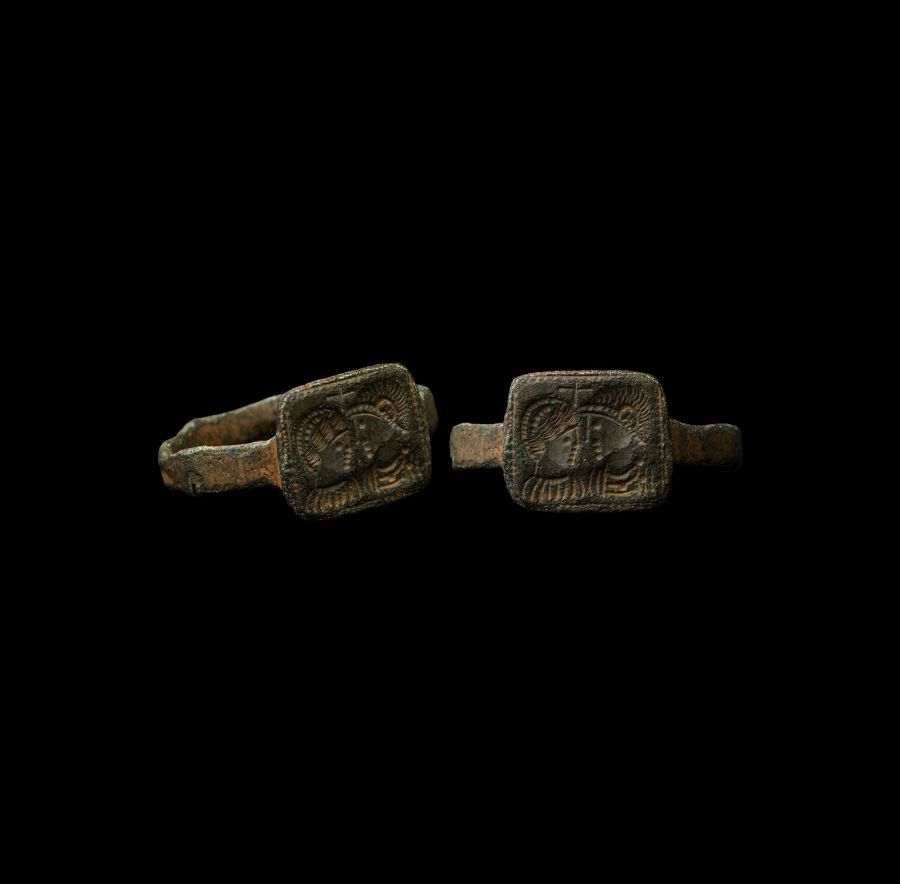
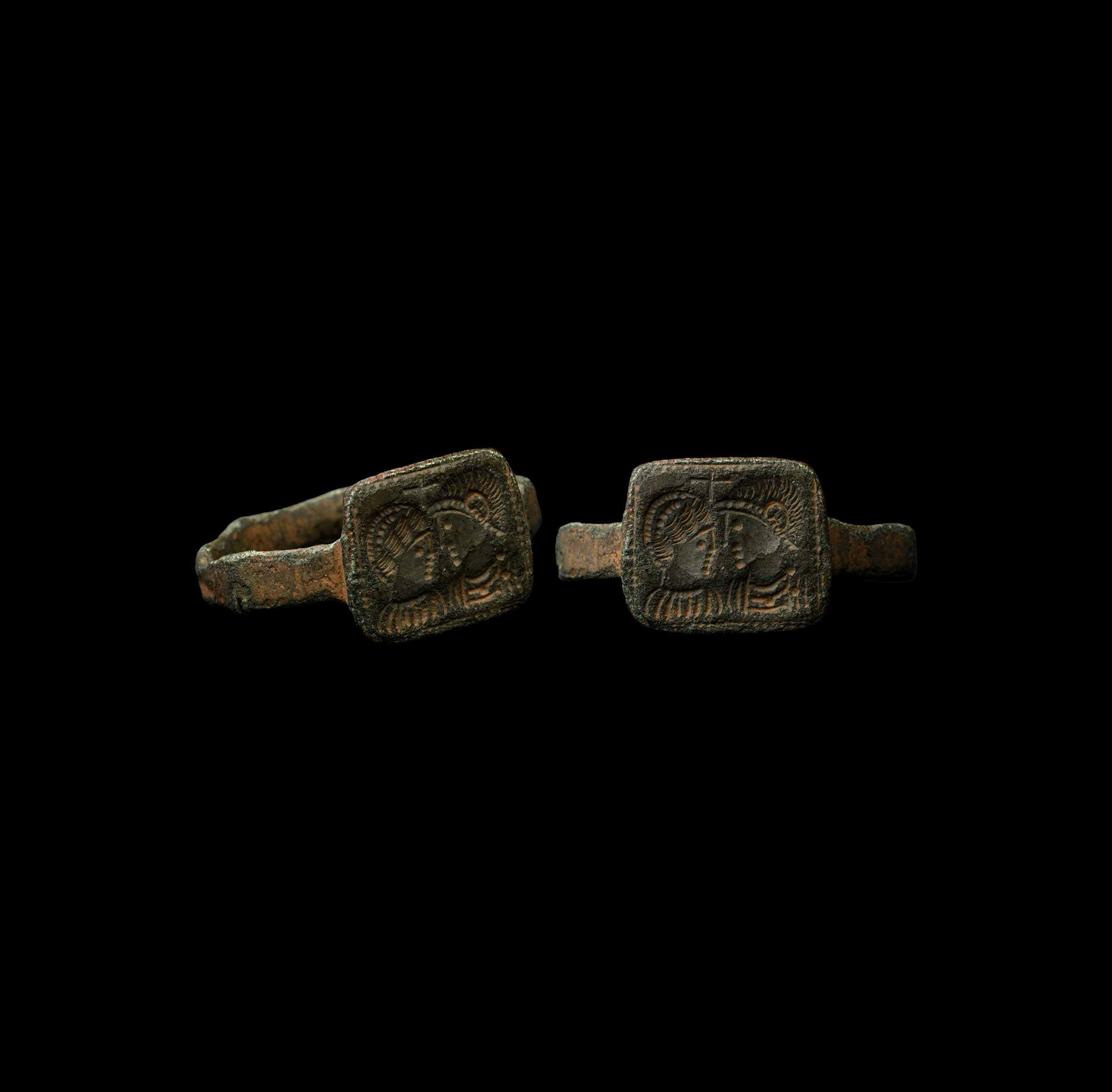
Byzantine Bronze Marriage Ring Depicting Two Facing Portraits
5TH-6TH CENTURY A.D.
1 in. (3.60 grams, 24.13 mm overall, 21.06 mm internal diameter (approximate size British T 1/2, USA 9 3/4, Europe 21.89, Japan 21)).
With a facetted hoop, a rectangular bezel, and opposed profile busts (male and female).
ProvenanceUK private collection before 2000.
Acquired on the UK art market.
Private collection, London, UK.
TimeLine Auctions follows a vetting process to ensure the authenticity and legality of all items, reinforcing our commitment to integrity and responsible trading. Each antiquity, antique, and coin lot undergoes thorough examination by a vetting committee of at least ten external specialists, professional trade association members, scientists, and archaeologists: Our Vetting Process
AUCTIONS:
TimeLine is a leading auction house specialising in antiquities, ancient art, collectables, natural history, coins, medals, and books. Our auctions offer museums, collectors, historians, and enthusiasts the opportunity to acquire unique and historically significant pieces.
LOT 0208
Byzantine Bronze Marriage Ring Depicting Two Facing Portraits
Sold for (Inc. bp): £468
-
Byzantine Silver Marriage Ring
6th-7th century A.D.Sold for (Inc. bp): £143
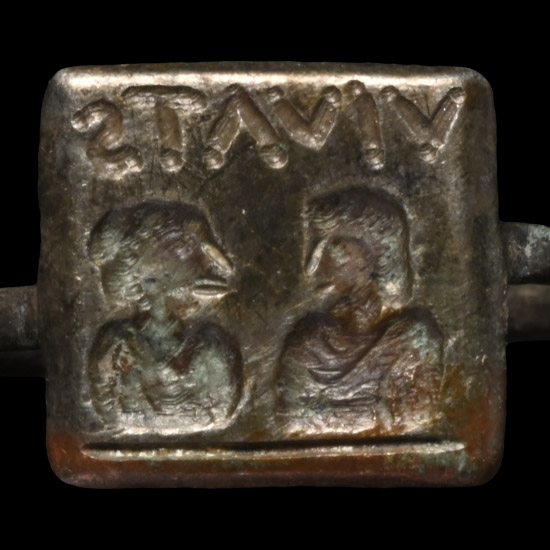
Comprising a slender round-section hoop with a rectangular bezel featuring an opposing couple, reversed inscription 'VIVTΛS' above. 1.97 grams, 21.66 mm overall, 18.81 mm internal diameter (approximate size British Q, USA 8, Europe 17.49, Japan 16)
From an English private collection, 1980s. Property of a London, UK, antiquarian. -
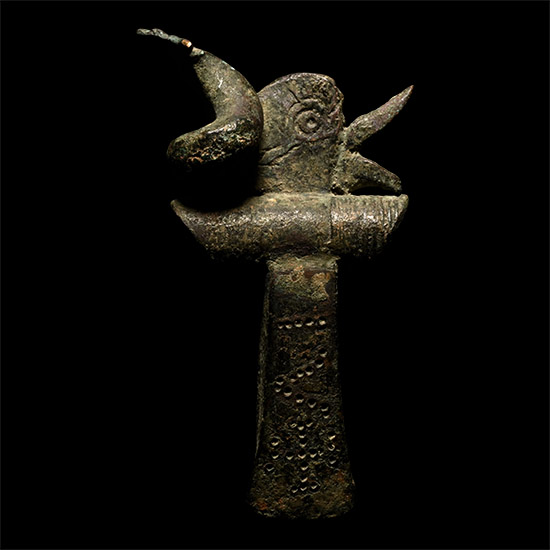
Early Byzantine Miniature Votive Axehead with Dolphin and Punched Inscription
4th-5th century A.D.Estimate: £1,200 - 1,700 (+bp*)
Opening Bid: £600
Miniature axehead with model dolphin at the socket; pointillé legend to the blade '+ΛΙΟΝΑ'. 35 grams, 60 mm
UK private collection before 2000. Acquired on the UK art market. Private collection, London, UK. -
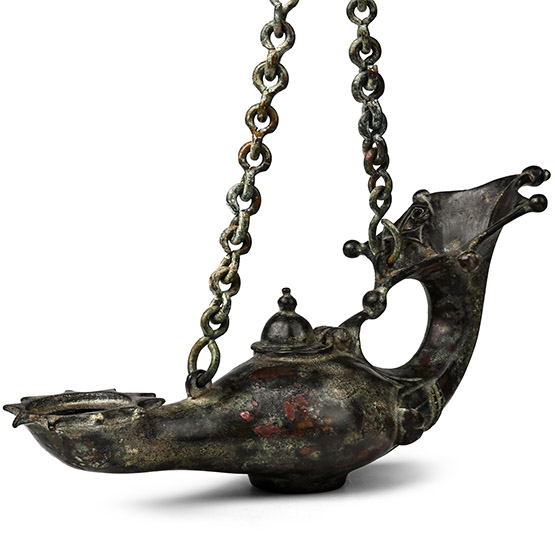
Byzantine Bronze Oil Lamp with Chain and Chi Rho
Circa 5th-6th century A.D.Estimate: £4,000 - 6,000 (‡+bp*)
Opening Bid: £2,000
With a carinated, round body and long, narrow nozzle with a flaring finial, a scalloped rim around the circular wick hole; small circular filling hole with a hinged, domed lid; the elaborate trumpet-shaped handle with a hexagonal lotus flower finial with knops, and a raised Chi Rho at the forward edge; looped suspension chain with a hook, and a square socket at the base to accommodate a stand pricket. 1.08 kg, 40 cm
Private collection, Stortford, England, 1982. with Christie's, New York, 9 June 2011, no.203. Accompanied by an academic report by Dr Raffaele D'Amato. This lot has been checked against the Interpol Database of stolen works of art and is accompanied by search certificate number no.13194-250130.
