
Loading, please wait...


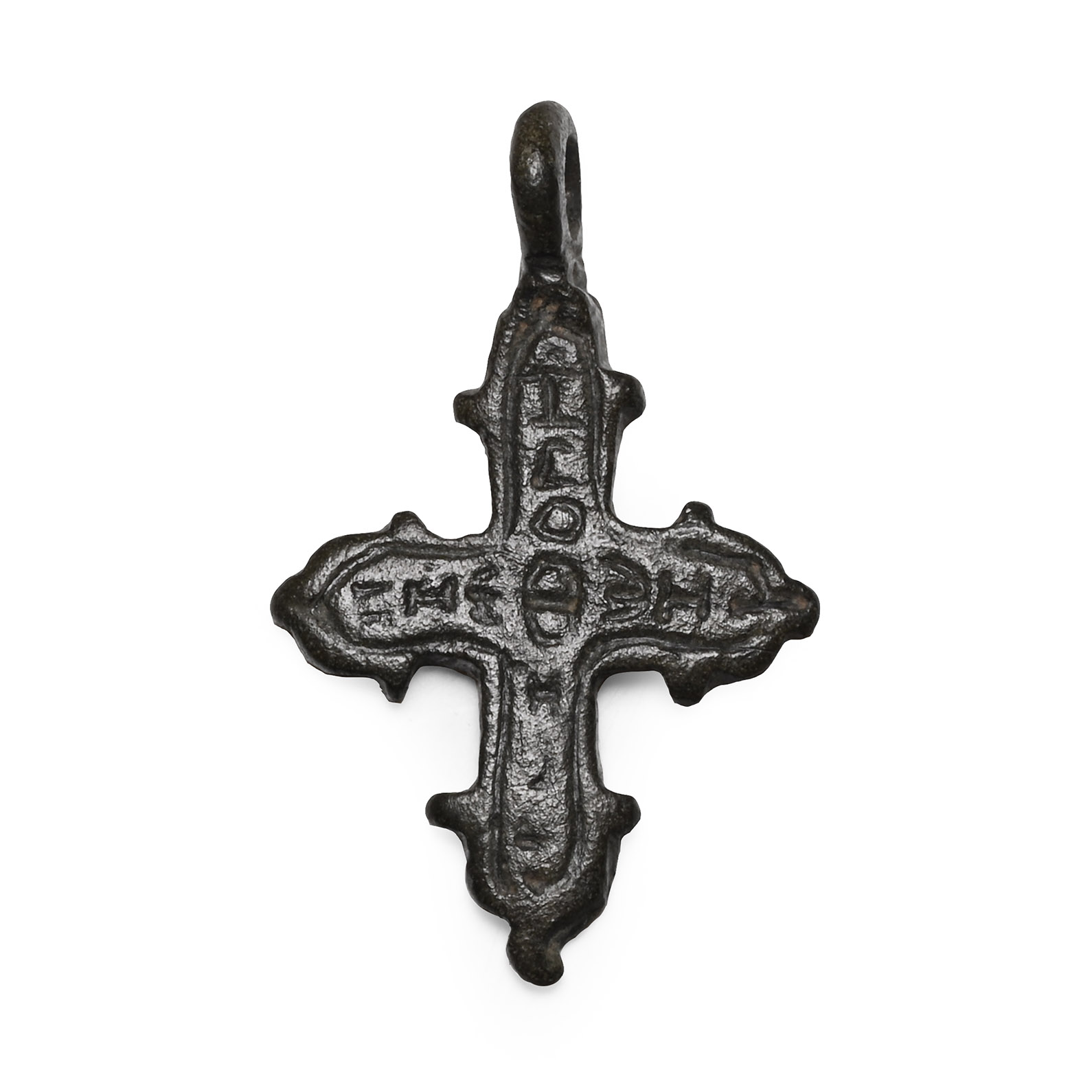
LOT 0974
Byzantine Bronze Inscribed Cross Pendant
12TH-14TH CENTURY A.D.
1 1/4 in. (3.74 grams, 32 mm).
Comprising a flat-section body and integral suspension loop, Greek inscription to the upper face.
ProvenanceEx German art market, 2000s.
Acquired from an EU collector living in London.
From the collection of Surrey, UK, gentleman.
TimeLine Auctions follows a vetting process to ensure the authenticity and legality of all items, reinforcing our commitment to integrity and responsible trading. Each antiquity, antique, and coin lot undergoes thorough examination by a vetting committee of at least ten external specialists, professional trade association members, scientists, and archaeologists: Our Vetting Process
AUCTIONS:
TimeLine is a leading auction house specialising in antiquities, ancient art, collectables, natural history, coins, medals, and books. Our auctions offer museums, collectors, historians, and enthusiasts the opportunity to acquire unique and historically significant pieces.
-
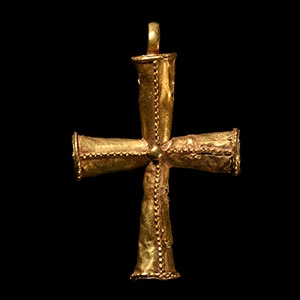
Byzantine Gold Cross Pendant
5th-6th century A.D.Sold for (Inc. bp): £3,315
Hollow-formed sheet gold cruciform pendant with filigree ropework to the end of each expanding tubular arm, band of beading to the upper face of each arm and central pellet; bale to the upper end. 3.67 grams, 40 mm
Acquired in the mid 1980s-1990s. From the family collection of Mr S.A., Switzerland, thence by descent. Private collection since the late 1990s. This lot has been checked against the Interpol Database of stolen works of art and is accompanied by a search certificate number no.12114-218167. -

Byzantine Marble Table Top with Roundels
6th-7th century A.D.Estimate: £25,000 - 35,000 (+bp*)
Opening Bid: £12,500
Broad stone disc with band of carved roundels to the border, dished central panel; the border comprising seventeen socket roundels with rosette and tendril ornament between, each roundel with reserved figural or emblematic ornament: an equal-arm cross with ivy leaves in the spandrels; to either side of this, a reserved regardant peacock; next to these, in pairs a calf's forequarters on each side; next, a goat, then a bull, then a regardant bird, a ram, a lamb and a peacock, remains of original pigment; reinforced with a steel backing and claws; accompanied by professionally made 'lift-on' wall brackets for display. 87 kg, 102 cm including wall bracket
Acquired in London from a UK collector in the early 2000s. Previously with an Austrian collector in London. Formerly in a North American collection. From a London gentleman, 2000s. Accompanied by an academic report by Dr Raffaele D'Amato. This lot has been checked against the Interpol Database of stolen works of art and is accompanied by a search certificate number no.12400-226356
The beasts have symbolic importance, such as the peacock for resurrection, the lamb as the -
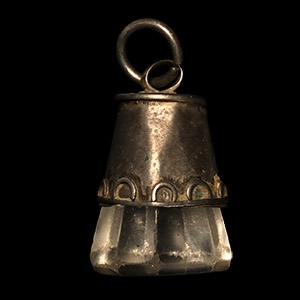
Byzantine Rock Crystal Stamp Seal in Silver Pendant with Military Saint on Horseback
Circa 6th-7th century A.D.Estimate: £3,000 - 4,000 (+bp*)
Opening Bid: £1,500
With a tapering octagonal body, the military saint on horseback holding a long spear, the horse wearing a detailed harness; set in a conical silver frame with suspension loop and crenellated edge. 7.9 grams, 30 mm
From an old New Zealand private collection. Acquired on the New Zealand art market circa 2014. Property of a New Zealand legal professional. Accompanied by an academic report by Dr Raffaele D’Amato. This lot has been checked against the Interpol Database of stolen works of art and is accompanied by search certificate number no.12327-223721.
The motif of a saint on horseback was common in the Romano-Christian culture of the 6th-7th centuries. The figure of a saint symbolised protection of the local church or monastery and its community, and could also be related to the priest leader of the community, as their personal seal.
