
Loading, please wait...
LOT 1059
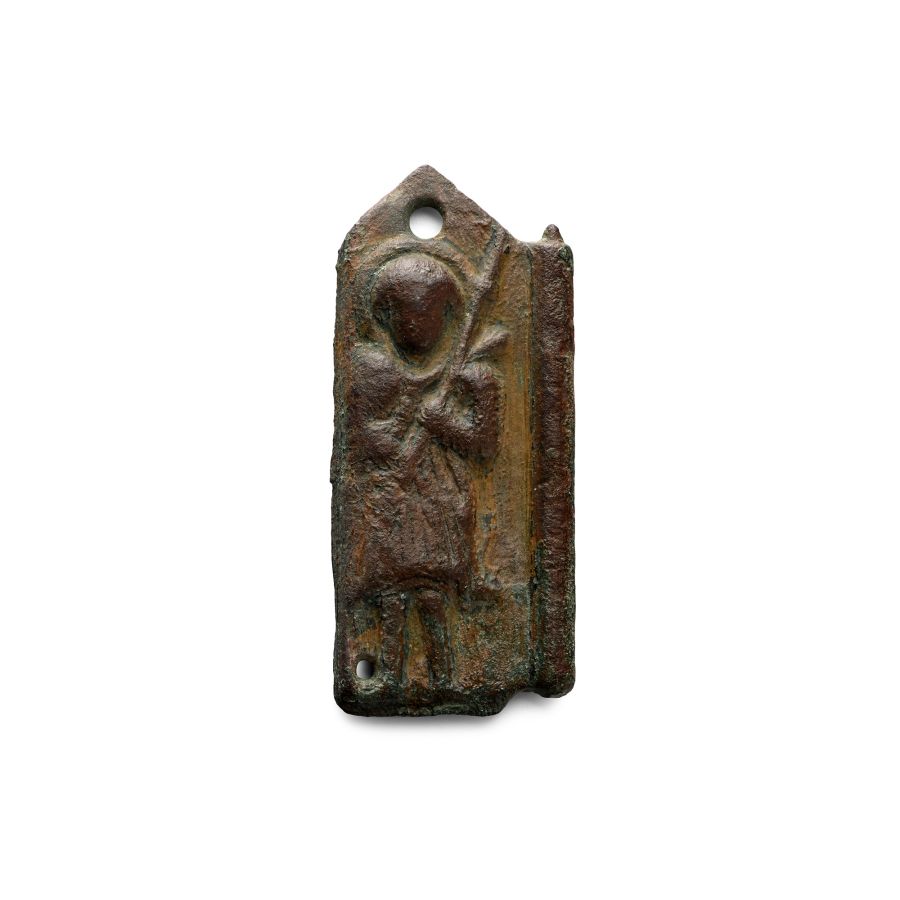
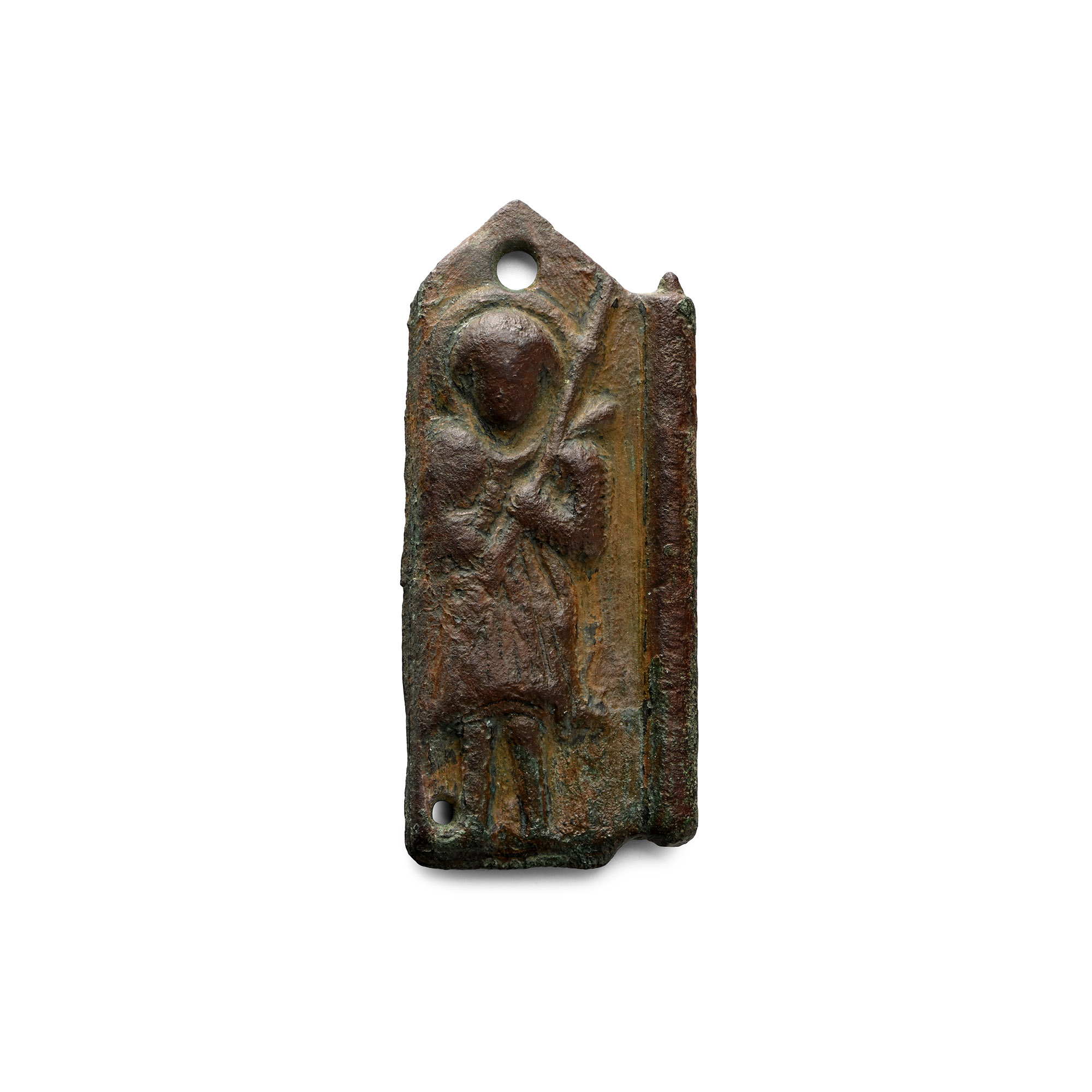
Byzantine Bronze Folding Icon with Military Saint
CIRCA 14TH CENTURY A.D.
2 in. (20.2 grams, 51 mm).
Diptych panel with triangular upper edge and hinged edge; obverse with facing armoured nimbate figure holding a spear; reverse with part of a cruciform design.
ProvenanceEx German art market, 2000s.
Acquired from an EU collector living in London.
From the collection of a Surrey, UK, gentleman.
This lot is accompanied by an illustrated lot declaration signed by the Head of the Antiquities Department, Dr Raffaele D'Amato.
TimeLine Auctions follows a vetting process to ensure the authenticity and legality of all items, reinforcing our commitment to integrity and responsible trading. Each antiquity, antique, and coin lot undergoes thorough examination by a vetting committee of at least ten external specialists, professional trade association members, scientists, and archaeologists: Our Vetting Process
AUCTIONS:
TimeLine is a leading auction house specialising in antiquities, ancient art, collectables, natural history, coins, medals, and books. Our auctions offer museums, collectors, historians, and enthusiasts the opportunity to acquire unique and historically significant pieces.
-
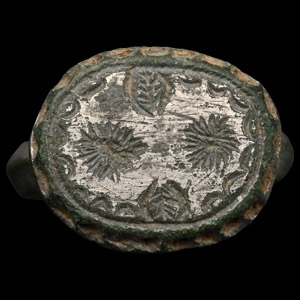
Byzantine Bronze Ring with Floral Cross
13th-15th century A.D.Sold for (Inc. bp): £72
With ellipsoid bezel, tinned upper face with reserved scallops to the rim and four starburst motifs. 9.78 grams, 24.92 mm overall, 18.51 mm internal diameter (approximate size British P 1/2, USA 7 3/4, Europe 16.86, Japan 16)
Acquired on the London art market in the late 1980s-1990s. From the family collection of an East London, UK, gentleman. This lot is accompanied by an illustrated lot declaration signed by the Head of the Antiquities Department, Dr Raffaele D'Amato. -
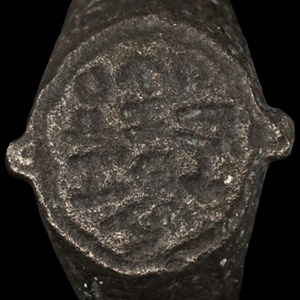
Byzantine Bronze Ring with Inscription
12th-13th century A.D. or laterSold for (Inc. bp): £46
With broad discoid bezel, lateral spurs; incuse Greek legend: 'AΓΗ ЄΝ ΘЄΟ ΔΗΜ(sic)' (Holy in God, Demetrios?). 11.46 grams, 24.86 mm overall, 17.30 mm internal diameter (approximate size British N, USA 6 1/2, Europe 13.72, Japan 13)
Ex German art market, 2000s. Acquired from an EU collector living in London. From the collection of a Surrey, UK, gentleman. This lot is accompanied by an illustrated lot declaration signed by the Head of the Antiquities Department, Dr Raffaele D'Amato. -
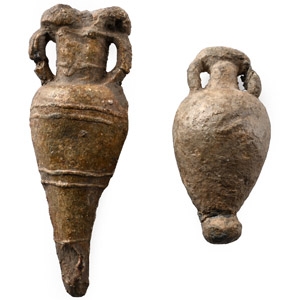
Byzantine Lead Holy Water Pilgrim's Ampulla Group
6th-7th century A.D.Sold for (Inc. bp): £46
Comprising a miniature amphora with small lateral handles, larger ampulla with transverse ribbing, open at the rim. 68 grams total, 36-52 mm
Acquired on the UK art market during the late 20th century. From the private collection of David King (1940-2024), Hoddesdon, Hertfordshire, UK. This lot is accompanied by an illustrated lot declaration signed by the Head of the Antiquities Department, Dr Raffaele D'Amato.
