
Loading, please wait...
LOT 0187
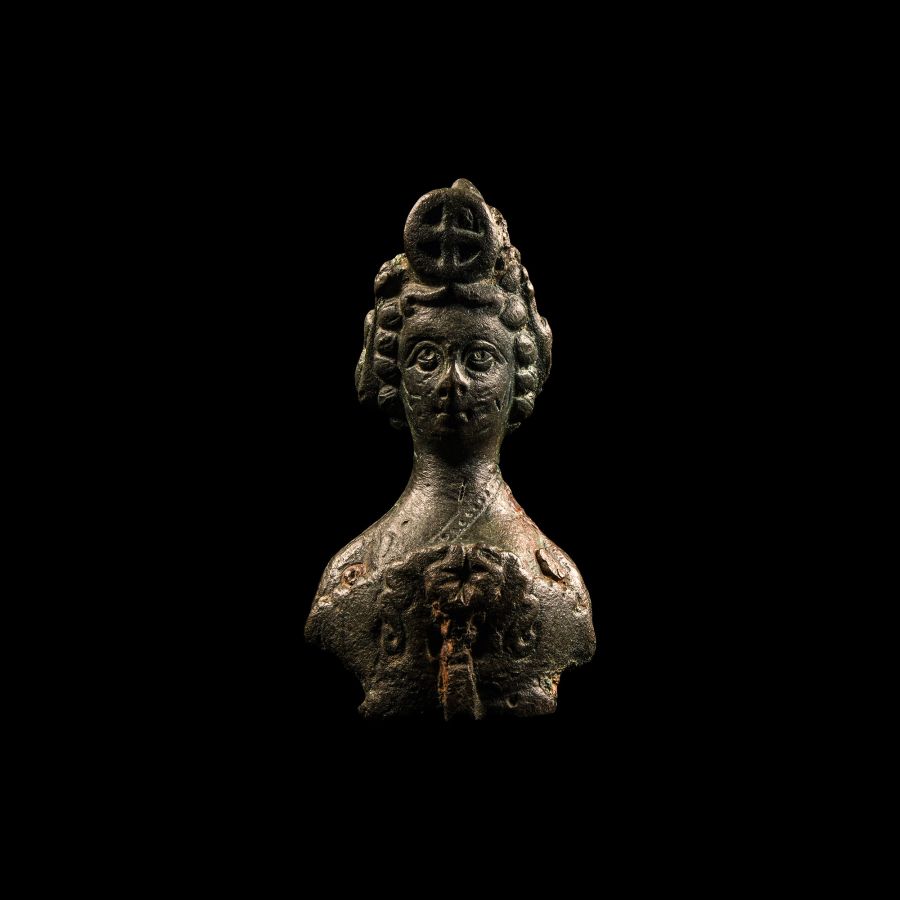
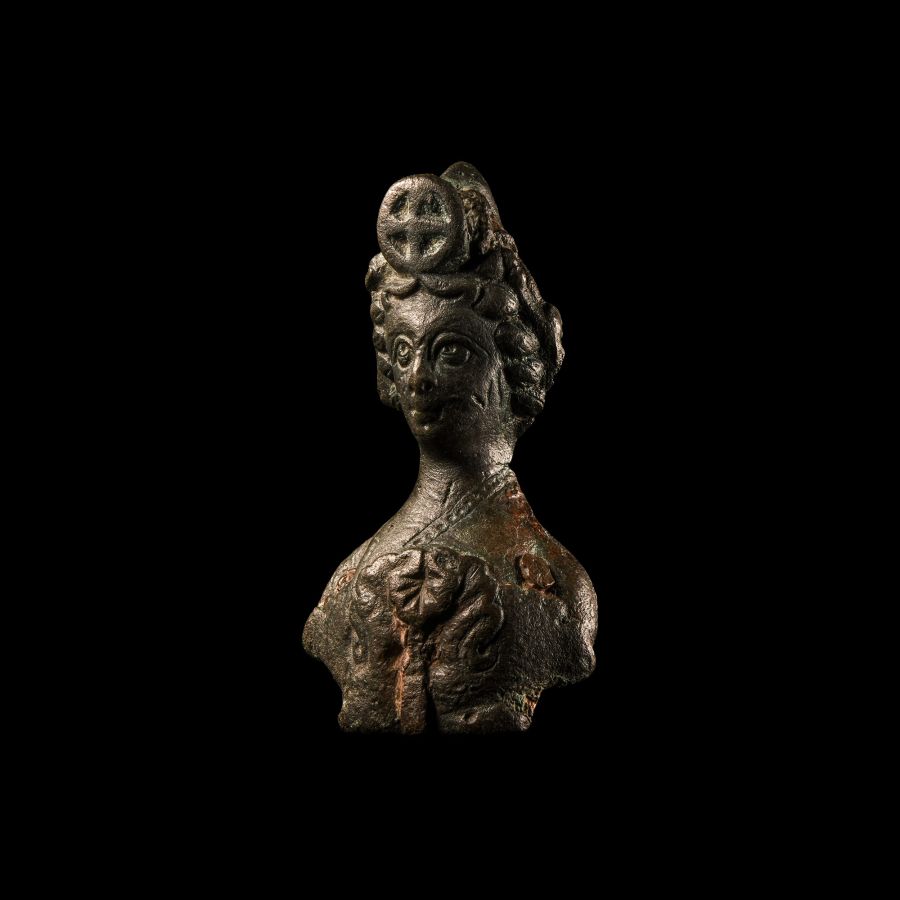
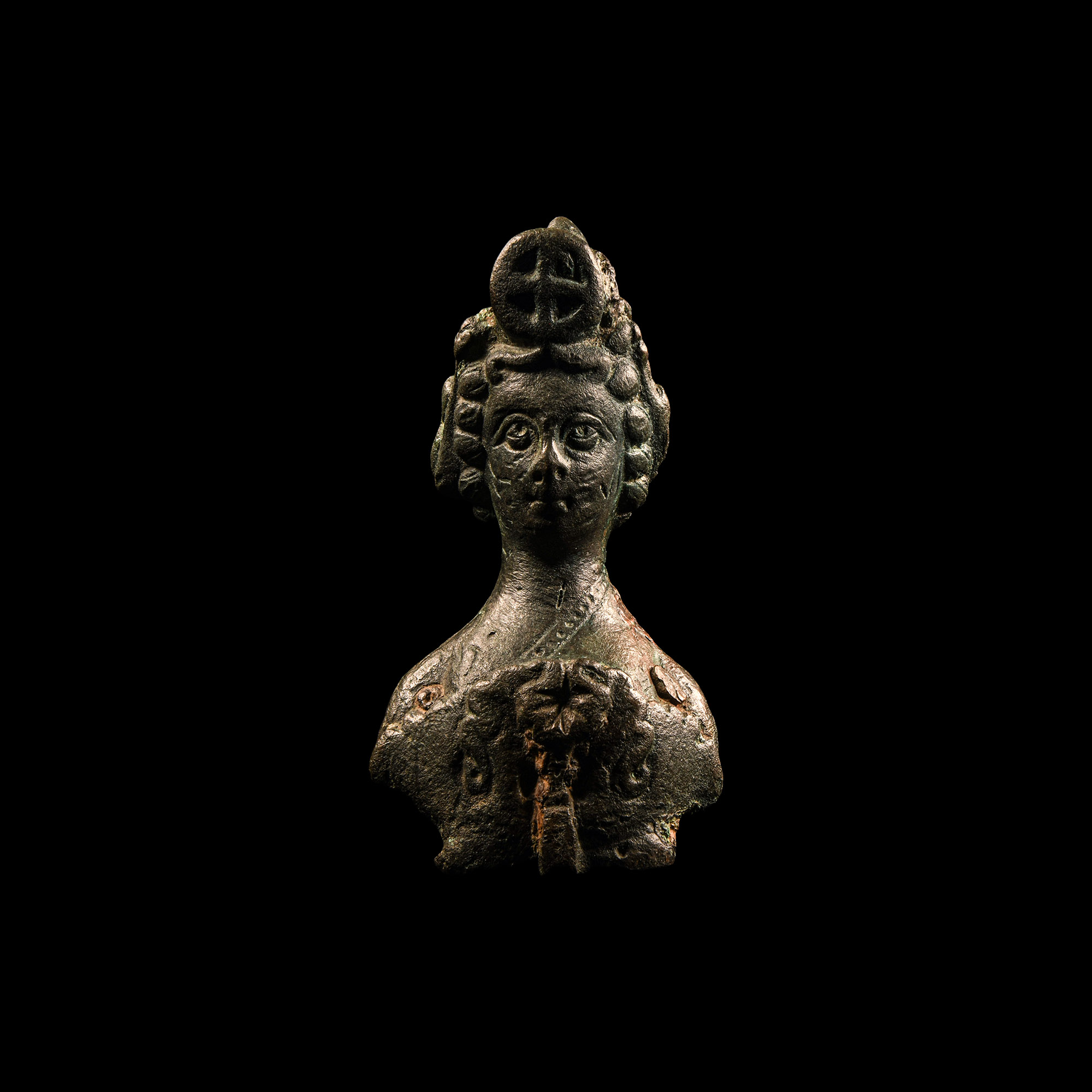
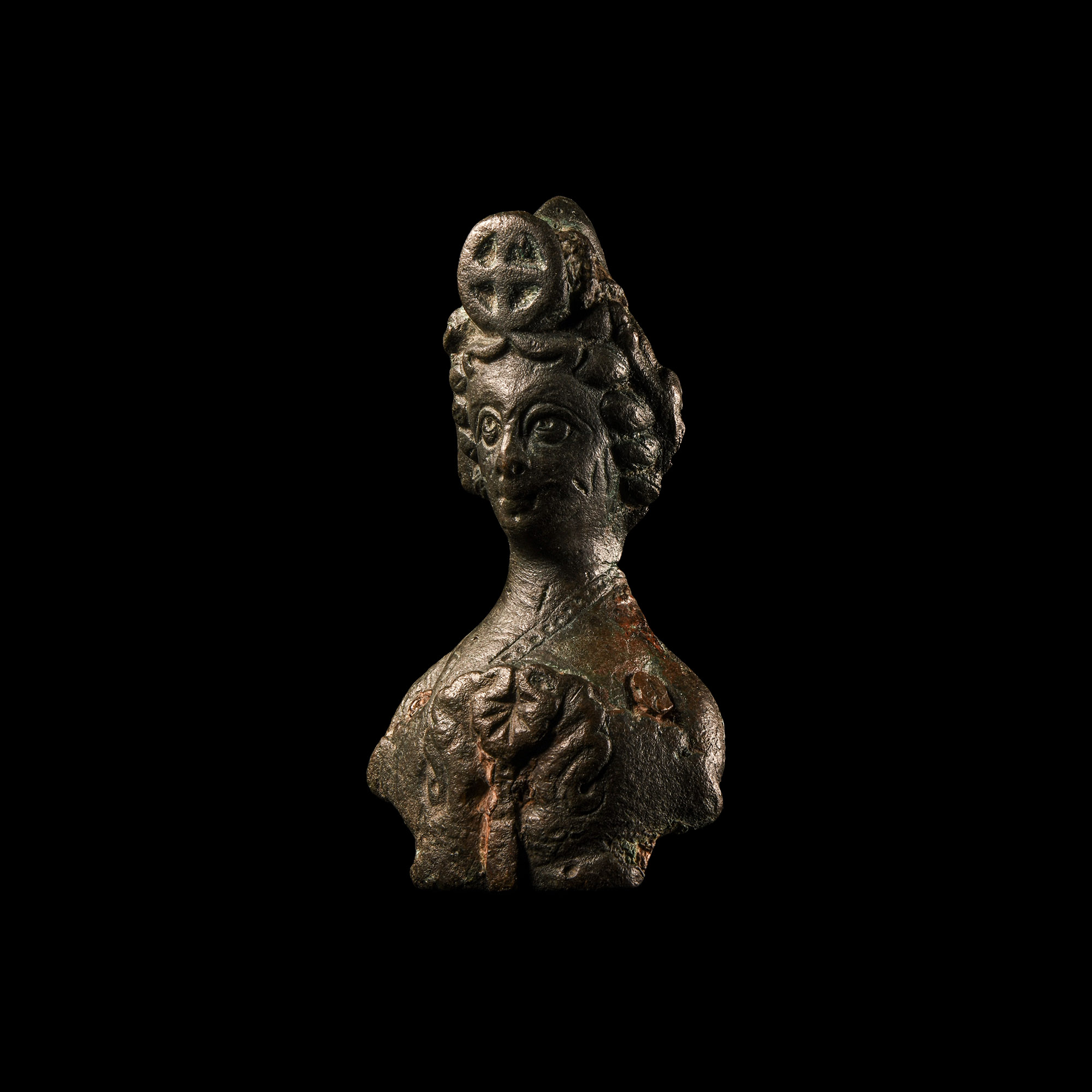
Byzantine Bronze Empress Mount
5TH-6TH CENTURY A.D.
3 3/4 in. (193 grams, 97 mm).
Formed in the half-round as a youthful female bust, a cross in the middle of the high hair arrangement (propoloma).
ProvenanceEx Law Professor in Alexandria, prior to 1930.
Ex collection M. Bouvier, Switzerland (1901-1980).
Cf. Bogdanović, J., Sinkević, I., Mihaljević, M., Marinkovic, C., Series: Art and Material Culture in Medieval and Renaissance Europe, Leiden-New York, 2023, figs.1.6,1.7, for bronze busts of empresses; cf Wamser, L., Die Welt von Byzanz - Europas Östliches Erbe, München, 2004, fig.355, for a 6th-7th century A.D. Roman example of a tripod with busts.
FootnotesThe image of the Roman Empress during the late Roman Empire, was connected to Christianity by the figure of the Empress Helena. Constantine had several cities renamed Helenopolis in honour of his mother, Helena, and she gained the political verification of power with the status nobilissima femina in 318 and the rank of Augusta in 324. Alongside her social and political image, Helena also had a significant reputation as a good Christian who was a patron and took care of poor people. Owing to this powerful religious image that was created, all other Christian women during the Eastern Roman Empire were encouraged spiritually by the fact that Helena was the mother of the first Christian emperor, and the image of the Roman empress was connected to the Christian image of the Mother of God, and represented on weights, bronze appliques and, in this case, maybe as an upper mount of a tripod.
CONDITIONTimeLine Auctions follows a vetting process to ensure the authenticity and legality of all items, reinforcing our commitment to integrity and responsible trading. Each antiquity, antique, and coin lot undergoes thorough examination by a vetting committee of at least ten external specialists, professional trade association members, scientists, and archaeologists: Our Vetting Process
AUCTIONS:
TimeLine is a leading auction house specialising in antiquities, ancient art, collectables, natural history, coins, medals, and books. Our auctions offer museums, collectors, historians, and enthusiasts the opportunity to acquire unique and historically significant pieces.
-
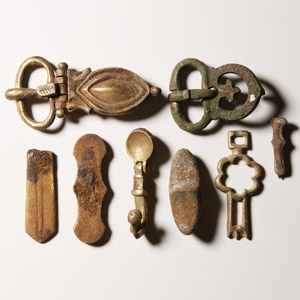
Byzantine Bronze Artefact Collection
6th century A.D. or laterSold for (Inc. bp): £104
Mainly comprising ornamental buckles and mounts, including openwork and zoomorphic examples. 115 grams total, 28-71 mm
Acquired in London in 1982. Property of a central London gentleman. -
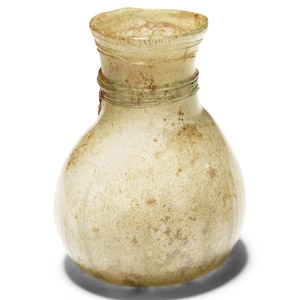
Byzantine Ribbed Glass Cosmetic Bottle with Trail
Circa 5th-6th century A.D.Sold for (Inc. bp): £33
Globular-bodied with a cylindrical neck and everted rim, applied trails around the neck and shallow vertical ribbing rising from the base up the lower body. 15.3 grams, 57 mm
Ex Coincraft, London WC1. Ex private Merseyside, UK, collection. Accompanied by a Coincraft certificate of authenticity. -
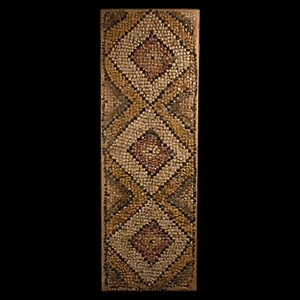
Byzantine Geometric Floor Mosaic
Circa 6th century A.D.Sold for (Inc. bp): £2,600
Comprising a triple geometric rhomboidal figure, where three rhombuses are drawn one inside the other and distinguished by different shades of yellow, white and light red, the latter figure marked in the centre by a white space; the three figures are vertically arranged in a perfect geometric axis on a light background. 36.3 kg, 114.5 cm including frame
Acquired 1970s-1996. Property of a North American collector. London collection, 2016. This lot has been checked against the Interpol Database of stolen works of art and is accompanied by search certificate number no.11823-207411.
The tendency to use abstract and geometric motifs characterises the mosaic art of the Levant under the domination of Byzantium. Close ties can be identified between these rhomboidal figures and those of some of the famous Lebanese mosaics of Beit el Dine, or the mosaics of Tiberias and Hammat, which represent the last expression of Roman art in that area before the Islamic conquest.
