
Loading, please wait...
LOT 1364
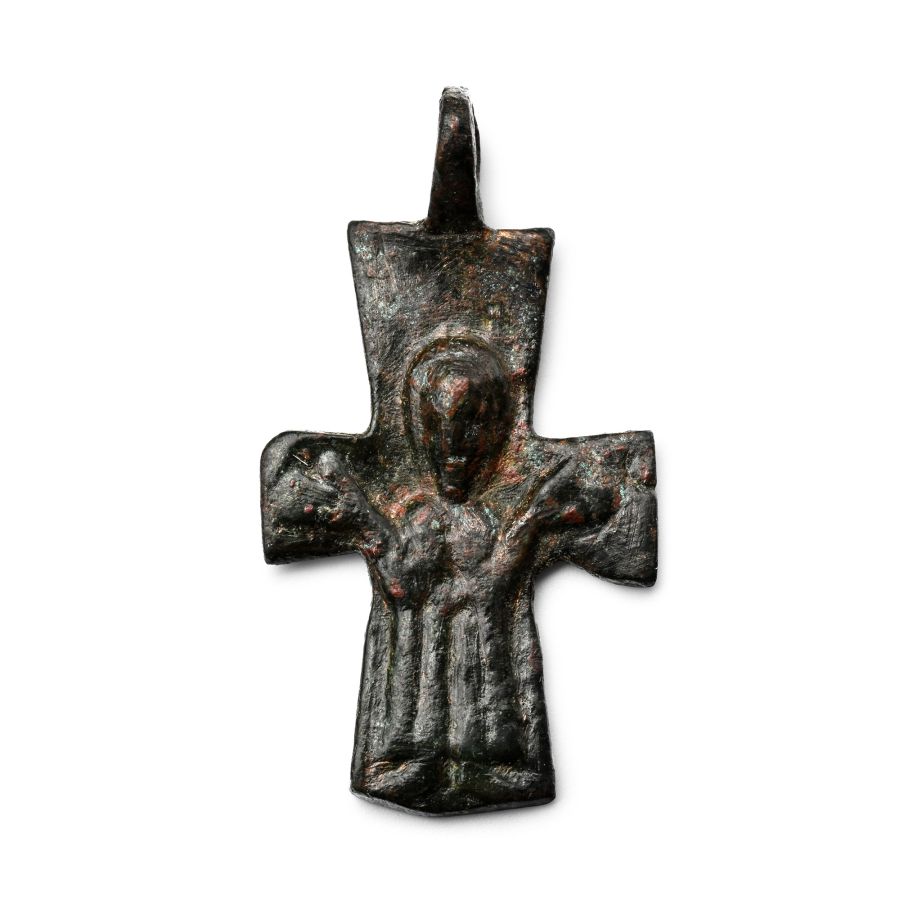
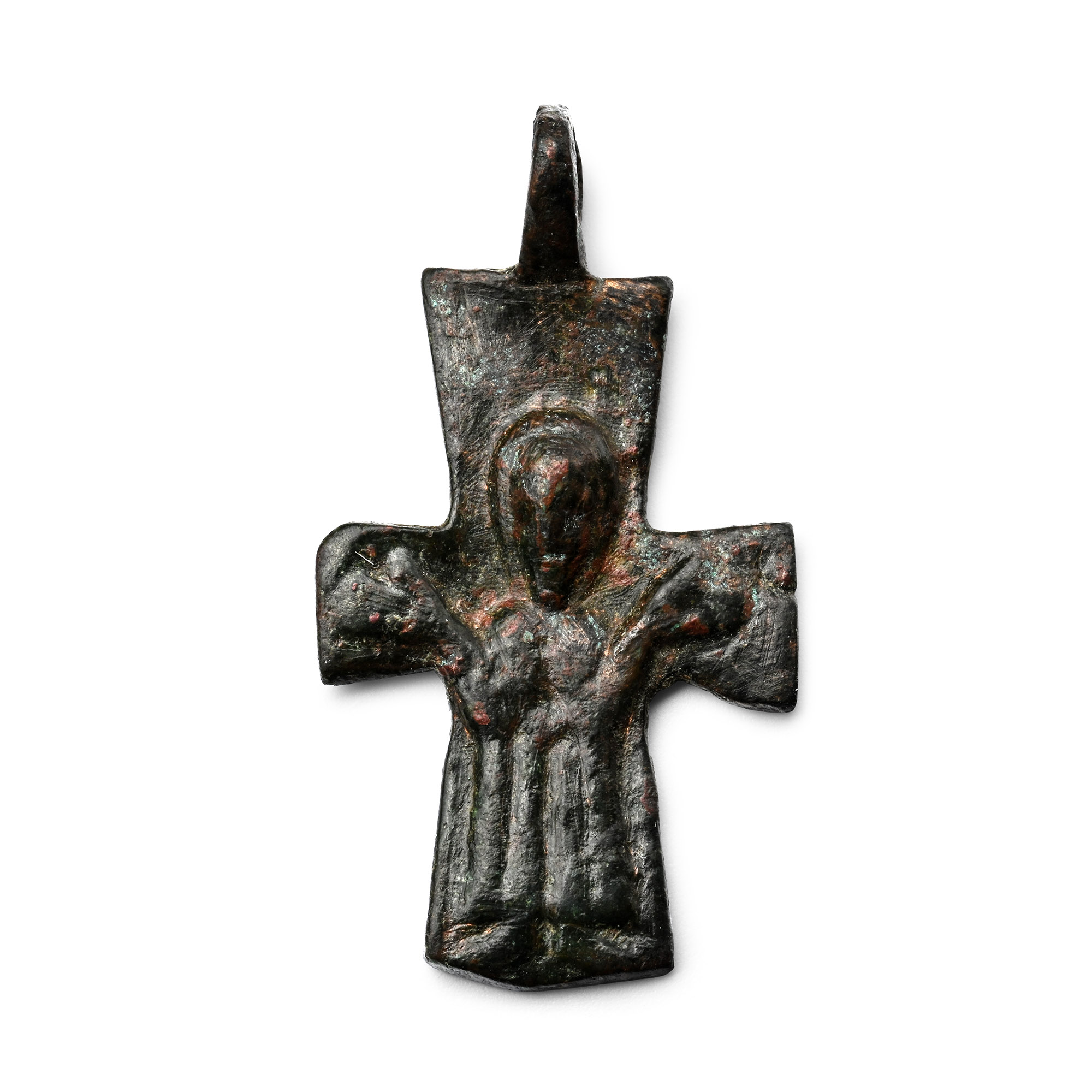
Byzantine Bronze Cross Pendant
CIRCA 10TH-12TH CENTURY A.D.
1 1/4 in. (3.56 grams, 34 mm).
With a raised nimbate figure in orans pose on the obverse, integral suspension loop. [No Reserve]
ProvenanceAcquired on the UK art market from the 1990s.
From the private collection of a Lincolnshire, UK, gentleman.
TimeLine Auctions follows a vetting process to ensure the authenticity and legality of all items, reinforcing our commitment to integrity and responsible trading. Each antiquity, antique, and coin lot undergoes thorough examination by a vetting committee of at least ten external specialists, professional trade association members, scientists, and archaeologists: Our Vetting Process
AUCTIONS:
TimeLine is a leading auction house specialising in antiquities, ancient art, collectables, natural history, coins, medals, and books. Our auctions offer museums, collectors, historians, and enthusiasts the opportunity to acquire unique and historically significant pieces.
-
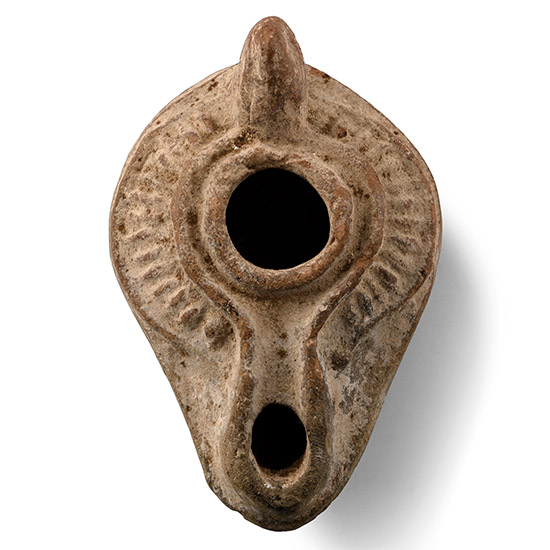
Byzantine Terracotta Oil Lamp
7th century A.D.Sold for (Inc. bp): £59
Slipper-shaped in plan with spike handle, raised rim to the filler hole, broad shoulder with raised radiating bars, stub nozzle, low basal ring, with inked inscription to verso which reads: '11-6-1963 / Front the old / ROMAN CITY / SEBASTIA / SAMARIA'. 83 grams, 89 mm
From a late Hampshire gentleman's collection, formed from the 1960s.
The shape of the lamp is similar to that of the candlestick-type lamps. The form of the channel and the handle point to a late date, i.e., the end of the 7th or the beginning of the 8th century A.D. -
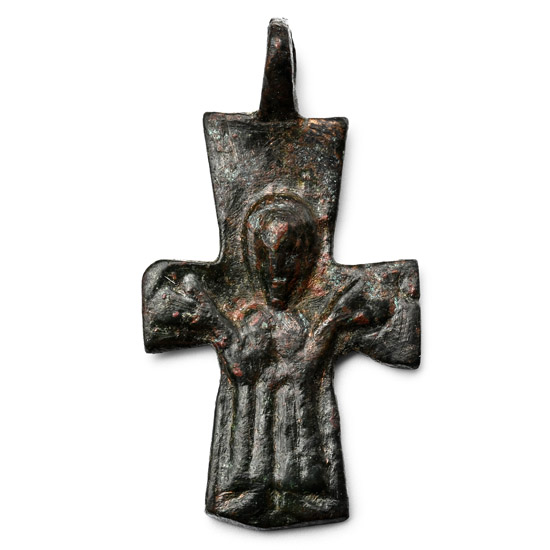
Byzantine Bronze Cross Pendant
Circa 10th-12th century A.D.Sold for (Inc. bp): £91
With a raised nimbate figure in orans pose on the obverse, integral suspension loop. 3.56 grams, 34 mm
Acquired on the UK art market from the 1990s. From the private collection of a Lincolnshire, UK, gentleman. -
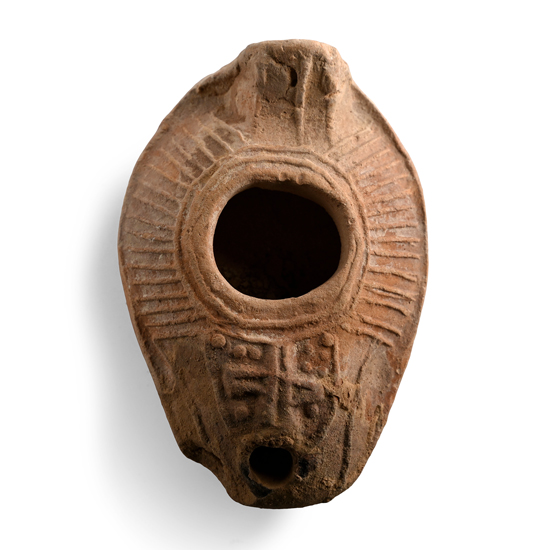
Byzantine Terracotta Slipper Oil Lamp with Cross
6th-8th century A.D.Sold for (Inc. bp): £39
Slipper-shaped in plan with a low rim around the filler hole, a stub nozzle, a lug handle to the rear, radiating linear decoration to the shoulder and cross-and-pellets to the nozzle, low basal ring. 65 grams, 84 mm
From a collection of lamps of a late Scottish gentleman, 1970-1990s.
