
Loading, please wait...
LOT 1323
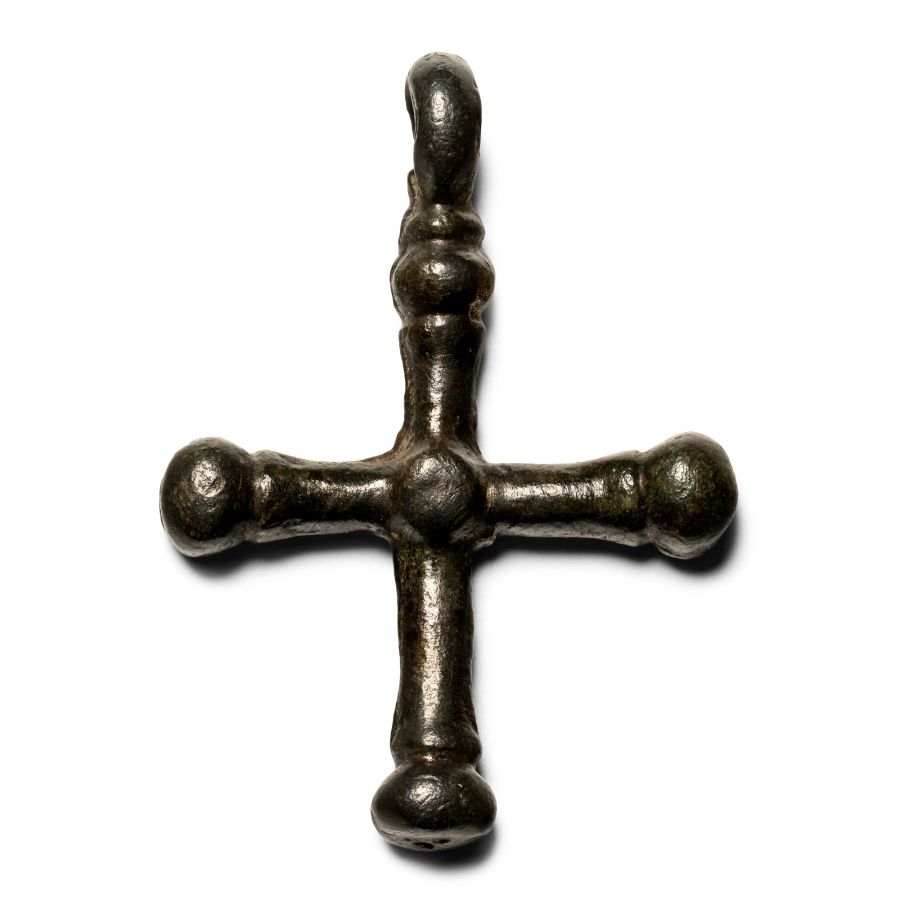
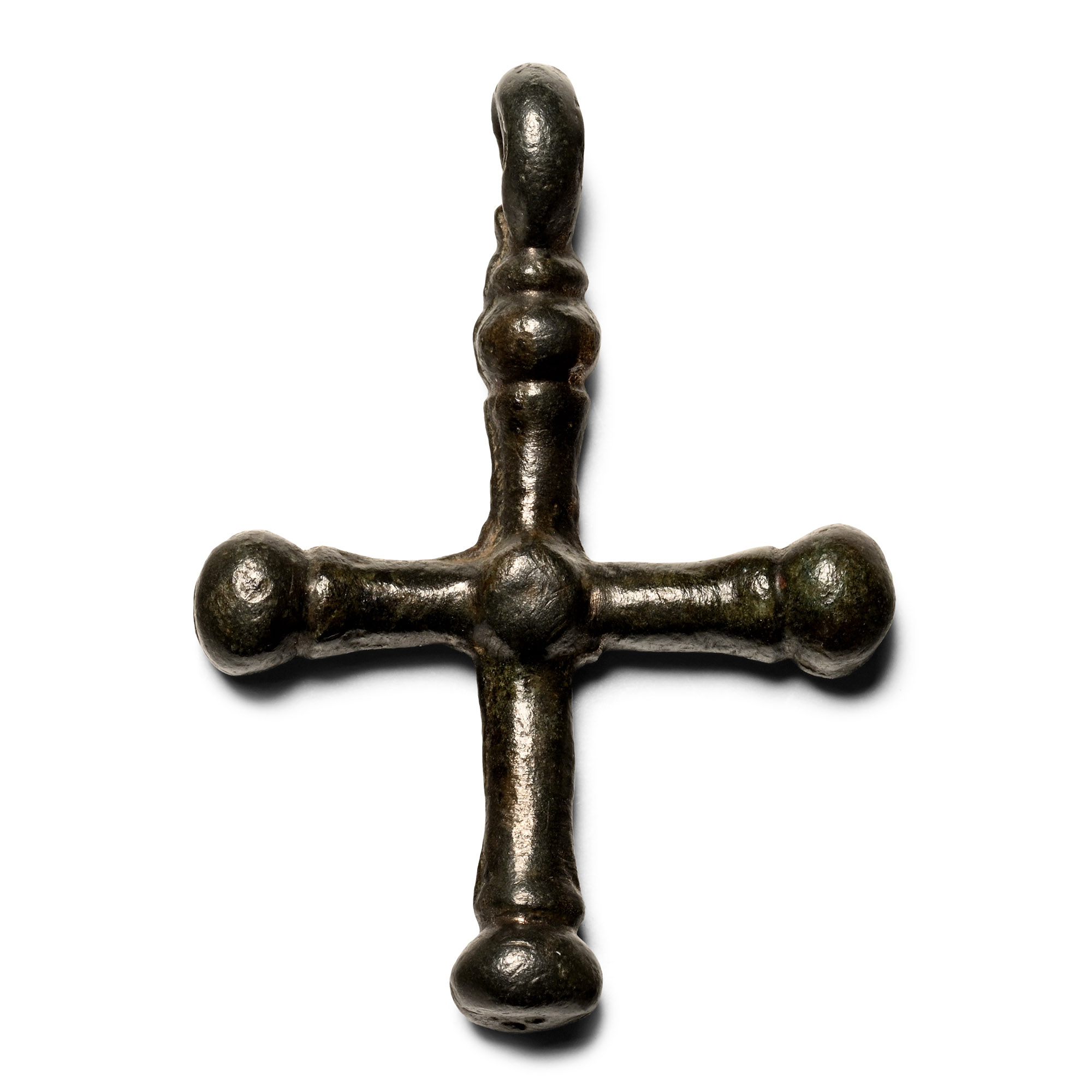
Byzantine Bronze Cross Pendant
10TH-12TH CENTURY A.D.
1 5/8 in. (10.6 grams, 43 mm).
Round-section arms with knop finials, raised pellet at the centre and an integral suspension loop. [No Reserve]
ProvenanceEx German art market, 2000s.
Acquired from an EU collector living in London.
From the collection of a Surrey, UK, gentleman.
TimeLine Auctions follows a vetting process to ensure the authenticity and legality of all items, reinforcing our commitment to integrity and responsible trading. Each antiquity, antique, and coin lot undergoes thorough examination by a vetting committee of at least ten external specialists, professional trade association members, scientists, and archaeologists: Our Vetting Process
AUCTIONS:
TimeLine is a leading auction house specialising in antiquities, ancient art, collectables, natural history, coins, medals, and books. Our auctions offer museums, collectors, historians, and enthusiasts the opportunity to acquire unique and historically significant pieces.
-
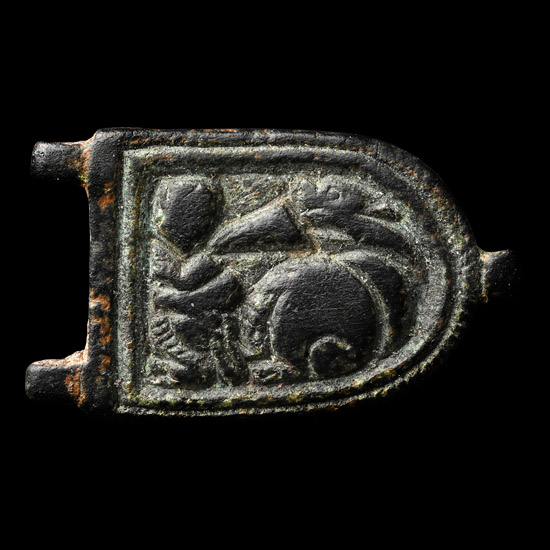
Byzantine Bronze Plate with Combat Scene
Circa 7th-8th century A.D.Sold for (Inc. bp): £46
Tongue-shaped in plan with knop finial and three pierced lugs to the reverse; raised rim enclosing a scene with an advancing gladiator and a beast preparing to attack. 14.83 grams, 38.39 mm
From the private collection of a European gentleman (1942-2024), formed since the 1970s. -
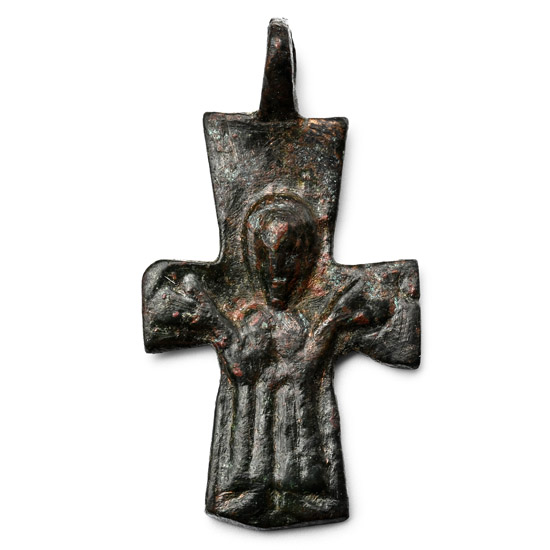
Byzantine Bronze Cross Pendant
Circa 10th-12th century A.D.Sold for (Inc. bp): £91
With a raised nimbate figure in orans pose on the obverse, integral suspension loop. 3.56 grams, 34 mm
Acquired on the UK art market from the 1990s. From the private collection of a Lincolnshire, UK, gentleman. -
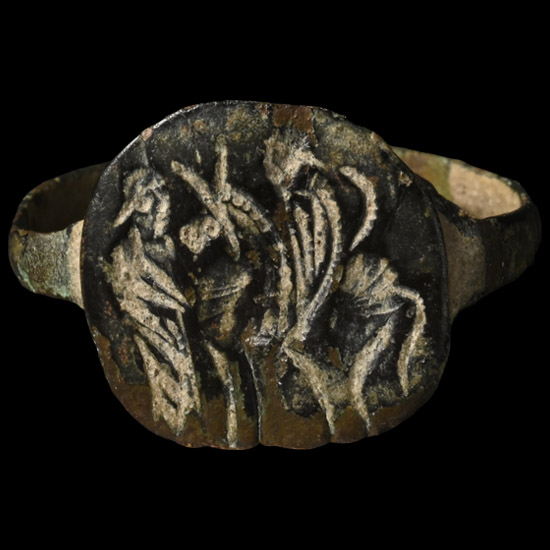
Byzantine Bronze Ring with Jesus Riding a Donkey
6th-7th century A.D.Sold for (Inc. bp): £91
Comprising a slender hoop with an oval bezel featuring an image of Jesus riding on a donkey before a robed man. 1.92 grams, 21.99 mm overall, 19.65 x 19.26 mm internal diameter (approximate size British T 1/2, USA 9 3/4, Europe 21.89, Japan 21)
From an English private collection, 1980s. Property of a London, UK, antiquarian.
