
Loading, please wait...
LOT 1056
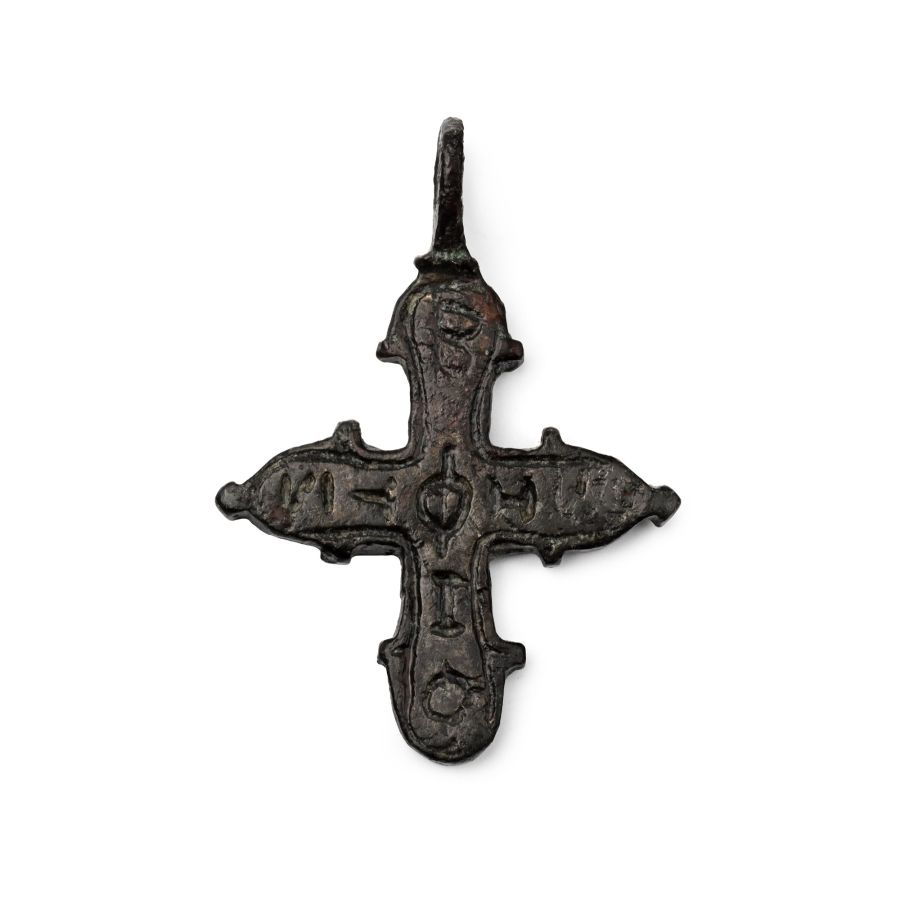
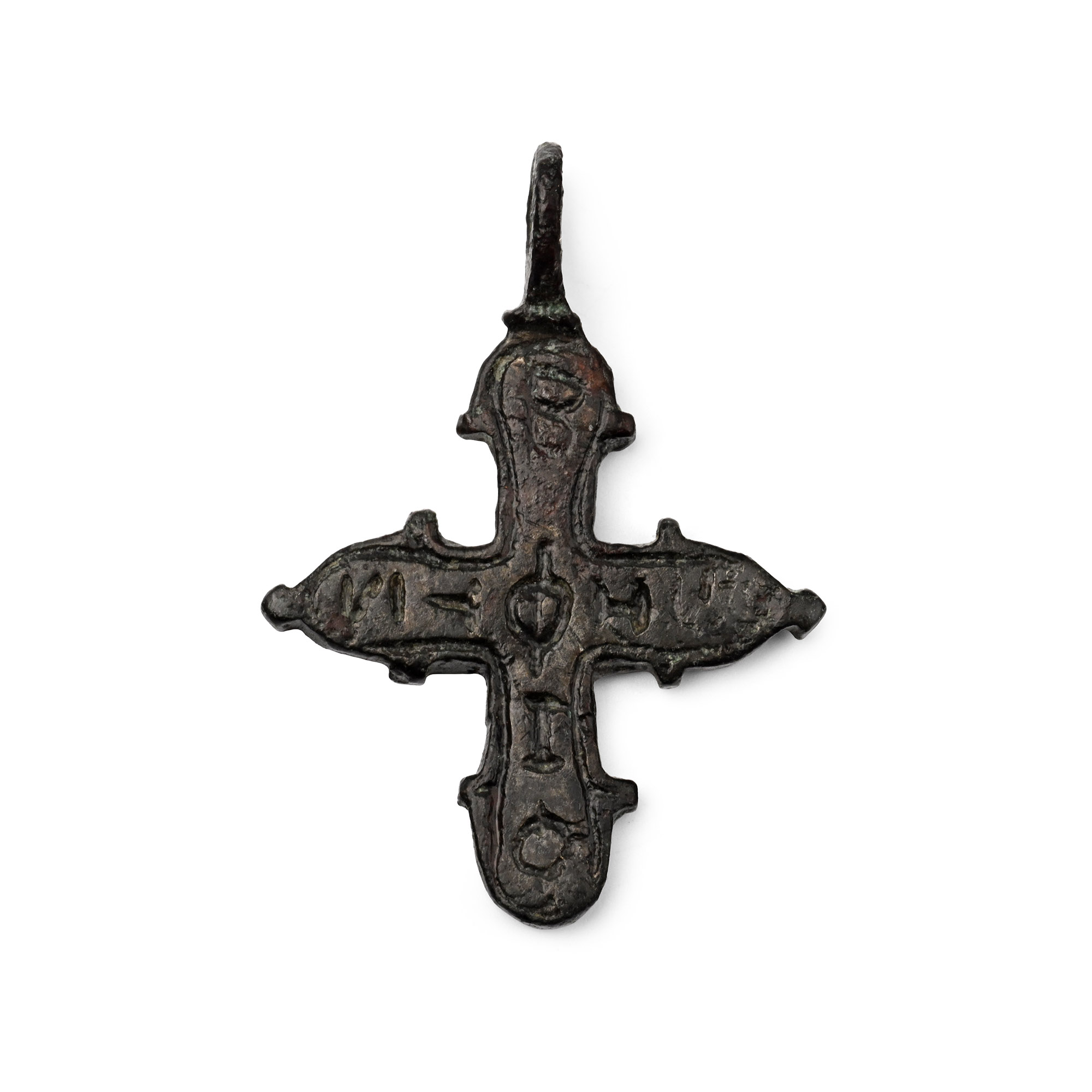
Byzantine Bronze Cross Pendant
10TH-14TH CENTURY A.D.
1 1/2 in. (4.83 grams, 37 mm).
Integral loop, incised letters on the arms. [No Reserve]
ProvenanceEx German art market, 2000s.
Acquired from an EU collector living in London.
From the collection of a Surrey, UK, gentleman.
This lot is accompanied by an illustrated lot declaration signed by the Head of the Antiquities Department, Dr Raffaele D'Amato.
TimeLine Auctions follows a vetting process to ensure the authenticity and legality of all items, reinforcing our commitment to integrity and responsible trading. Each antiquity, antique, and coin lot undergoes thorough examination by a vetting committee of at least ten external specialists, professional trade association members, scientists, and archaeologists: Our Vetting Process
AUCTIONS:
TimeLine is a leading auction house specialising in antiquities, ancient art, collectables, natural history, coins, medals, and books. Our auctions offer museums, collectors, historians, and enthusiasts the opportunity to acquire unique and historically significant pieces.
-
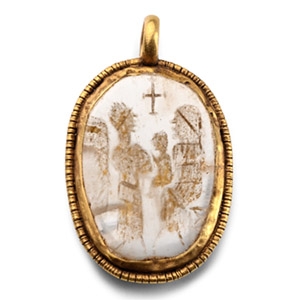
Byzantine Gold and Rock Crystal Pendant with Adoration Scene
Late 6th century A.D.Sold for (Inc. bp): £4,680
Ellipsoid intaglio with adoration scene comprising of seated Virgin holding an infant Christ on her lap, opposite a standing crowned figure holding a shield(?), cross to the upper centre of the scene; set in a golden frame with ribbed border and suspension loop to the top. 9.35 grams, 36 mm
Ex an important collection of Christian artefacts, from a Surrey, UK, gentleman, 1980-1990s. This lot has been checked against the Interpol Database of stolen works of art and is accompanied by a search certificate number no.12871-240788. This lot has been cleared against the Art Loss Register database, and is accompanied by an illustrated lot declaration signed by the Head of the Antiquities Department, Dr Raffaele D'Amato. -
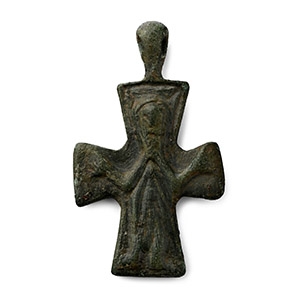
Byzantine Bronze Cross Pendant
10th-14th century A.D.Sold for (Inc. bp): £111
Bifacial expanding arm cross with integral loop, one side with Corpus Christi, the other with a figure in orans pose. 9.2 grams, 42 mm
Ex German art market, 2000s. Acquired from an EU collector living in London. From the collection of a Surrey, UK, gentleman. This lot is accompanied by an illustrated lot declaration signed by the Head of the Antiquities Department, Dr Raffaele D'Amato. -
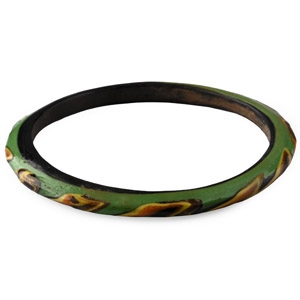
Byzantine Period Glass Bangle
8th-12th century A.D.Sold for (Inc. bp): £91
D-shaped in section with green mosaic band to the upper face of the outer edge, marvered trail with red and yellow, undulating profile. 30.9 grams, 93 mm
Ex property of a London collector; acquired 1960s. Property of a North London, UK, lady. This lot is accompanied by an illustrated lot declaration signed by the Head of the Antiquities Department, Dr Raffaele D'Amato.
