
Loading, please wait...
LOT 1070
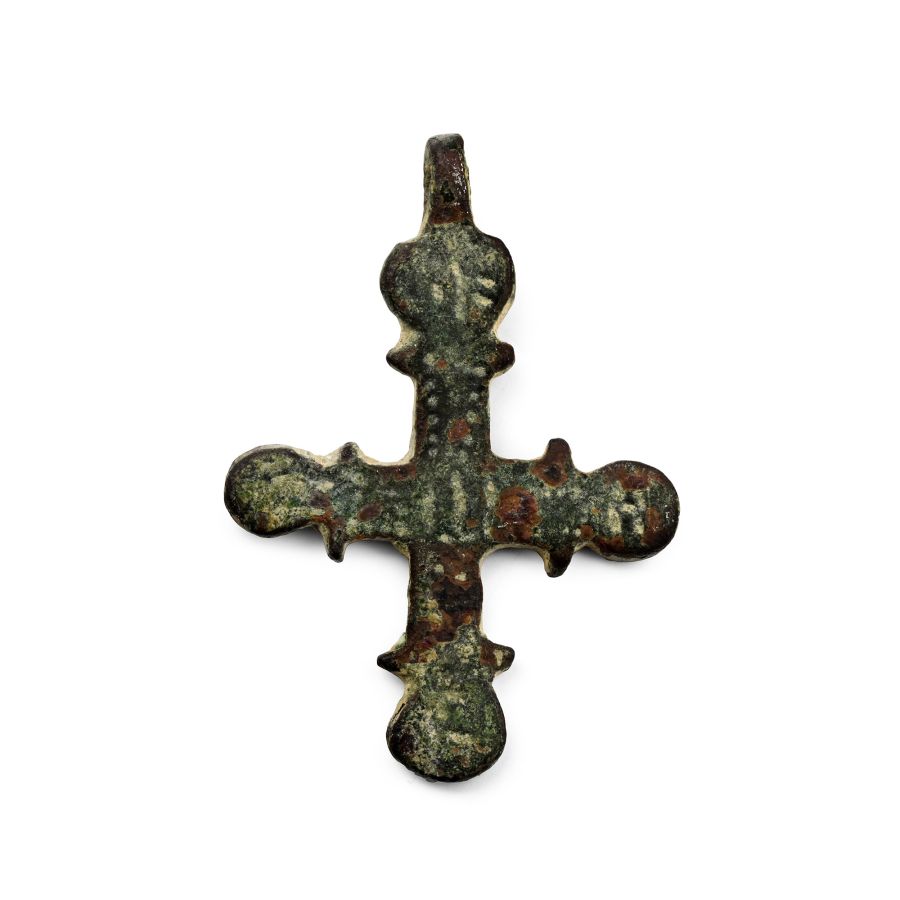
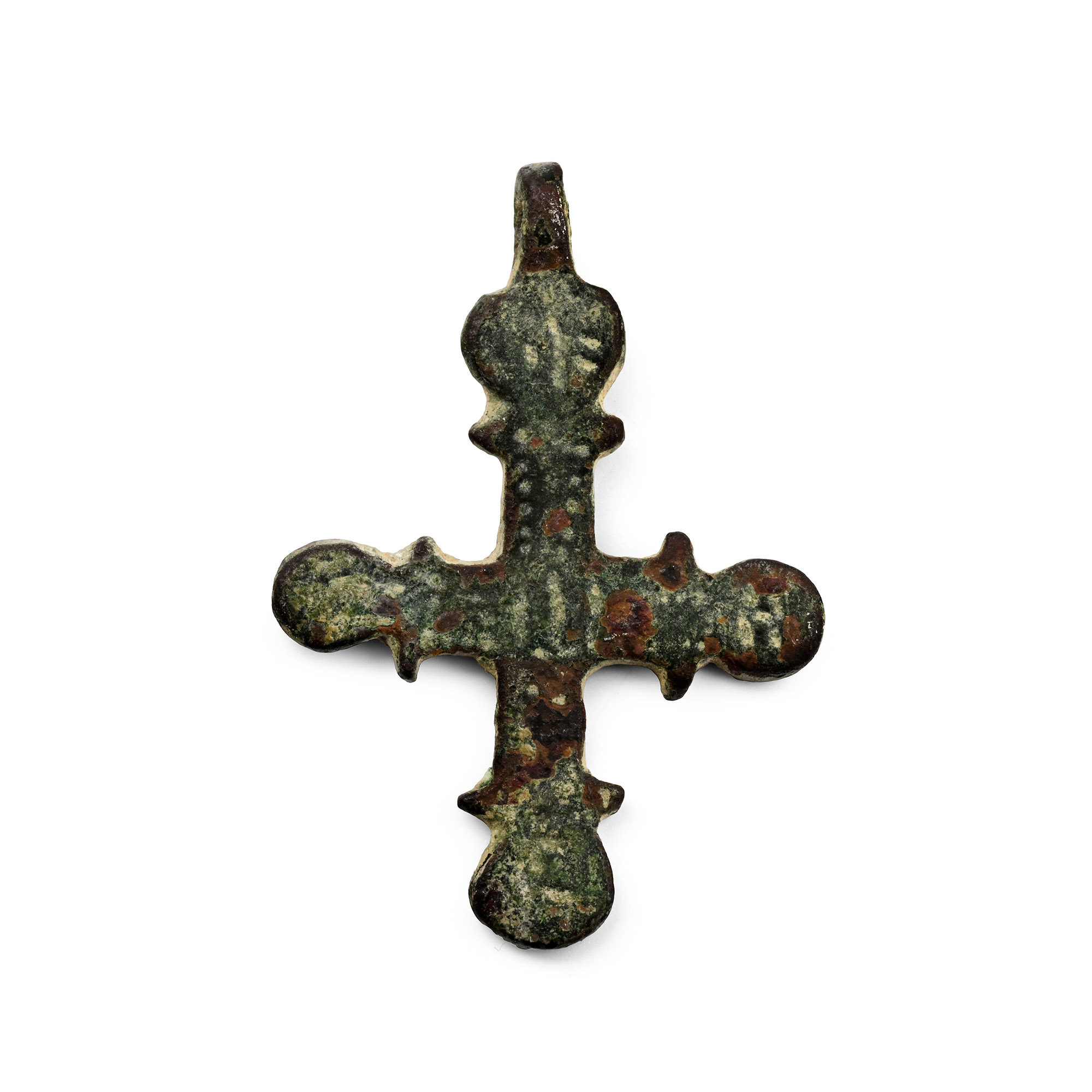
Byzantine Bronze Cross Pendant
10TH-14TH CENTURY A.D.
1 1/2 in. (5.5 grams, 39 mm).
A cross pommée pendant with pointillé decoration. [No Reserve]
ProvenanceEx German art market, 2000s.
Acquired from an EU collector living in London.
From the collection of a Surrey, UK, gentleman.
This lot is accompanied by an illustrated lot declaration signed by the Head of the Antiquities Department, Dr Raffaele D'Amato.
TimeLine Auctions follows a vetting process to ensure the authenticity and legality of all items, reinforcing our commitment to integrity and responsible trading. Each antiquity, antique, and coin lot undergoes thorough examination by a vetting committee of at least ten external specialists, professional trade association members, scientists, and archaeologists: Our Vetting Process
AUCTIONS:
TimeLine is a leading auction house specialising in antiquities, ancient art, collectables, natural history, coins, medals, and books. Our auctions offer museums, collectors, historians, and enthusiasts the opportunity to acquire unique and historically significant pieces.
-
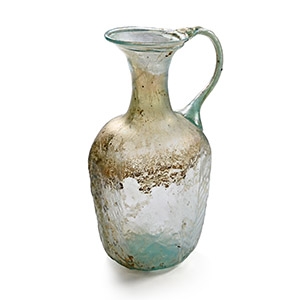
Byzantine Mould-Blown Christian Glass Vessel
Late 6th-early 7th century A.D.Sold for (Inc. bp): £572
Comprising a pale-blue hexagonal body with cylindrical neck and rolled rim, applied tubular handle; rosette to base, the side panels with alternating motifs: two of the panels with a palm-leaf, two with large conjoining lozenges with bosses, and the other two with crosshatching, each small lozenge with a pellet to the centre. 90 grams, 16 cm
From an important London collection of glass, 1990s. This lot is accompanied by an illustrated lot declaration signed by the Head of the Antiquities Department, Dr Raffaele D'Amato. -
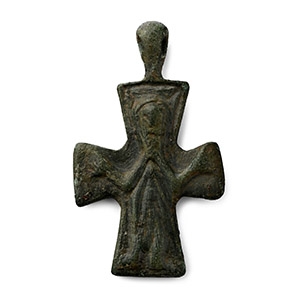
Byzantine Bronze Cross Pendant
10th-14th century A.D.Sold for (Inc. bp): £111
Bifacial expanding arm cross with integral loop, one side with Corpus Christi, the other with a figure in orans pose. 9.2 grams, 42 mm
Ex German art market, 2000s. Acquired from an EU collector living in London. From the collection of a Surrey, UK, gentleman. This lot is accompanied by an illustrated lot declaration signed by the Head of the Antiquities Department, Dr Raffaele D'Amato. -
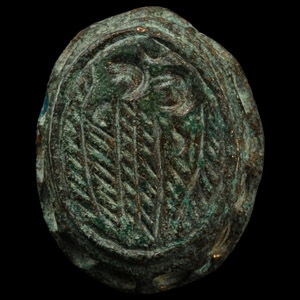
Byzantine Bronze Ring with Saints
13th-15th century A.D.Sold for (Inc. bp): £72
With D-section hoop, ellipsoid plaque with dentilled rim, low-relief image of two figures in hatched cloaks. 10.74 grams, 23.50 mm overall, 17.58 mm internal diameter (approximate size British N, USA 6 1/2, Europe 13.72, Japan 13)
Acquired on the London art market in the late 1980s-1990s. From the family collection of an East London, UK, gentleman. This lot is accompanied by an illustrated lot declaration signed by the Head of the Antiquities Department, Dr Raffaele D'Amato.
