
Loading, please wait...
LOT 1076
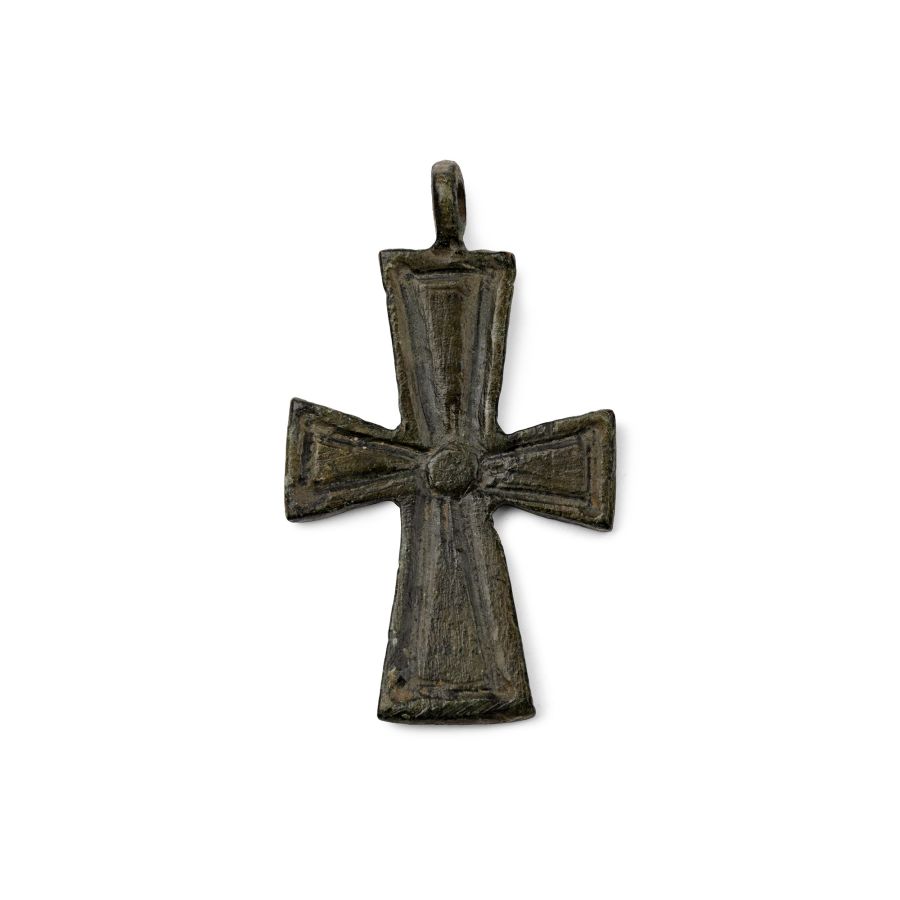
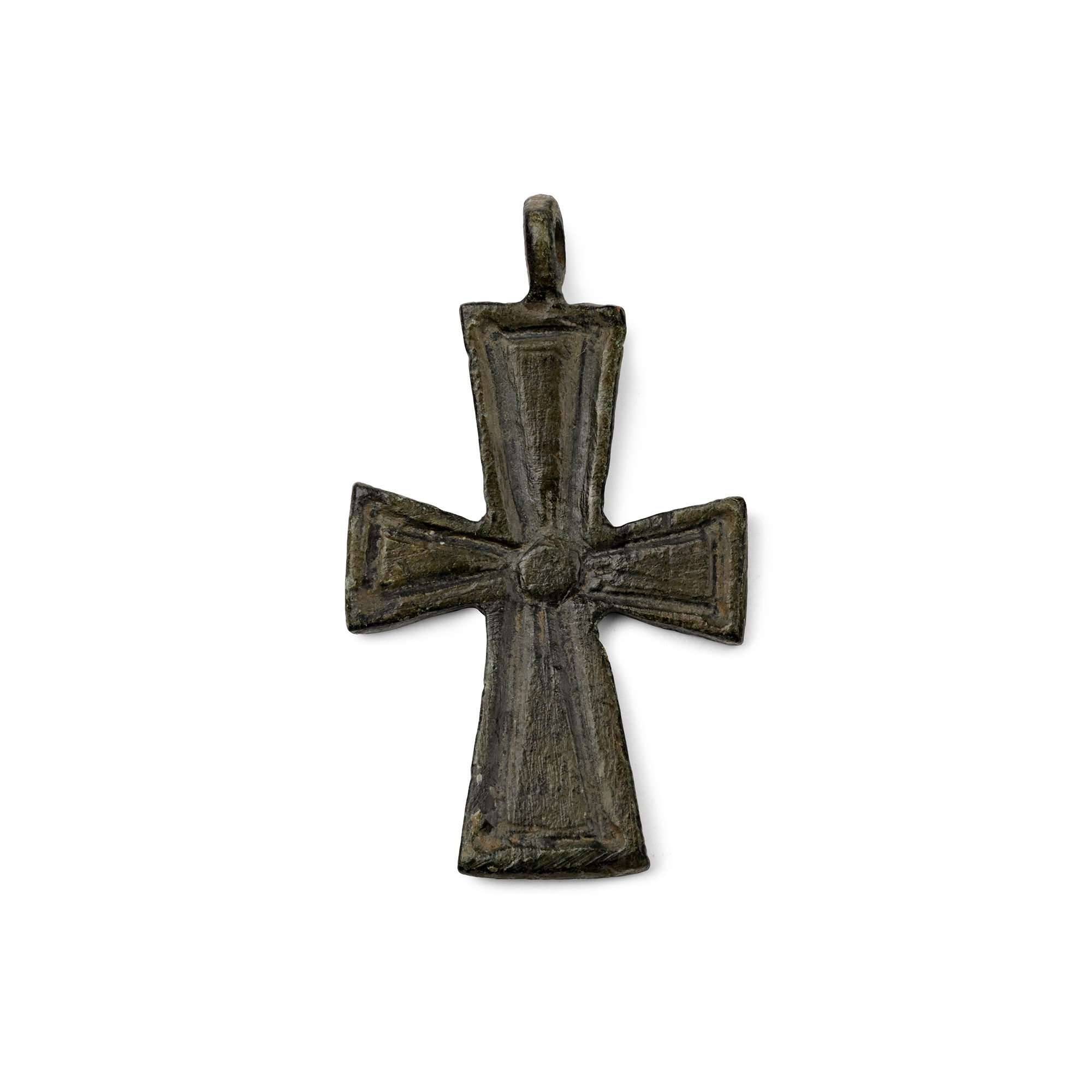
Byzantine Bronze Cross Pendant
10TH-14TH CENTURY A.D.
1 1/2 in. (5.44 grams, 38 mm).
Expanding arms with grooved borders, central pellet and integral suspension loop. [No Reserve]
ProvenanceEx German art market, 2000s.
Acquired from an EU collector living in London.
From the collection of a Surrey, UK, gentleman.
This lot is accompanied by an illustrated lot declaration signed by the Head of the Antiquities Department, Dr Raffaele D'Amato.
TimeLine Auctions follows a vetting process to ensure the authenticity and legality of all items, reinforcing our commitment to integrity and responsible trading. Each antiquity, antique, and coin lot undergoes thorough examination by a vetting committee of at least ten external specialists, professional trade association members, scientists, and archaeologists: Our Vetting Process
AUCTIONS:
TimeLine is a leading auction house specialising in antiquities, ancient art, collectables, natural history, coins, medals, and books. Our auctions offer museums, collectors, historians, and enthusiasts the opportunity to acquire unique and historically significant pieces.
-
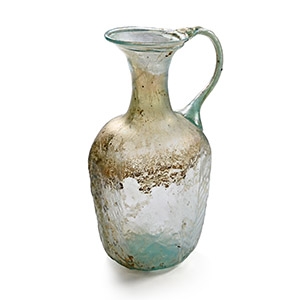
Byzantine Mould-Blown Christian Glass Vessel
Late 6th-early 7th century A.D.Sold for (Inc. bp): £572
Comprising a pale-blue hexagonal body with cylindrical neck and rolled rim, applied tubular handle; rosette to base, the side panels with alternating motifs: two of the panels with a palm-leaf, two with large conjoining lozenges with bosses, and the other two with crosshatching, each small lozenge with a pellet to the centre. 90 grams, 16 cm
From an important London collection of glass, 1990s. This lot is accompanied by an illustrated lot declaration signed by the Head of the Antiquities Department, Dr Raffaele D'Amato. -
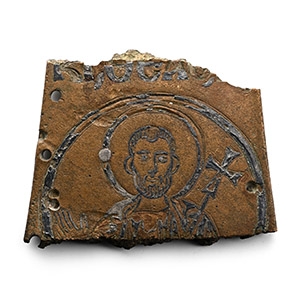
Byzantine Bronze Processional Cross Fragment with Inlaid Silver Bust
10th century A.D.Sold for (Inc. bp): £520
Irregular fragment with attachment holes along both lateral edges; inlaid silver nimbate bust with processional cross to the left shoulder, inside an arched border; inlaid legend above, possibly Coptic script; perhaps used as a trade-weight. 121 grams, 64 mm
Ex Ariadne Galleries, New York, USA, 2009. Ex central London gallery. This lot is accompanied by an illustrated lot declaration signed by the Head of the Antiquities Department, Dr Raffaele D'Amato. -
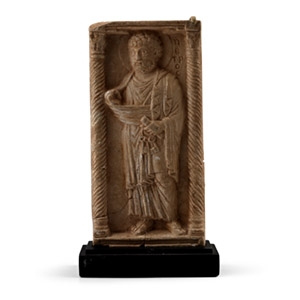
Byzantine Stone Carving of Saint Peter
6th-7th century A.D.Sold for (Inc. bp): £3,250
Rectangular marble panel with half-round figure of standing Saint Peter between two columns, holding ring with three keys and scroll in one hand, inscription 'ΠΕTPOC' to the upper right corner; finely carved low-relief cross with wide arms to the reverse; repaired and mounted on a custom-made display stand. 103 grams, 10.4 cm (132 grams total, 11.7 cm including stand)
Some repairs.
with The Bactria Corp., NYC, USA, 1970s. Private collection, New York, USA. with Arte Primitivo, New York, USA, 17 March 2021, no.619 ($9,920.00). Private collection, London, UK. Accompanied by an academic report by Dr Raffaele D'Amato. This lot has been checked against the Interpol Database of stolen works of art and is accompanied by a search certificate number no.12839-240781. This lot has been cleared against the Art Loss Register database, and is accompanied by an illustrated lot declaration signed by the Head of the Antiquities Department, Dr Raffaele D'Amato.
The relief shows similarities with scenes from sarcophagi made in Constantinople, which depict miracles of Christ witnessed by the Apostles, especially Saint Peter. In particular, due to its similarity to fragments of a sarcophagus from Leontopolis but carved in Byzantium, the scene may depict the healing of the blind man of Jericho, with Peter witnessing the miracles performed by Jesus.
