
Loading, please wait...
LOT 1072
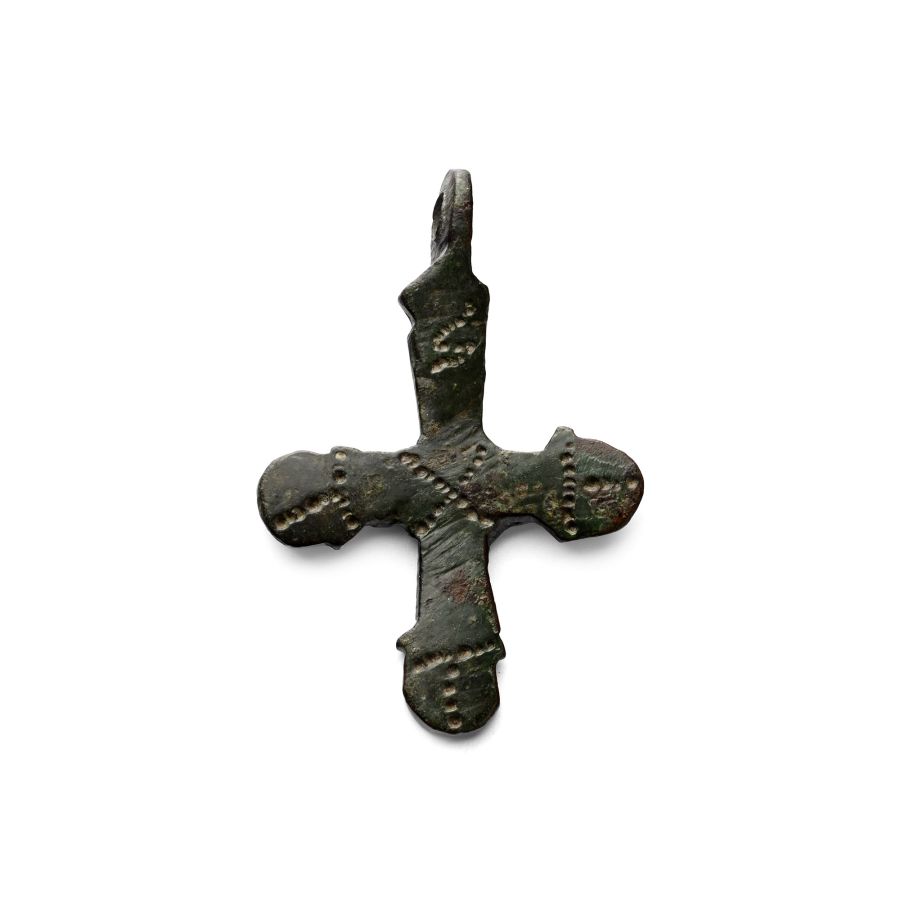
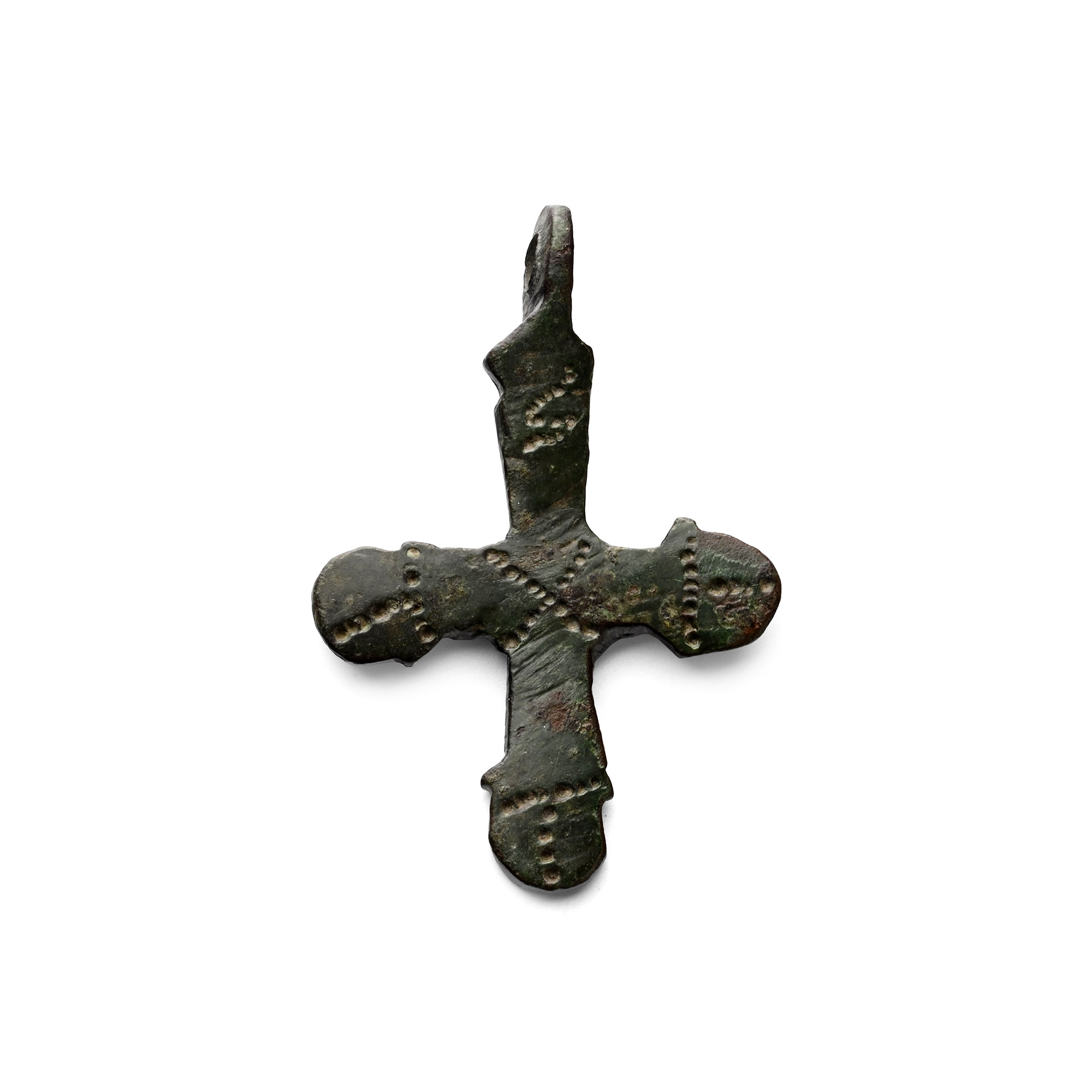
Byzantine Bronze Cross Pendant
10TH-14TH CENTURY A.D.
1 3/4 in. (7.58 grams, 44 mm).
With splayed end to each arm and integral loop; pointillé motifs to both faces. [No Reserve]
ProvenanceEx German art market, 2000s.
Acquired from an EU collector living in London.
From the collection of a Surrey, UK, gentleman.
This lot is accompanied by an illustrated lot declaration signed by the Head of the Antiquities Department, Dr Raffaele D'Amato.
TimeLine Auctions follows a vetting process to ensure the authenticity and legality of all items, reinforcing our commitment to integrity and responsible trading. Each antiquity, antique, and coin lot undergoes thorough examination by a vetting committee of at least ten external specialists, professional trade association members, scientists, and archaeologists: Our Vetting Process
AUCTIONS:
TimeLine is a leading auction house specialising in antiquities, ancient art, collectables, natural history, coins, medals, and books. Our auctions offer museums, collectors, historians, and enthusiasts the opportunity to acquire unique and historically significant pieces.
-
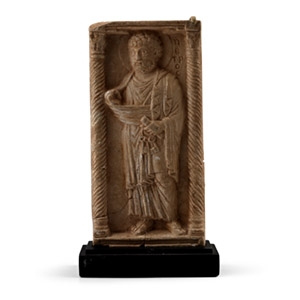
Byzantine Stone Carving of Saint Peter
6th-7th century A.D.Sold for (Inc. bp): £3,250
Rectangular marble panel with half-round figure of standing Saint Peter between two columns, holding ring with three keys and scroll in one hand, inscription 'ΠΕTPOC' to the upper right corner; finely carved low-relief cross with wide arms to the reverse; repaired and mounted on a custom-made display stand. 103 grams, 10.4 cm (132 grams total, 11.7 cm including stand)
Some repairs.
with The Bactria Corp., NYC, USA, 1970s. Private collection, New York, USA. with Arte Primitivo, New York, USA, 17 March 2021, no.619 ($9,920.00). Private collection, London, UK. Accompanied by an academic report by Dr Raffaele D'Amato. This lot has been checked against the Interpol Database of stolen works of art and is accompanied by a search certificate number no.12839-240781. This lot has been cleared against the Art Loss Register database, and is accompanied by an illustrated lot declaration signed by the Head of the Antiquities Department, Dr Raffaele D'Amato.
The relief shows similarities with scenes from sarcophagi made in Constantinople, which depict miracles of Christ witnessed by the Apostles, especially Saint Peter. In particular, due to its similarity to fragments of a sarcophagus from Leontopolis but carved in Byzantium, the scene may depict the healing of the blind man of Jericho, with Peter witnessing the miracles performed by Jesus. -
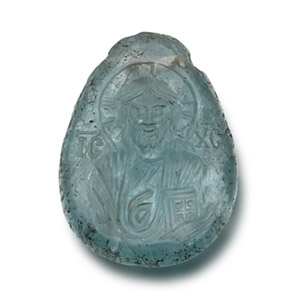
Byzantine Engraved Stone Pendant Bead
6th-8th century A.D.Estimate: £5,000 - 7,000 (+bp*)
Opening Bid: £2,500
Piriform in profile and plano-convex in section with incised motif to each face: above - cross fourchee within a balustered arch; below - facing nimbate bust of Christ with book in one hand and fingers in the gesture of blessing, 'IC XC' legend flanking; supplied with a museum-quality impression. 6.45 grams, 27 mm
Acquired in London before 2000. From the collection of a Mayfair, London, UK, gentleman. This lot has been checked against the Interpol Database of stolen works of art and is accompanied by search certificate number no.12805-240849. This lot has been cleared against the Art Loss Register database, and is accompanied by an illustrated lot declaration signed by the Head of the Antiquities Department, Dr Raffaele D'Amato. -
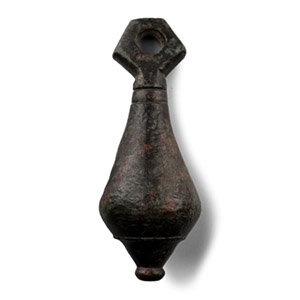
Large Byzantine Bronze Steelyard Weight
10th-12th century A.D.Sold for (Inc. bp): £195
Piriform in profile with knop finial, pierced pentagonal suspension lug. 510 grams, 11.1 cm
Ex German art market, 2000s. Acquired from an EU collector living in London. From the collection of a Surrey, UK, gentleman. This lot is accompanied by an illustrated lot declaration signed by the Head of the Antiquities Department, Dr Raffaele D'Amato.
