
Loading, please wait...
LOT 0778
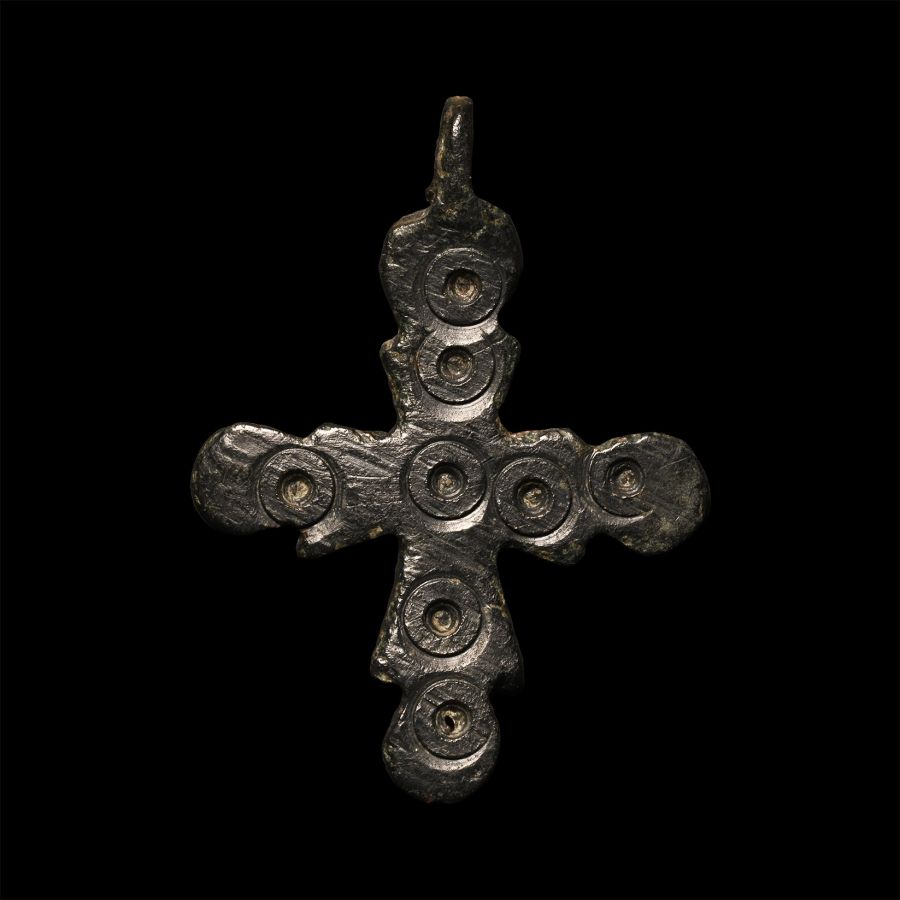
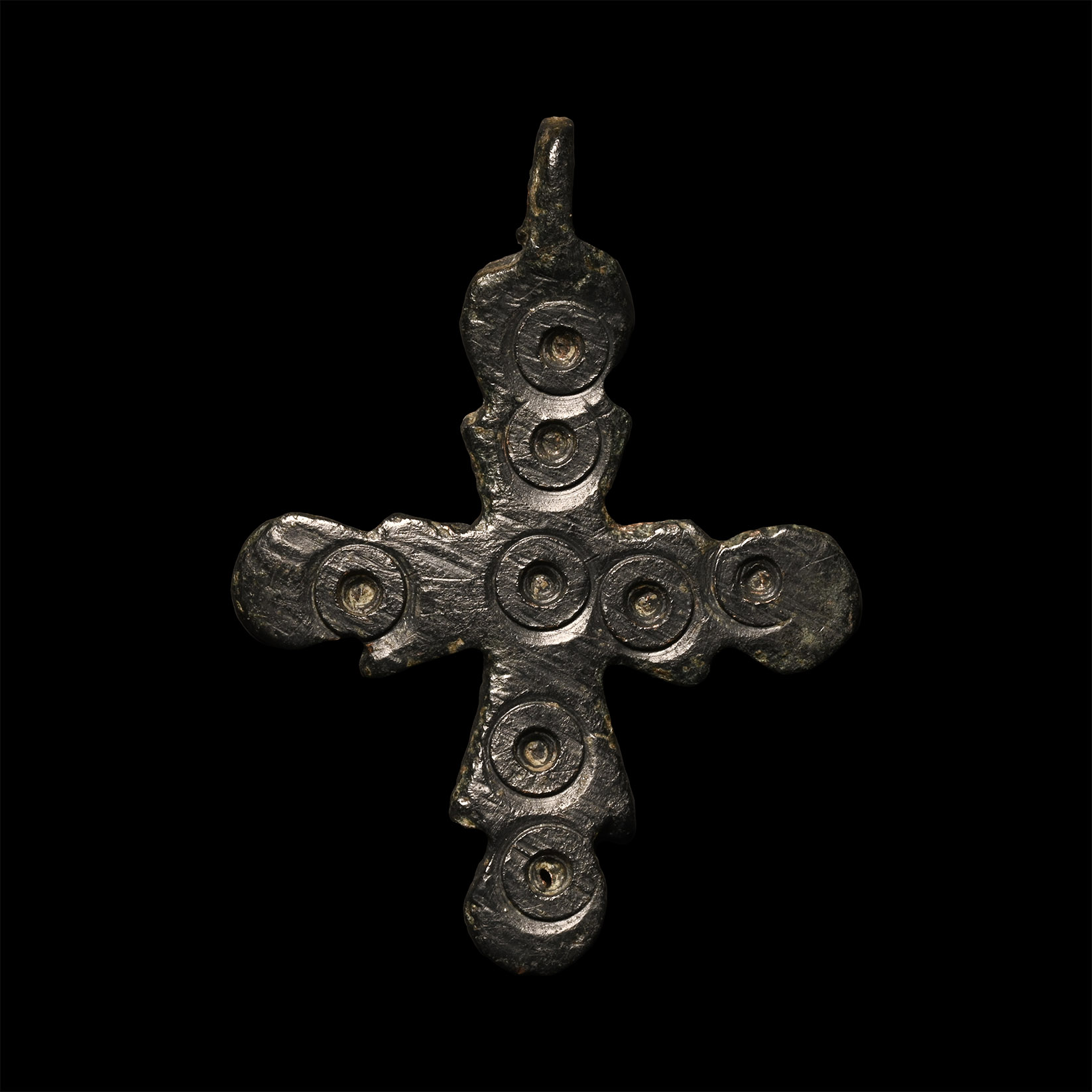
Byzantine Bronze Cross Pendant
6TH-8TH CENTURY A.D.
1 1/2 in. (4.96 grams, 39 mm).
Cross pommee with roundels to the centre and each arm; suspension loop. [No Reserve]
ProvenanceAcquired on the UK art market before 2000.
Property of a Surrey, UK, collector.
TimeLine Auctions follows a vetting process to ensure the authenticity and legality of all items, reinforcing our commitment to integrity and responsible trading. Each antiquity, antique, and coin lot undergoes thorough examination by a vetting committee of at least ten external specialists, professional trade association members, scientists, and archaeologists: Our Vetting Process
AUCTIONS:
TimeLine is a leading auction house specialising in antiquities, ancient art, collectables, natural history, coins, medals, and books. Our auctions offer museums, collectors, historians, and enthusiasts the opportunity to acquire unique and historically significant pieces.
-
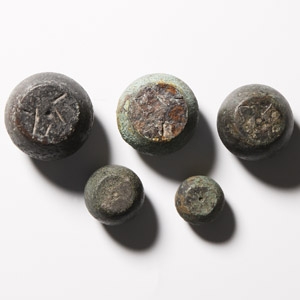
Byzantine Bronze Trade Weight Collection
Circa 8th-12th century A.D.Sold for (Inc. bp): £65
Mixed group of barrel-shaped weights pellets and other markings. 227 grams total, 14-26 mm
Ex Simmons Gallery, London E11, UK, in the 1990s. From a North London collection. -
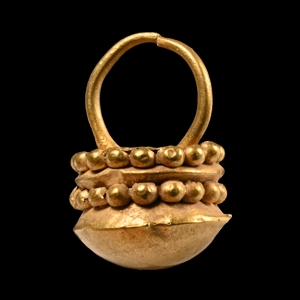
Byzantine Gold Earring
Circa 8th-12th century A.D.Estimate: £250 - 350 (+bp*)
Opening Bid: £125
Hollow-formed drum with domed lower face, applied collar and two rows of granules, split loop above. 3.11 grams, 23 mm
Ex European collection formed in the 1990s. Acquired from a North London gallery. Property of an Essex gentleman. -
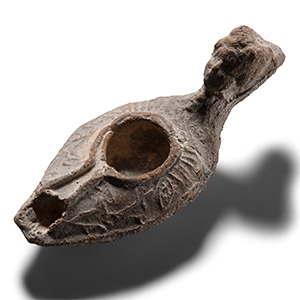
Byzantine Terracotta Slipper Oil Lamp with Head of a Goddess
5th-8th century A.D.Sold for (Inc. bp): £124
With a large sub circular filling hole and a narrow channel running towards the nozzle; stylised animal motifs and linear decoration to the body; the integral handle formed as the head of a goddess with rounded face and curly hair; low basal ring from which raised tendrils radiate. 79 grams, 11.6 cm
Acquired before 1990s/early 2000s. From the family collection of Jack Lyttle (1944-2023), Kilmacolm, Scotland; thence by descent to his granddaughter. Property of an East Sussex, UK, gentleman.
