
Loading, please wait...


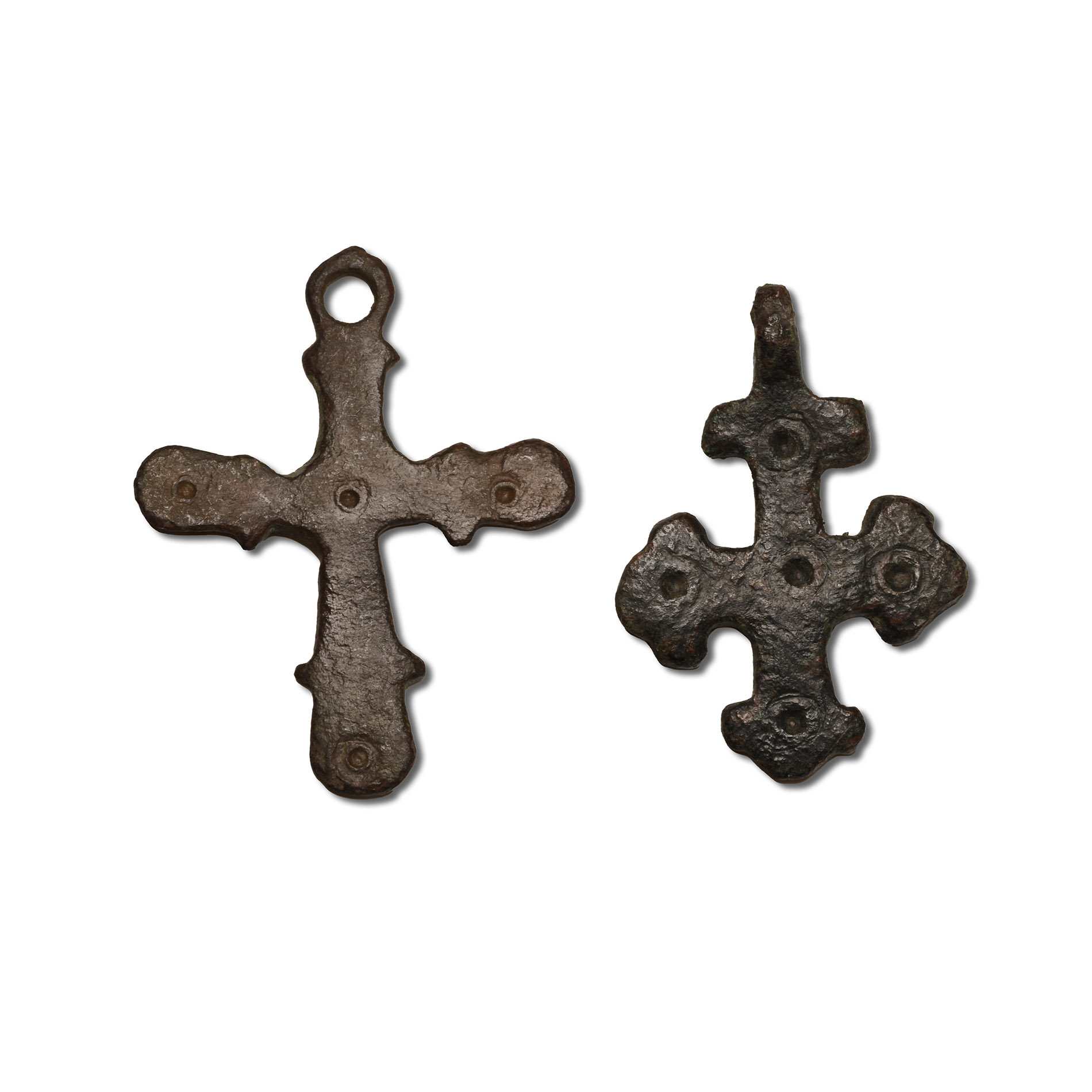
LOT 0925
Byzantine Bronze Cross Pendant Group
6TH-8TH CENTURY A.D.
1 1/4 - 1 3/8 in. (9.25 grams total, 32-36 mm).
Comprising two pendants: one a cross pommée with ring-and-dot decoration; the other with bud finials and similar decoration. [2]
ProvenanceEx German art market, 2000s.
Acquired from an EU collector living in London.
From the collection of Surrey, UK, gentleman.
TimeLine Auctions follows a vetting process to ensure the authenticity and legality of all items, reinforcing our commitment to integrity and responsible trading. Each antiquity, antique, and coin lot undergoes thorough examination by a vetting committee of at least ten external specialists, professional trade association members, scientists, and archaeologists: Our Vetting Process
AUCTIONS:
TimeLine is a leading auction house specialising in antiquities, ancient art, collectables, natural history, coins, medals, and books. Our auctions offer museums, collectors, historians, and enthusiasts the opportunity to acquire unique and historically significant pieces.
-
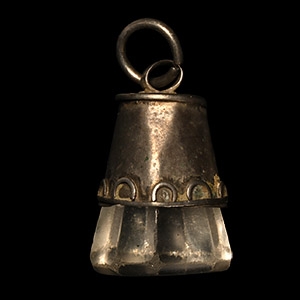
Byzantine Rock Crystal Stamp Seal in Silver Pendant with Military Saint on Horseback
Circa 6th-7th century A.D.Estimate: £3,000 - 4,000 (+bp*)
Opening Bid: £1,500
With a tapering octagonal body, the military saint on horseback holding a long spear, the horse wearing a detailed harness; set in a conical silver frame with suspension loop and crenellated edge. 7.9 grams, 30 mm
From an old New Zealand private collection. Acquired on the New Zealand art market circa 2014. Property of a New Zealand legal professional. Accompanied by an academic report by Dr Raffaele D’Amato. This lot has been checked against the Interpol Database of stolen works of art and is accompanied by search certificate number no.12327-223721.
The motif of a saint on horseback was common in the Romano-Christian culture of the 6th-7th centuries. The figure of a saint symbolised protection of the local church or monastery and its community, and could also be related to the priest leader of the community, as their personal seal. -
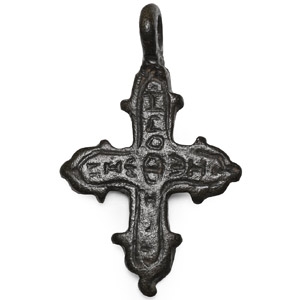
Byzantine Bronze Inscribed Cross Pendant
12th-14th century A.D.Sold for (Inc. bp): £156
Comprising a flat-section body and integral suspension loop, Greek inscription to the upper face. 3.74 grams, 32 mm
Ex German art market, 2000s. Acquired from an EU collector living in London. From the collection of Surrey, UK, gentleman. -
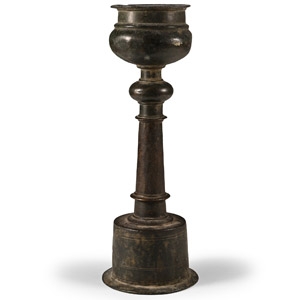
Byzantine Bronze Oil Lamp Stand
12th-13th century A.D.Sold for (Inc. bp): £715
Comprising a hollow drum-shaped base with flange rim, tapering stem with raised collars, broad bowl with raised neck and gusseted rim. 659 grams, 25 cm
Ex London, UK, gallery, 1971-early 2000s. London, UK, collection.
