
Loading, please wait...
LOT 0756
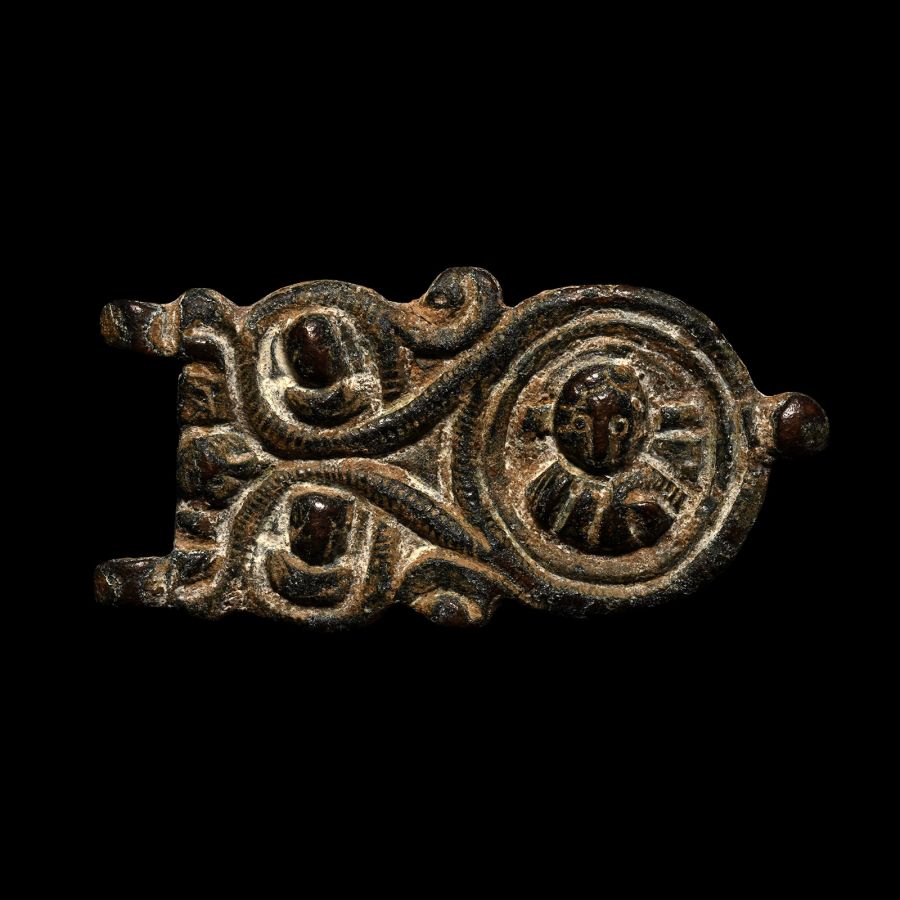
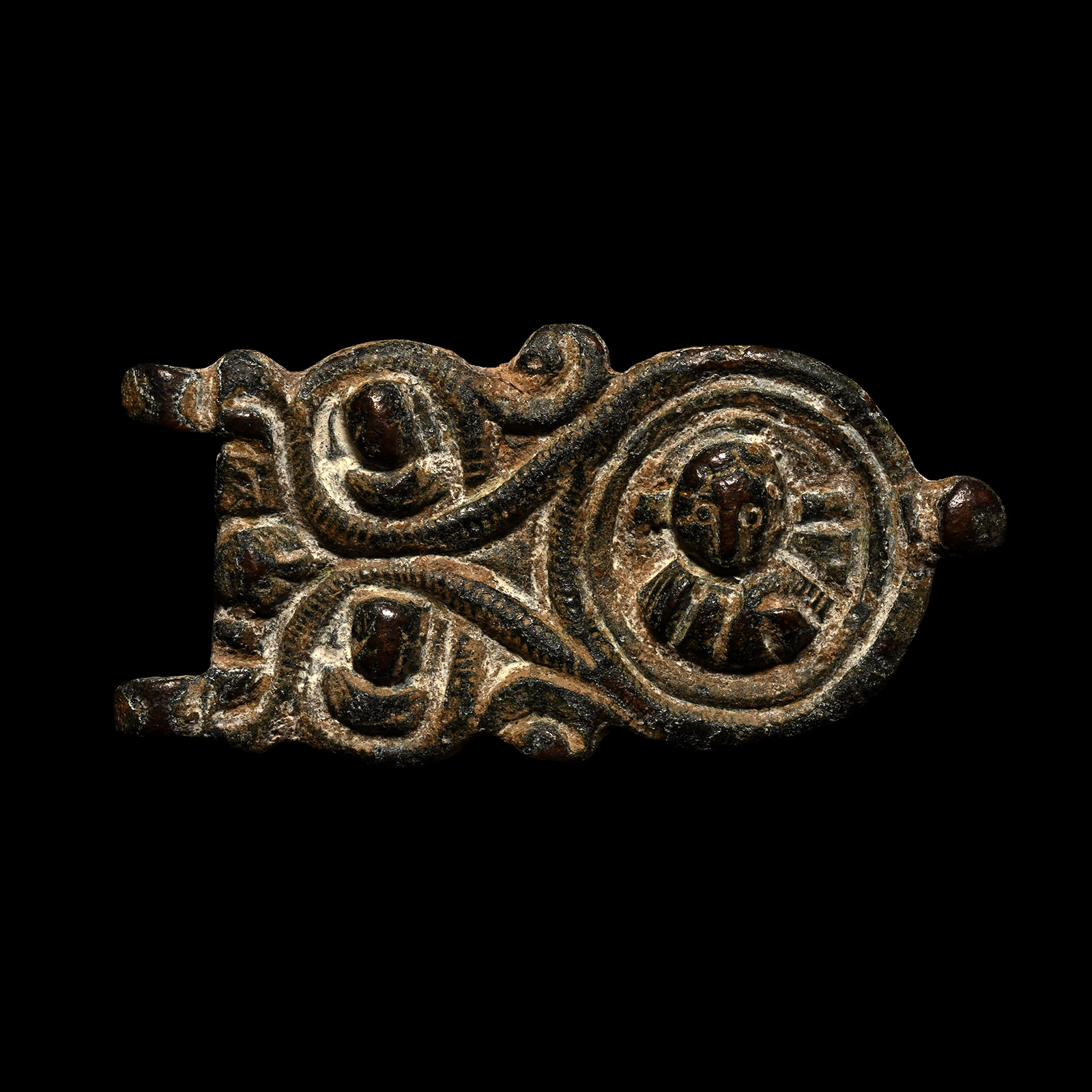
Byzantine Bronze Buckle Plate with Christ and Saints
CIRCA 6TH CENTURY A.D.
1 1/2 in. (13.5 grams, 40 mm).
Comprising tongue-shaped plaque with three low-relief busts within scrollwork; two pierced lugs on the reverse. [No Reserve]
ProvenanceFrom a 1990s collection.
Property of an Essex gentleman.
Cf. Baldini Lippolis, I., L’oreficeria nell’Impero di Costantinopoli fra il IV e il VII secolo (Goldsmithing in the Empire of Constantinople between the 4th and 7th centuries), Bari, 1999, figs.17-19, p.231, for parallels.
FootnotesThe type belongs to the group of buckles with internal clipeus, according to Baldini-Lippolis. The ‘clipei’ of the belt buckles with figurative motifs show a rather summary rendering of the subjects, which were mainly created by impressing and engraving. Our buckle has a notable parallel with a similar specimen from Baltimore, with a bust of Christ on the clipeus.
CONDITIONTimeLine Auctions follows a vetting process to ensure the authenticity and legality of all items, reinforcing our commitment to integrity and responsible trading. Each antiquity, antique, and coin lot undergoes thorough examination by a vetting committee of at least ten external specialists, professional trade association members, scientists, and archaeologists: Our Vetting Process
AUCTIONS:
TimeLine is a leading auction house specialising in antiquities, ancient art, collectables, natural history, coins, medals, and books. Our auctions offer museums, collectors, historians, and enthusiasts the opportunity to acquire unique and historically significant pieces.
-
Byzantine Terracotta Slipper Oil Lamp with Head of a Goddess
5th-8th century A.D.Sold for (Inc. bp): £124
With a large sub circular filling hole and a narrow channel running towards the nozzle; stylised animal motifs and linear decoration to the body; the integral handle formed as the head of a goddess with rounded face and curly hair; low basal ring from which raised tendrils radiate. 79 grams, 11.6 cm
Acquired before 1990s/early 2000s. From the family collection of Jack Lyttle (1944-2023), Kilmacolm, Scotland; thence by descent to his granddaughter. Property of an East Sussex, UK, gentleman. -
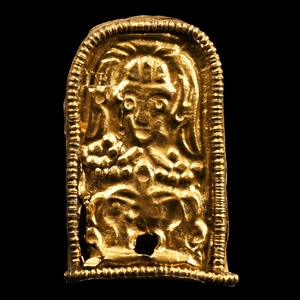
Byzantine Gold Strap End with Facing Figure
Circa 9th-10th century A.D.Estimate: £600 - 800 (+bp*)
Opening Bid: £320
The hollow-formed, tongue-shaped body adorned with a filigree border, repoussé figure with pellets on the torso and serpents framing the head. 7.40 grams, 39 mm
Acquired 1990s-early 2000s. East Anglian private collection. -
.jpg)
Byzantine Bronze Ring with 'Globus Cruciger' Gemstone
Circa 6th-8th century A.D.Sold for (Inc. bp): £221
With narrow, flat-bottomed hoop and tapering shoulders, inset garnet cabochon with 'globus cruciger' motif. 4.75 grams, 24.93 mm overall, 17.59 mm internal diameter (approximate size British M 1/2, USA 6 1/4, Europe 13.09, Japan 12)
Acquired on the German art market before 2000. Property of a Surrey, UK, collector.
The globus cruciger comprises a sphere surmounted by a cross potent, symbolising the domination of the world by Christianity.
