
Loading, please wait...


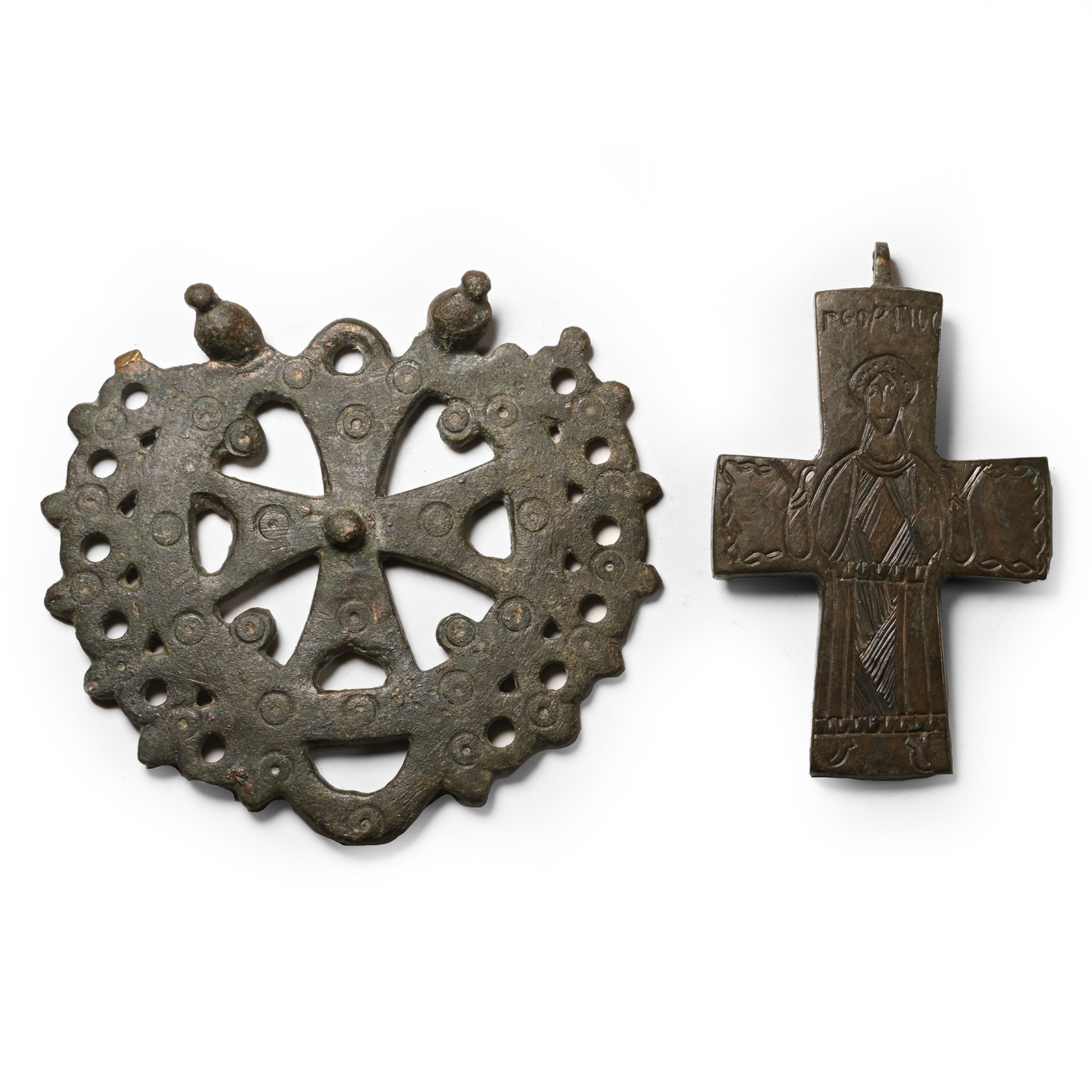
LOT 1060
Byzantine Bronze Artefact Group
6TH-11TH CENTURY A.D.
3 1/4 - 3 3/4 in. (188 grams total, 84-95 mm).
Comprising: front cover of an enkolpion with robed figure in orans pose, legend 'ΓΕΟΡΓΙΟC' (St. George) above; censer cover or horse phalera with openwork design, expanding-arm cross within an arc with ring-and-dot motifs, poppy-head lugs, suspension loop. [2]
ProvenanceFrom the private collection of Mr K.A., acquired in the 1990s-early 2000s.
This lot is accompanied by an illustrated lot declaration signed by the Head of the Antiquities Department, Dr Raffaele D'Amato.
Cf. a similar cross in Wamser, L., Die Welt von Byzanz - Europas Östliches Erbe, München, 2004, items 165, 166, 168, for type.
CONDITIONTimeLine Auctions follows a vetting process to ensure the authenticity and legality of all items, reinforcing our commitment to integrity and responsible trading. Each antiquity, antique, and coin lot undergoes thorough examination by a vetting committee of at least ten external specialists, professional trade association members, scientists, and archaeologists: Our Vetting Process
AUCTIONS:
TimeLine is a leading auction house specialising in antiquities, ancient art, collectables, natural history, coins, medals, and books. Our auctions offer museums, collectors, historians, and enthusiasts the opportunity to acquire unique and historically significant pieces.
-
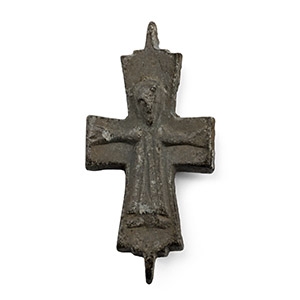
Byzantine Bronze Reliquary Cross Pendant Plate
10th-14th century A.D.Sold for (Inc. bp): £85
An enkolpion plate with low-relief Corpus Christi figure, remains of hinge loops above and below. 5.8 grams, 45 mm
Ex German art market, 2000s. Acquired from an EU collector living in London. From the collection of a Surrey, UK, gentleman. This lot is accompanied by an illustrated lot declaration signed by the Head of the Antiquities Department, Dr Raffaele D'Amato. -
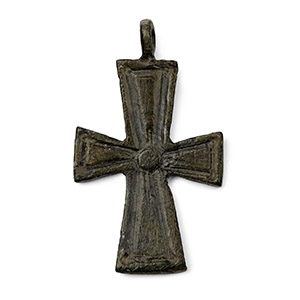
Byzantine Bronze Cross Pendant
10th-14th century A.D.Sold for (Inc. bp): £169
Expanding arms with grooved borders, central pellet and integral suspension loop. 5.44 grams, 38 mm
Ex German art market, 2000s. Acquired from an EU collector living in London. From the collection of a Surrey, UK, gentleman. This lot is accompanied by an illustrated lot declaration signed by the Head of the Antiquities Department, Dr Raffaele D'Amato. -
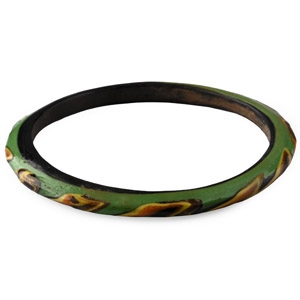
Byzantine Period Glass Bangle
8th-12th century A.D.Sold for (Inc. bp): £91
D-shaped in section with green mosaic band to the upper face of the outer edge, marvered trail with red and yellow, undulating profile. 30.9 grams, 93 mm
Ex property of a London collector; acquired 1960s. Property of a North London, UK, lady. This lot is accompanied by an illustrated lot declaration signed by the Head of the Antiquities Department, Dr Raffaele D'Amato.
