
Loading, please wait...
LOT 0858
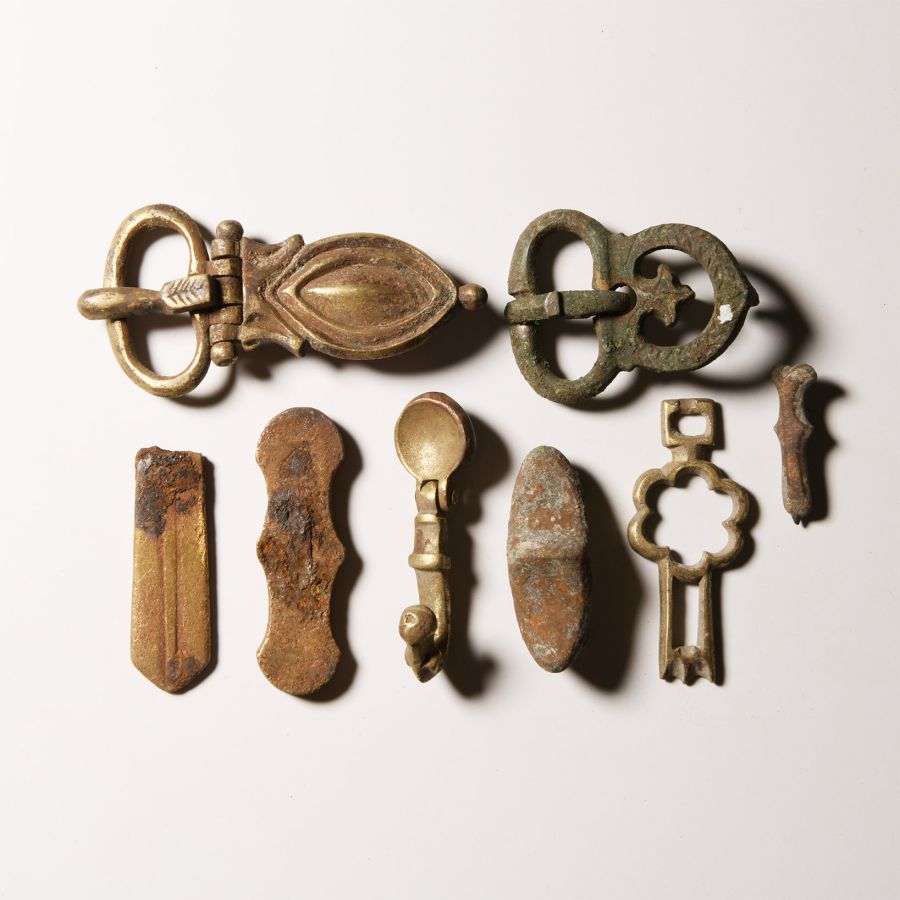
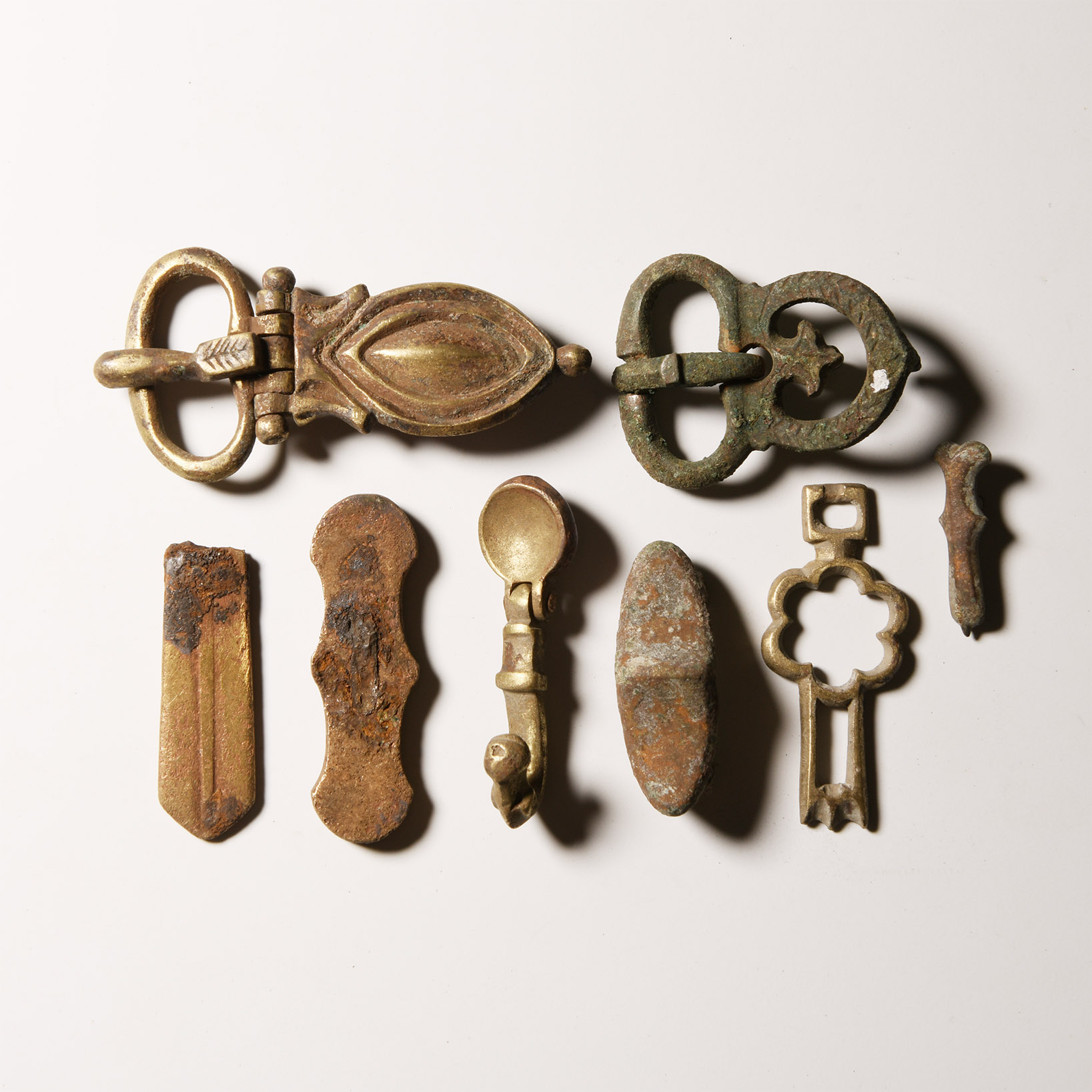
Byzantine Bronze Artefact Collection
6TH CENTURY A.D. OR LATER
1 1/8 - 2 3/4 in. (115 grams total, 28-71 mm).
Mainly comprising ornamental buckles and mounts, including openwork and zoomorphic examples. [8, No Reserve]
ProvenanceAcquired in London in 1982.
Property of a central London gentleman.
TimeLine Auctions follows a vetting process to ensure the authenticity and legality of all items, reinforcing our commitment to integrity and responsible trading. Each antiquity, antique, and coin lot undergoes thorough examination by a vetting committee of at least ten external specialists, professional trade association members, scientists, and archaeologists: Our Vetting Process
AUCTIONS:
TimeLine is a leading auction house specialising in antiquities, ancient art, collectables, natural history, coins, medals, and books. Our auctions offer museums, collectors, historians, and enthusiasts the opportunity to acquire unique and historically significant pieces.
-
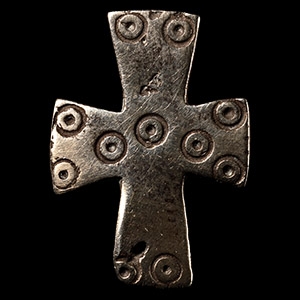
Byzantine Silver Cross Brooch
Circa 6th-7th century A.D.Sold for (Inc. bp): £182
Shaped as an equal-armed cross, surface decorated with pellet-in-circles, catch and fastening pin on the back; polished. 5.27 grams, 28 mm
Acquired on the UK art market. Property of a Ruislip, UK, gentleman, by inheritance.
The cross fibulae was part of a Roman female costume in the Mediterranean and in the regions around the Mediterranean. They were used to close the cloak at chest height. -
.jpg)
Byzantine Gold and Crystal Seal Pendant
6th-7th century A.D. or laterSold for (Inc. bp): £2,860
Composed of a tapering octagonal body, intaglio image of a robed and winged figure of Archangel Michael standing left, holding a Christian cross to base, granulated gold frame with suspension loop. 9.27 grams, 29 mm
From the collection of a North American gentleman, formed in the 1990s. This lot has been checked against the Interpol Database of stolen works of art and is accompanied by search certificate number no.11864-200658.
The Roman motif of winged Victory bearing a laurel wreath was slowly replaced with the image of Archangel Michael carrying the victory cross when the Roman Empire converted to Christianity. -
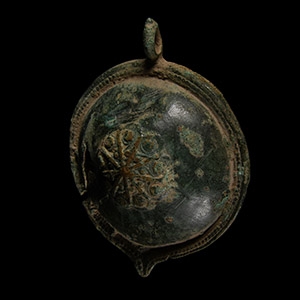
Byzantine Bronze Horse Harness Boss Pendant
15th century A.D.Sold for (Inc. bp): £78
Large domed centre with low-relief sun wheel design, pellets to the rim and suspension loop above. 28.6 grams, 75 mm
From the collection of a North American gentleman, formed in the 1990s.
In the late period of Byzantium, round-shaped buckles and horse harness mounts were often decorated with beaded edges and with floral embossed ornaments, under the influence of the Ottoman Turks. They have the shape of a small shield and impressed decoration of a rose. If belt appliques, they have an extra boss for attachment, instead of the loop usually attached to the horse harness pendants.
