
Loading, please wait...
LOT 1504
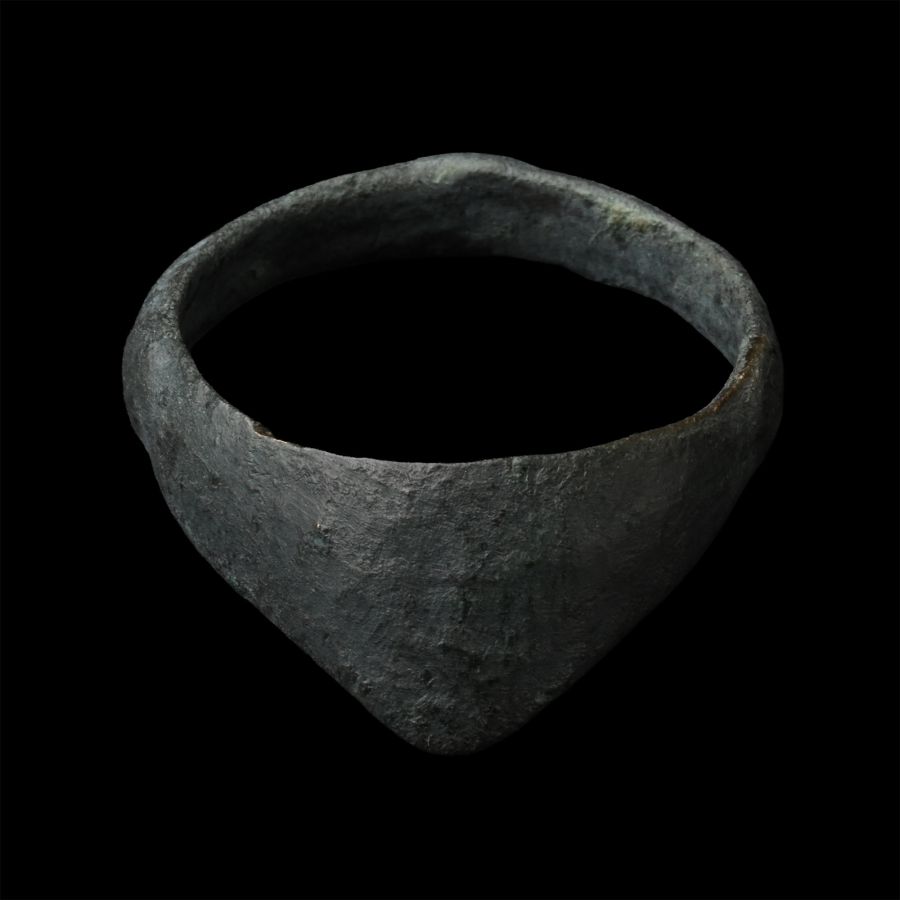
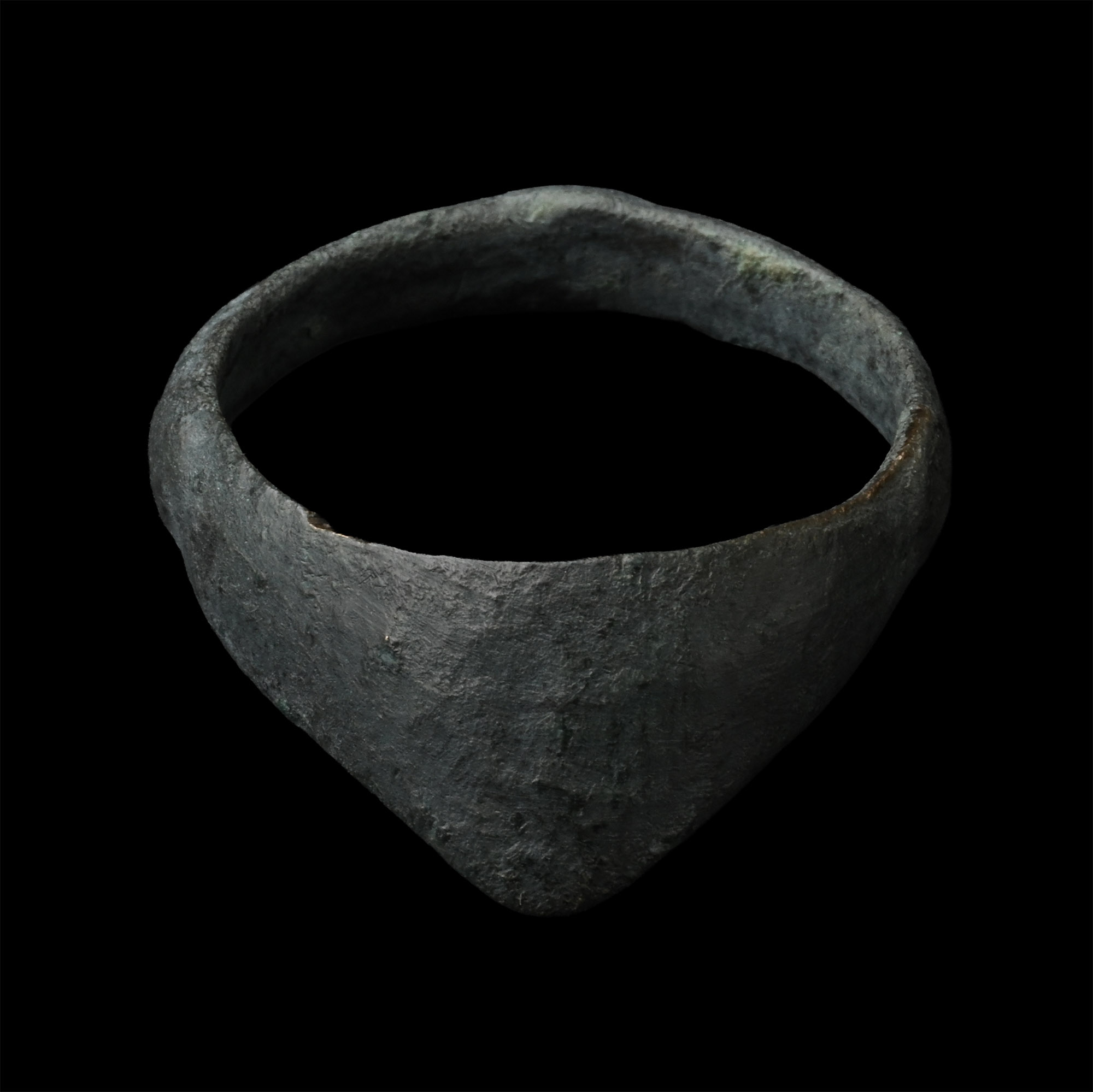
Byzantine Bronze Archer's Thumb Ring
CIRCA 6TH-8TH CENTURY A.D.
1 3/8 in. (6.10 grams, 34.93 mm overall, 24.32 x 24.43 mm internal diameter (approximate size British Z+5, USA 14 3/4, Europe 35.08, Japan 33)).
With narrow triangular flange and three raised bosses to the hoop. [No Reserve]
ProvenanceEx German art market, 2000s.
Acquired from an EU collector living in London.
From the collection of a Surrey, UK, gentleman.
TimeLine Auctions follows a vetting process to ensure the authenticity and legality of all items, reinforcing our commitment to integrity and responsible trading. Each antiquity, antique, and coin lot undergoes thorough examination by a vetting committee of at least ten external specialists, professional trade association members, scientists, and archaeologists: Our Vetting Process
AUCTIONS:
TimeLine is a leading auction house specialising in antiquities, ancient art, collectables, natural history, coins, medals, and books. Our auctions offer museums, collectors, historians, and enthusiasts the opportunity to acquire unique and historically significant pieces.
LOT 1504
Byzantine Bronze Archer's Thumb Ring
Estimate £40 - 60€46 - 70 (for guidance only)$54 - 81 (for guidance only)
Opening Bid
£5 (EUR 6; USD 7) +BP*
-
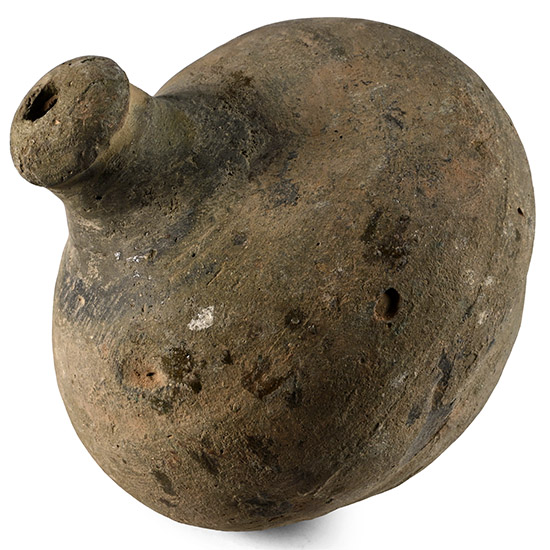
Byzantine 'Greek Fire' Ceramic Fire Bomb or Hand Grenade
9th-11th century A.D.Estimate: £70 - 90 (+bp*)
Opening Bid: £5
Biconical body with rounded base and domed filler hole; intended to be filled with explosive liquid and a wick, and used as a hand grenade. 502 grams, 97 mm
Ex important collection of weaponry, London, UK, 1980-1990s. Accompanied by an academic paper by military specialist Dr Raffaele D'Amato, dated 15 July 2019 and titled 'Eastern Roman Empire - Greek Fire Bomb or Hand Grenade (μεσαίον kακάβιον) 9th-11th century AD'.
Apart from the use of siphons or manual flame-throwers called cheirosiphona, special corps of Roman soldiers employed terracotta grenades, in the form of small jars, abundantly evidenced in archaeological excavations. They were called μεσαία kακαβιά or κυτροκακάβια, where the former had a bulbous shape and the latter a more cylindrical form. -
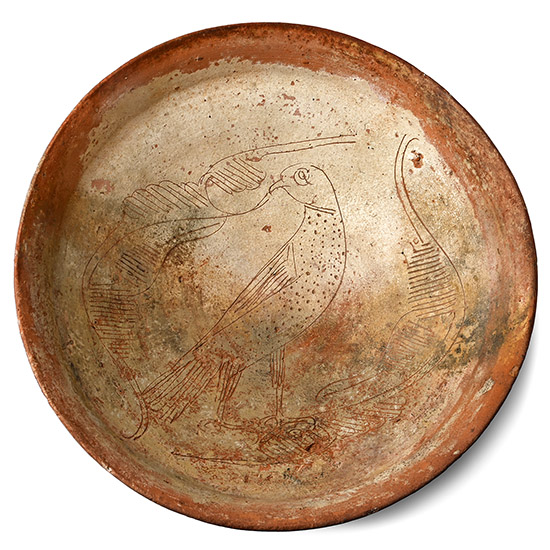
Byzantine Terracotta Sgrafitto Dish with a Falcon Among Leafy Branches
Perhaps Corinth, mid-12th century A.D.Estimate: £500 - 700 (+bp*)
Opening Bid: £5
Broad and squat with carination to the exterior face, and a broad foot ring; cream glaze with sgraffito design of a delineated falcon in profile, surrounded by leafy branches and holding one of the branches in its hooked beak. 1.04 kg, 26.3 cm
Private collection (L.v.L.), Rhineland-Pfalz, Germany, acquired between 1960s-1980s.
In the Byzantine Empire, and even more so in the Islamic world, hunting falcons were a symbol of wealth and high status. The spectrum of designs in which they are to be found on 12th-century Byzantine pottery, in particular, offers a forceful testament both to the cultural reach of such vessels during the period and to the skill of the potters who were able to produce large numbers of beautifully worked slipware vessels destined for marine trade. The present example is likely to have been discovered in the late 1960's, when it is thought a 12th-century shipwreck laden with slipware vessels was excavated off the coast of Izmir. -
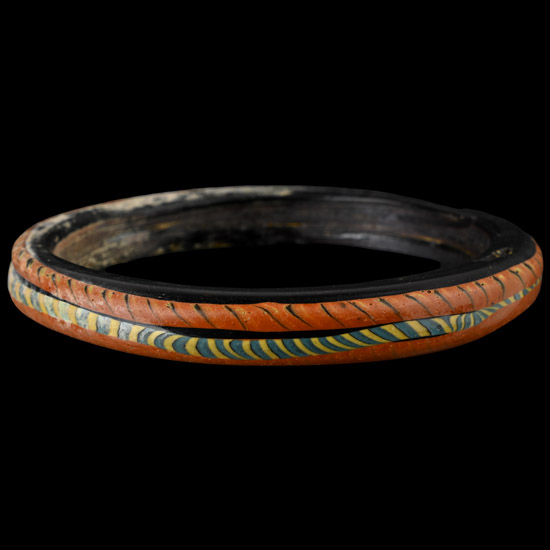
Byzantine Period Mosaic Glass Bangle
Circa 8th-12th century A.D.Estimate: £60 - 80 (+bp*)
Opening Bid: £5
Square-section hoop from black glass with orange, yellow and blue bands to the outer face. 60.3 grams, 95 mm
From the collection of a gentleman born in the late 19th century, formed 1940s-1970s. From an old Staffordshire family collection; thence by descent.
