
Loading, please wait...
LOT 0872
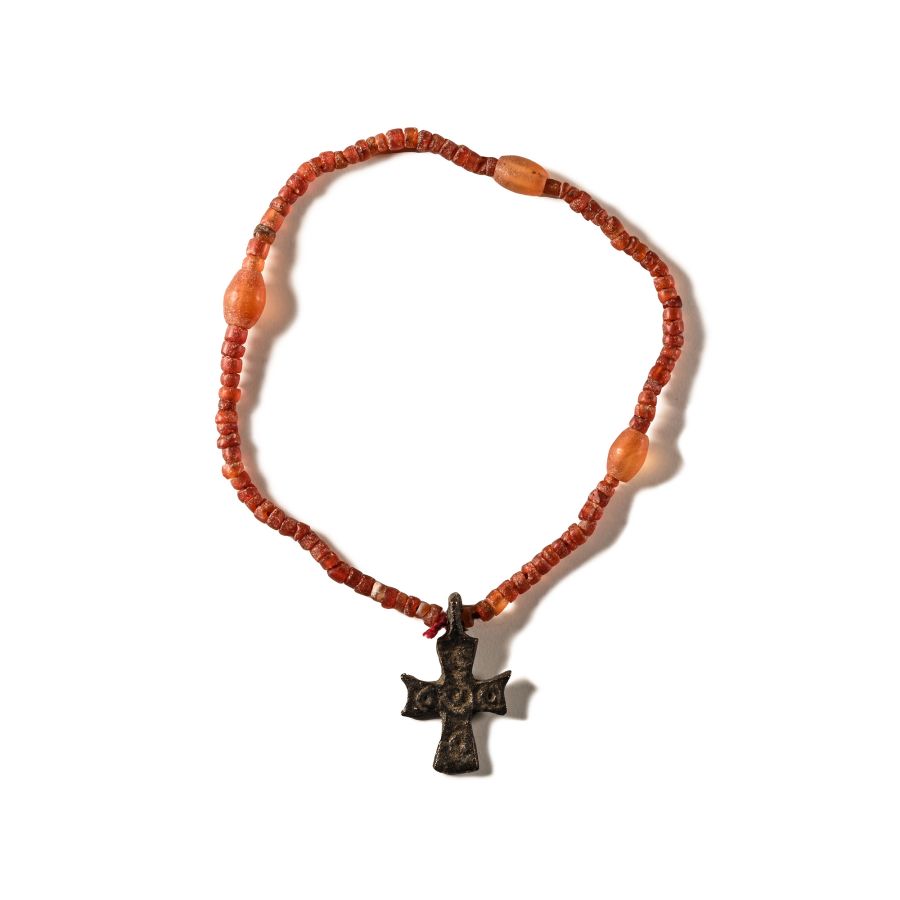
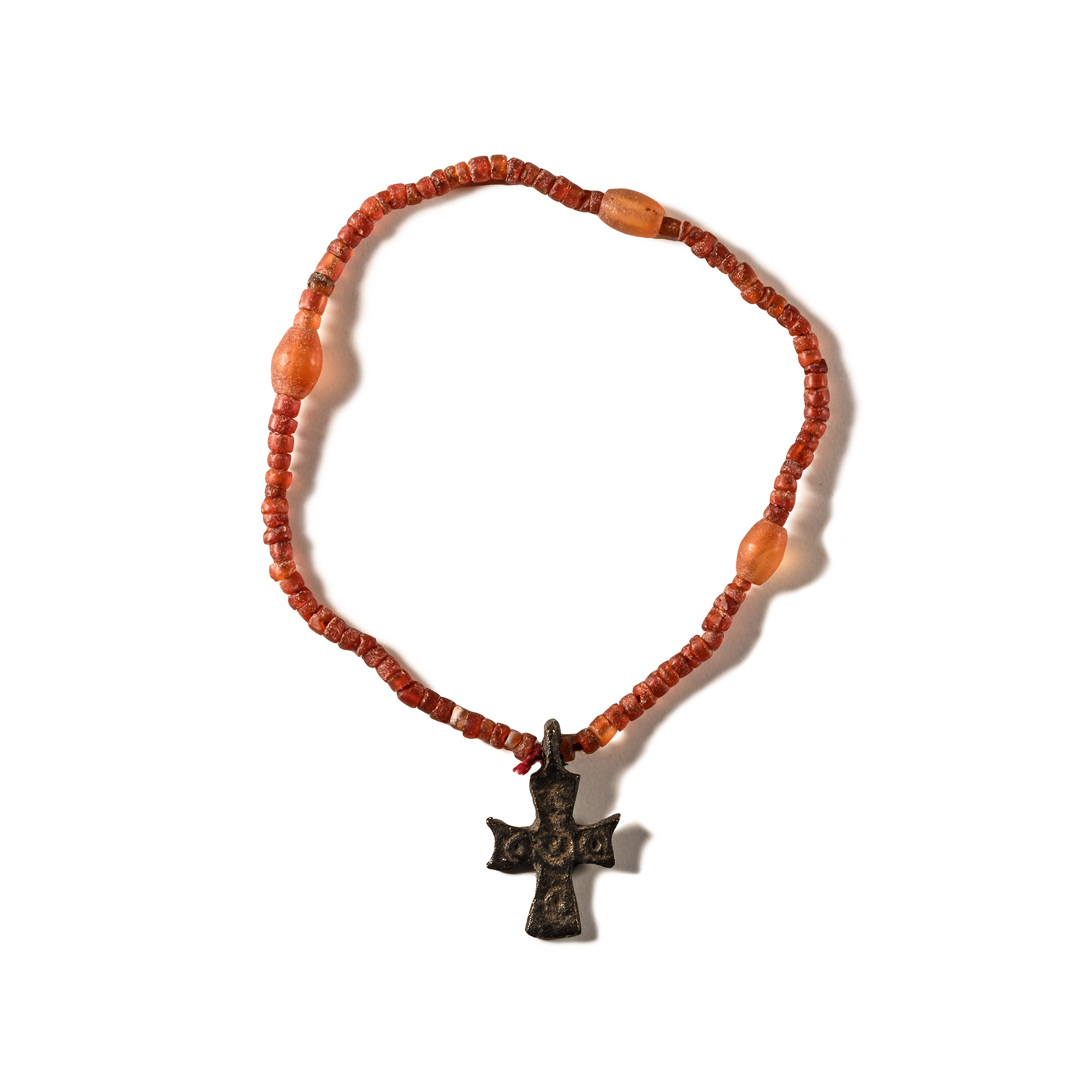
Byzantine Bead Bracelet with Cross
15TH CENTURY A.D. OR EARLIER
7 1/8 in. (4.28 grams, 18 cm long).
Restrung; composed of annular and biconvex carnelian beads, together with a bronze Christian cross with the Five Wounds of Christ represented as ring-and-dot ornament. [No Reserve]
ProvenanceAcquired 1980-2015.
Ex Abelita family collection.
TimeLine Auctions follows a vetting process to ensure the authenticity and legality of all items, reinforcing our commitment to integrity and responsible trading. Each antiquity, antique, and coin lot undergoes thorough examination by a vetting committee of at least ten external specialists, professional trade association members, scientists, and archaeologists: Our Vetting Process
AUCTIONS:
TimeLine is a leading auction house specialising in antiquities, ancient art, collectables, natural history, coins, medals, and books. Our auctions offer museums, collectors, historians, and enthusiasts the opportunity to acquire unique and historically significant pieces.
-
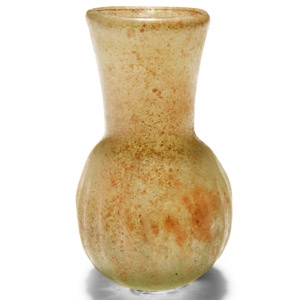
Byzantine Ribbed Glass Cosmetic Bottle
Circa 5th-6th century A.D.Sold for (Inc. bp): £78
The translucent globular body with raised ribs running vertically around the equator, with everted neck and mouth. 29 grams, 72 mm
Ex Coincraft, London WC1. Ex private Merseyside, UK, collection. Accompanied by a Coincraft certificate of authenticity. -
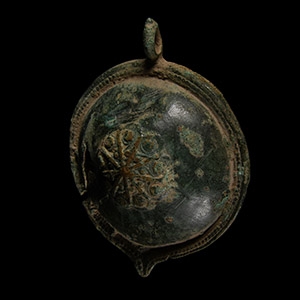
Byzantine Bronze Horse Harness Boss Pendant
15th century A.D.Sold for (Inc. bp): £78
Large domed centre with low-relief sun wheel design, pellets to the rim and suspension loop above. 28.6 grams, 75 mm
From the collection of a North American gentleman, formed in the 1990s.
In the late period of Byzantium, round-shaped buckles and horse harness mounts were often decorated with beaded edges and with floral embossed ornaments, under the influence of the Ottoman Turks. They have the shape of a small shield and impressed decoration of a rose. If belt appliques, they have an extra boss for attachment, instead of the loop usually attached to the horse harness pendants. -
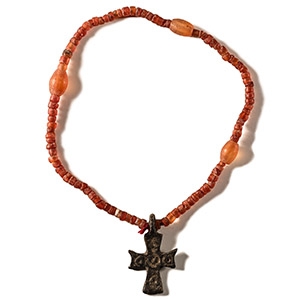
Byzantine Bead Bracelet with Cross
15th century A.D. or earlierSold for (Inc. bp): £169
Restrung; composed of annular and biconvex carnelian beads, together with a bronze Christian cross with the Five Wounds of Christ represented as ring-and-dot ornament. 4.28 grams, 18 cm long
Acquired 1980-2015. Ex Abelita family collection.
