
Loading, please wait...
LOT 0866
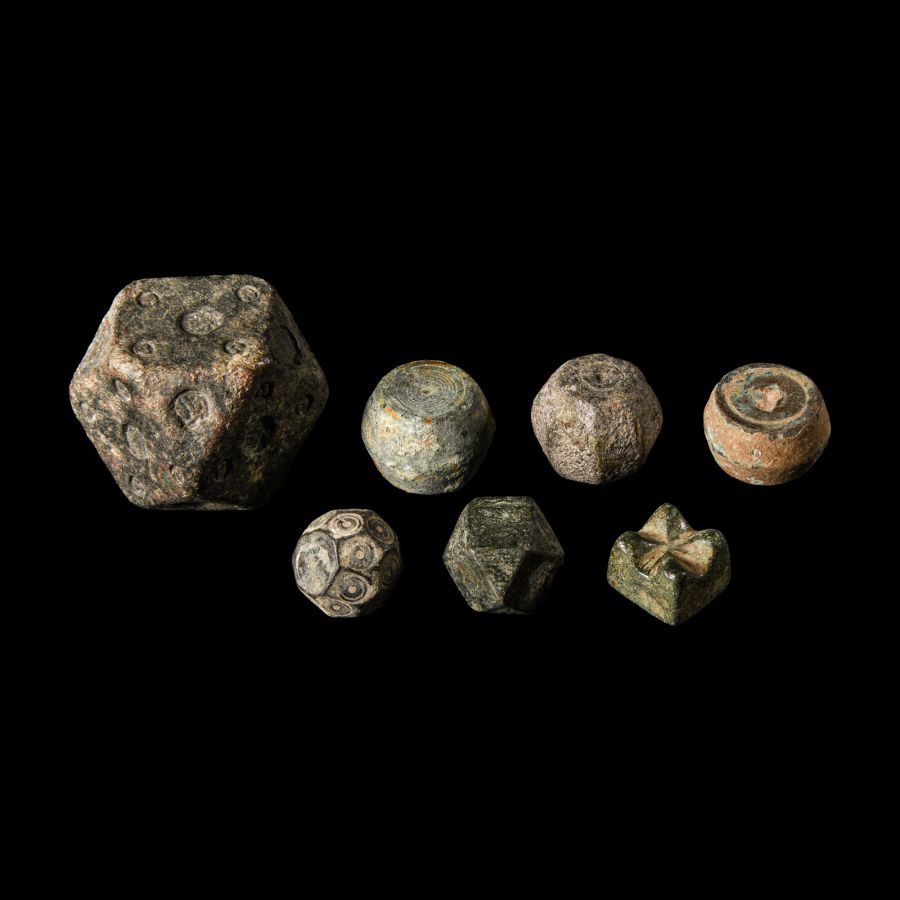
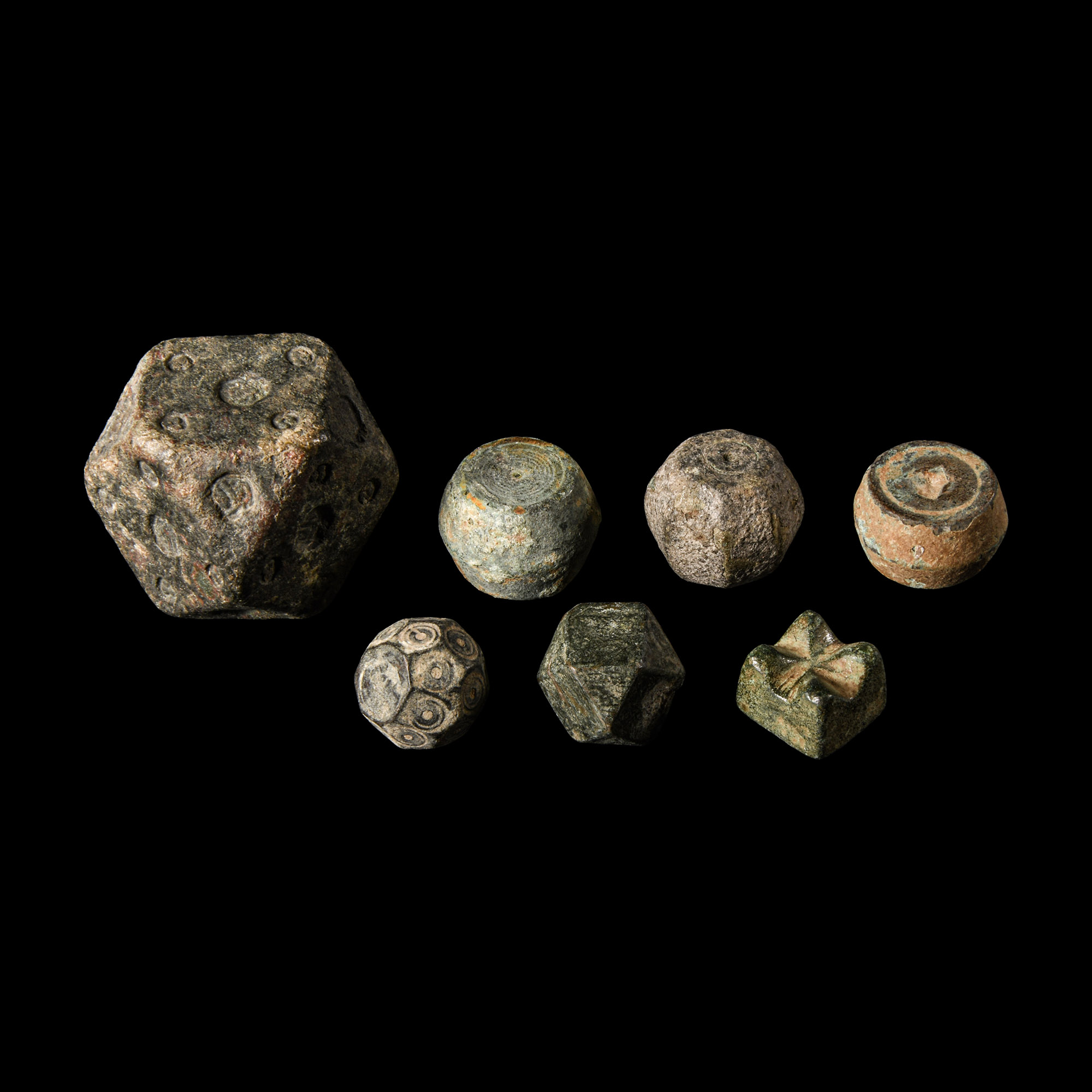
Byzantine and Other Bronze Weight Collection
8TH-12TH CENTURY A.D.
1/2 - 1 1/8 in. (270 grams total, 13-28 mm).
Comprising weights of various sizes and shapes, and bearing a variety of markings: ring-and-dot motifs, a cross; dimples. [7, No Reserve]
ProvenanceEx Simmons Gallery, London E11, UK, in the 1990s.
From a North London collection.
TimeLine Auctions follows a vetting process to ensure the authenticity and legality of all items, reinforcing our commitment to integrity and responsible trading. Each antiquity, antique, and coin lot undergoes thorough examination by a vetting committee of at least ten external specialists, professional trade association members, scientists, and archaeologists: Our Vetting Process
AUCTIONS:
TimeLine is a leading auction house specialising in antiquities, ancient art, collectables, natural history, coins, medals, and books. Our auctions offer museums, collectors, historians, and enthusiasts the opportunity to acquire unique and historically significant pieces.
-
.jpg)
Byzantine Gold and Crystal Seal Pendant
6th-7th century A.D. or laterSold for (Inc. bp): £2,860
Composed of a tapering octagonal body, intaglio image of a robed and winged figure of Archangel Michael standing left, holding a Christian cross to base, granulated gold frame with suspension loop. 9.27 grams, 29 mm
From the collection of a North American gentleman, formed in the 1990s. This lot has been checked against the Interpol Database of stolen works of art and is accompanied by search certificate number no.11864-200658.
The Roman motif of winged Victory bearing a laurel wreath was slowly replaced with the image of Archangel Michael carrying the victory cross when the Roman Empire converted to Christianity. -
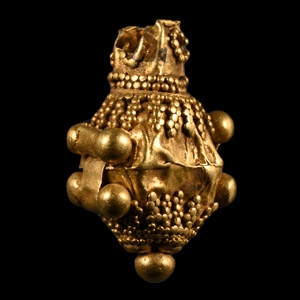
Byzantine Gold Filigree Finial
6th-14th century A.D.Estimate: £250 - 350 (+bp*)
Opening Bid: £125
Of hollow, bulbous form, now slightly squashed, four pellets to each side and an apex pellet, granule clusters to both hemispheres, socket to base with roughly square-shaped cross-section, three circular attachment piercings with granulated borders. 2.47 grams, 17 mm
From a late Japanese specialist collector, 1970-2000s. -
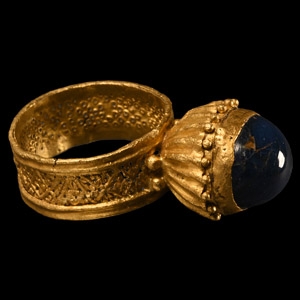
Byzantine Gold Ring with Sapphire
5th-6th century A.D.Estimate: £1,800 - 2,400 (+bp*)
Opening Bid: £1,000
Flat-section hoop displaying geometric pierced work between raised bands, fluted hemispherical bezel adorned with granules and set with possibly a later polished cabochon sapphire. 8.66 grams, 33.78 mm overall, 16.94 mm internal diameter (approximate size British M 1/2, USA 6 1/4, Europe 13.09, Japan 13)
Acquired 1990s-early 2000s. East Anglian private collection. This lot has been checked against the Interpol Database of stolen works of art and is accompanied by search certificate no.201084.
