
Loading, please wait...
LOT 0182
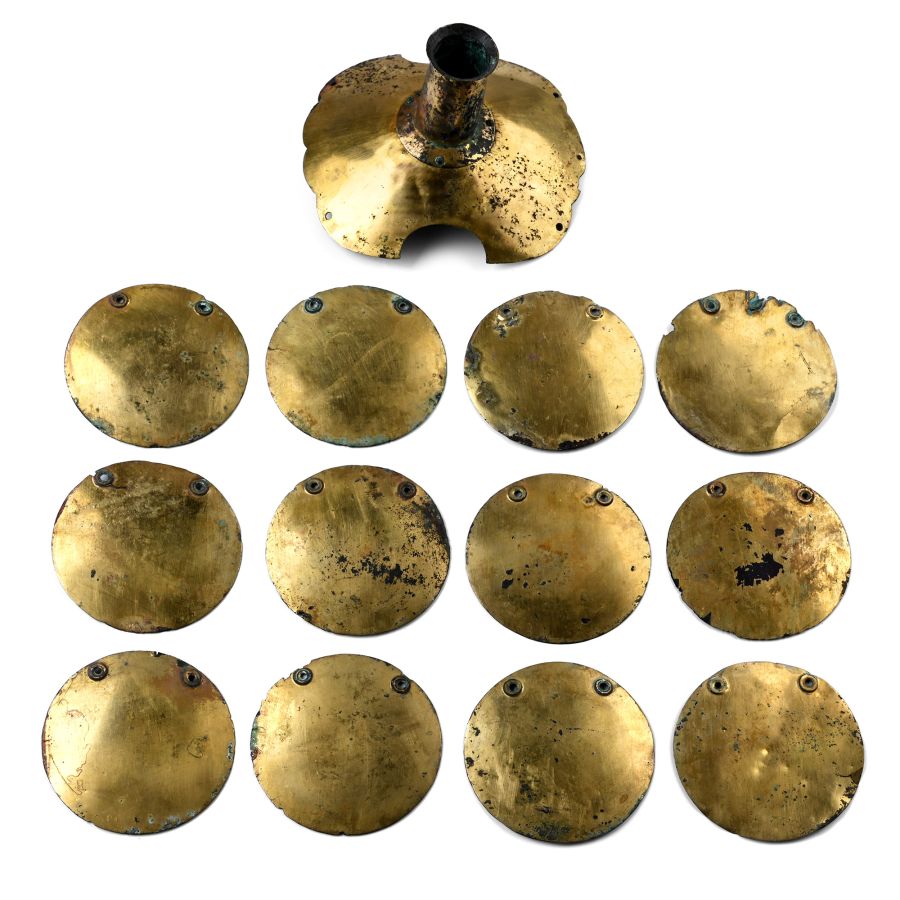
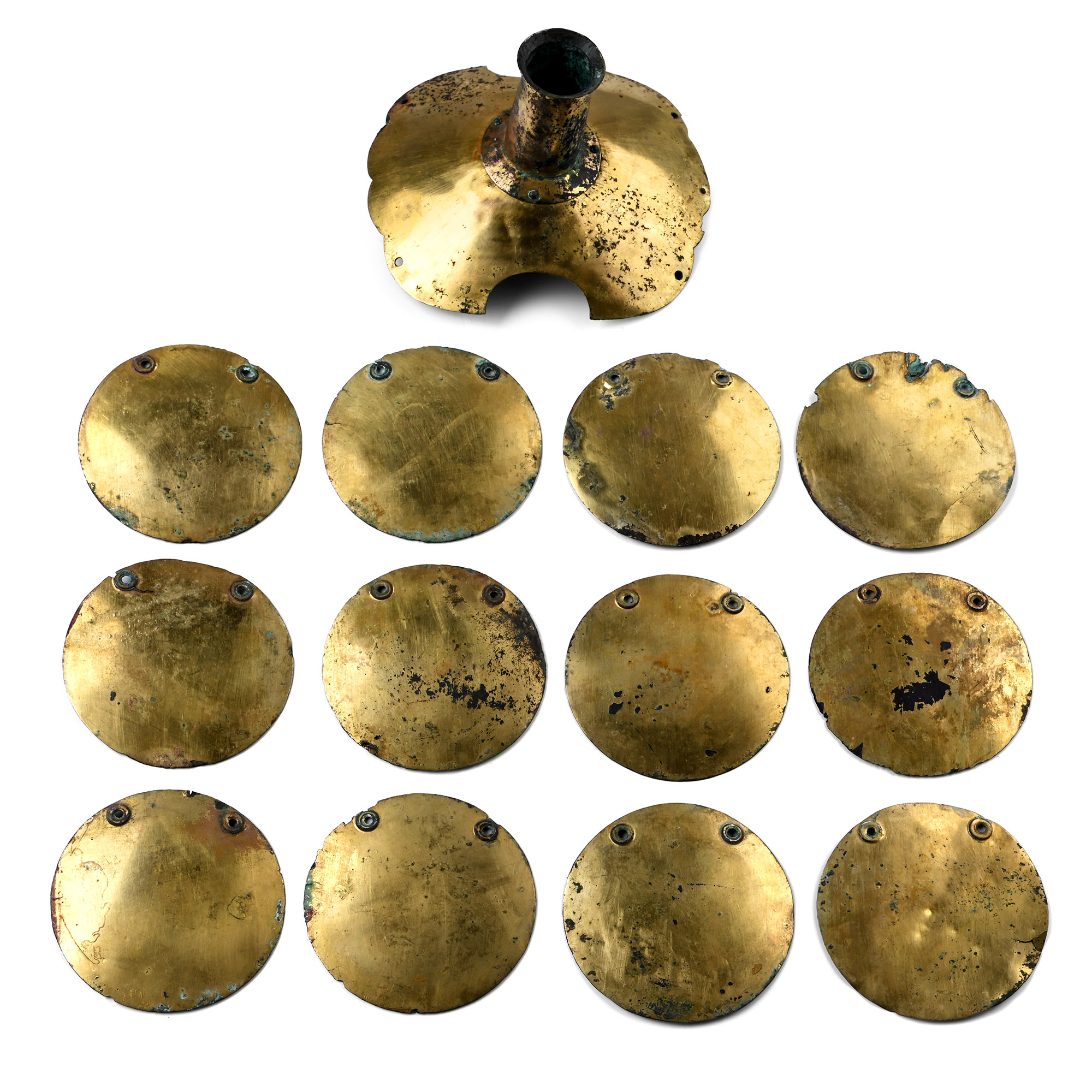
Byzantine Age Gilt Bronze Horse Bridle Decoration Group
9TH-10TH CENTURY A.D.
3 1/4 - 5 1/4 in. (357 grams total, 8.2-13.3 cm).
Comprising: a domed cap with lateral scoops and attachment holes to the edges, a central applied tapering tube with flared rim; twelve gently domed disc-scales with two attachment points. [13, No Reserve]
ProvenanceFrom the private collection of a London gentleman, from his grandfather's collection formed before the early 1970s.
LiteratureCf. Gorelik, M., ‘Arms and Armour in South-Eastern Europe in the Second Half of the First Millennium AD’ in Nicolle, D., Companion to Medieval Arms and Armour, Woodbridge, 2002, pp.127-148, for type.
FootnotesThe cap is provided with a plume-holder and two lateral slots for the ears; the scales decorate the rest of the bridle or harness.
CONDITIONTimeLine Auctions follows a vetting process to ensure the authenticity and legality of all items, reinforcing our commitment to integrity and responsible trading. Each antiquity, antique, and coin lot undergoes thorough examination by a vetting committee of at least ten external specialists, professional trade association members, scientists, and archaeologists: Our Vetting Process
AUCTIONS:
TimeLine is a leading auction house specialising in antiquities, ancient art, collectables, natural history, coins, medals, and books. Our auctions offer museums, collectors, historians, and enthusiasts the opportunity to acquire unique and historically significant pieces.
LOT 0182
Byzantine Age Gilt Bronze Horse Bridle Decoration Group
Sold for (Inc. bp): £650
-
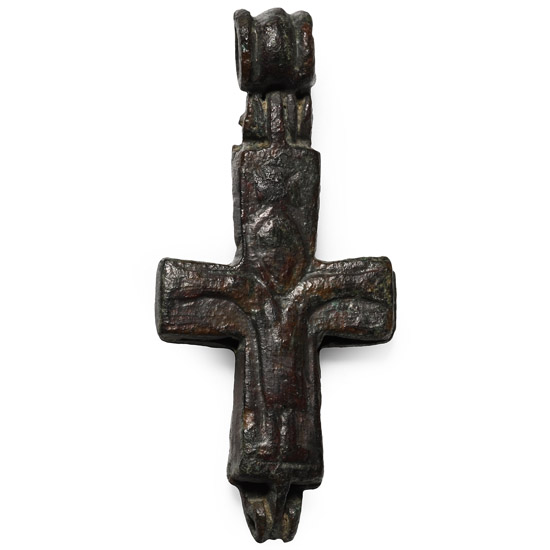
Byzantine Bronze Reliquary Cross Pendant
Circa 10th-12th century A.D.Sold for (Inc. bp): £208
Enkolpion with hinged loop, nimbate figure in orans pose to obverse, Corpus Christi with a small cross above the head to reverse. 12.26 grams, 49 mm
Ex German art market, 2000s. Acquired from an EU collector living in London. From the collection of a Surrey, UK, gentleman. -
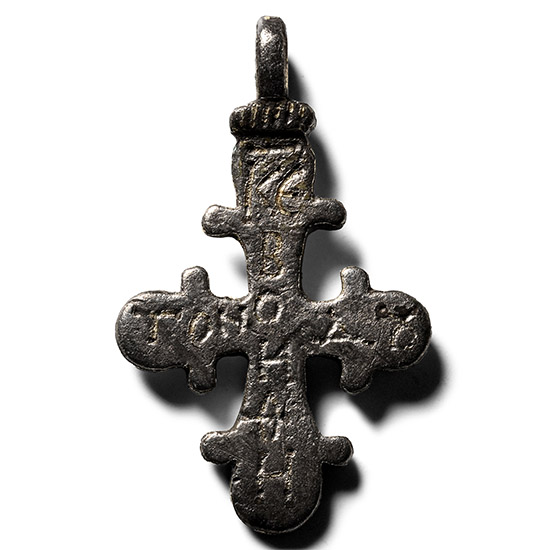
Byzantine Silver-Gilt Cross Pendant
Circa 9th-12th century A.D.Sold for (Inc. bp): £140
Bifacial cross with lobed finials, gilt Greek inscription on both sides, one side with 'KE BOHΘΗ' placed vertically and 'TON ΔOY[...]' horizontally; the other side with 'ΛON COY CTYΛY' placed vertically, and 'ANON' horizontally; the whole inscription reading: 'KγριΕ BOHΘH TON ΔOYΛON COY CTYΛYANON' = Lord helps your servant Stylianos. 4.52 grams, 34 mm
Ex German art market, 2000s. Acquired from an EU collector living in London. From the collection of a Surrey, UK, gentleman. -
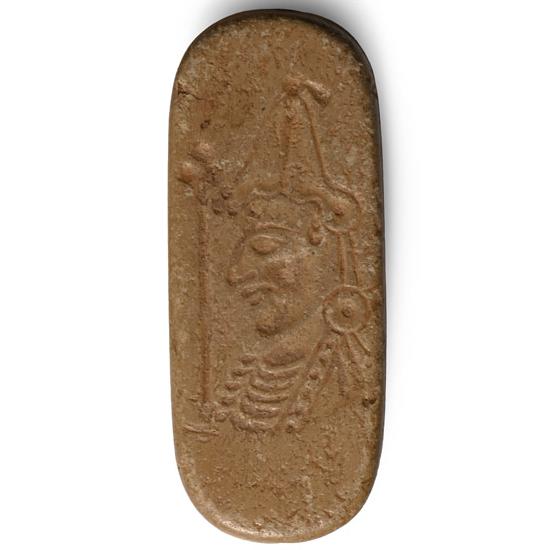
Byzantine Inscribed Bone Plaque
Circa 6th-10th century AD.Sold for (Inc. bp): £117
Obverse with low-relief bust wearing conical headgear, with trefoil sceptre and hatched robe; reverse with legend 'ΚΕΒΟΗΙΤΟ' ('T' inverted). 3.12 grams, 38 mm
Ex Essex gentleman's collection, 2000s.
