
Loading, please wait...

LOT 0963
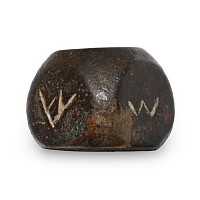
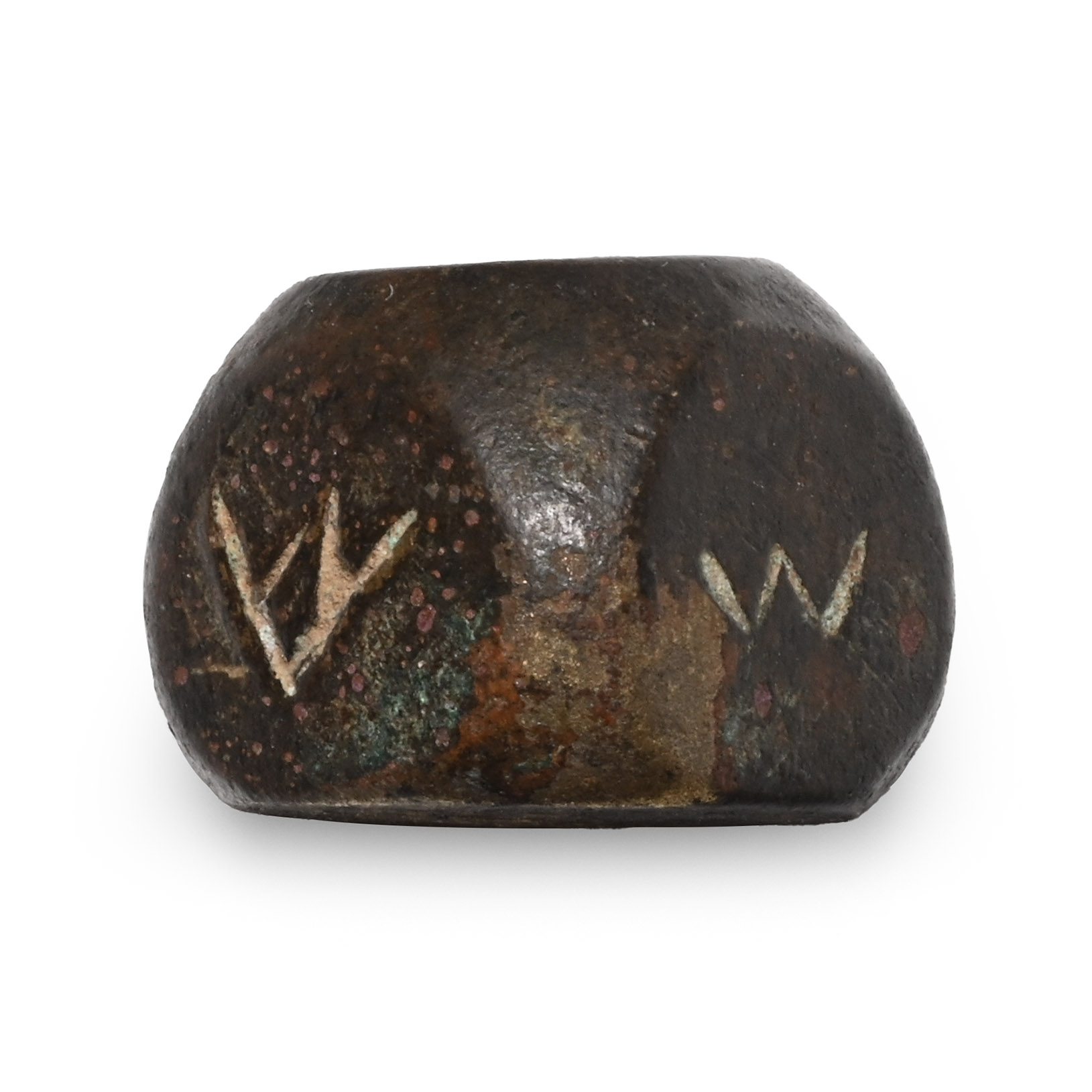
Byzantine AE Three(?) Unciae Weight
CIRCA 5TH-7TH CENTURY A.D.
5/8 in. (26 grams, 16 mm).
In the form of a cube engraved on five sides: ᏌΓ and M and A and X and V. [No Reserve]
ProvenanceFrom the collection of a gentleman, acquired on the London art market in the 1990s.
CONDITIONTimeLine Auctions follows a vetting process to ensure the authenticity and legality of all items, reinforcing our commitment to integrity and responsible trading. Each antiquity, antique, and coin lot undergoes thorough examination by a vetting committee of at least ten external specialists, professional trade association members, scientists, and archaeologists: Our Vetting Process
AUCTIONS:
TimeLine is a leading auction house specialising in antiquities, ancient art, collectables, natural history, coins, medals, and books. Our auctions offer museums, collectors, historians, and enthusiasts the opportunity to acquire unique and historically significant pieces.
-
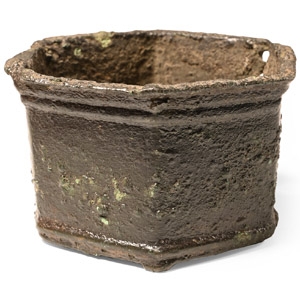
Byzantine Hexagonal Bronze Censer Base
5th-7th century A.D.Sold for (Inc. bp): £130
With flared and stepped rim and foot; pierced for attachment; carbonised accretion within. 194 grams, 80 mm
From a family collection mostly formed in the 1940s-1950s, thence by descent. -
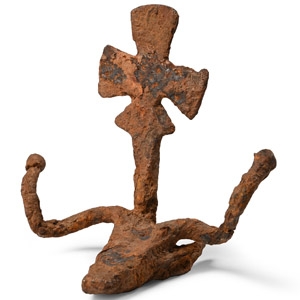
Byzantine Iron Bull-Head Attachment with Cross
5th-8th century A.D.Sold for (Inc. bp): £117
Composed of a stylised bull's head with slender recurved horns and pricked ears, an expanding arm cross emerging from the animal's head on a rectangular arm. 55 grams, 74 mm
with a London, UK gallery, 1971-early 2000s. -
.jpg)
Byzantine Marble Table Top with Roundels
6th-7th century A.D.Estimate: £25,000 - 35,000 (+bp*)
Opening Bid: £12,500
Broad stone disc with band of carved roundels to the border, dished central panel; the border comprising seventeen socket roundels with rosette and tendril ornament between, each roundel with reserved figural or emblematic ornament: an equal-arm cross with ivy leaves in the spandrels; to either side of this, a reserved regardant peacock; next to these, in pairs a calf's forequarters on each side; next, a goat, then a bull, then a regardant bird, a ram, a lamb and a peacock, remains of original pigment; reinforced with a steel backing and claws; accompanied by professionally made 'lift-on' wall brackets for display. 87 kg, 102 cm including wall bracket
Acquired in London from a UK collector in the early 2000s. Previously with an Austrian collector in London. Formerly in a North American collection. From a London gentleman, 2000s. Accompanied by an academic report by Dr Raffaele D'Amato. This lot has been checked against the Interpol Database of stolen works of art and is accompanied by a search certificate number no.12400-226356
The beasts have symbolic importance, such as the peacock for resurrection, the lamb as the
