
Loading, please wait...
LOT 2636
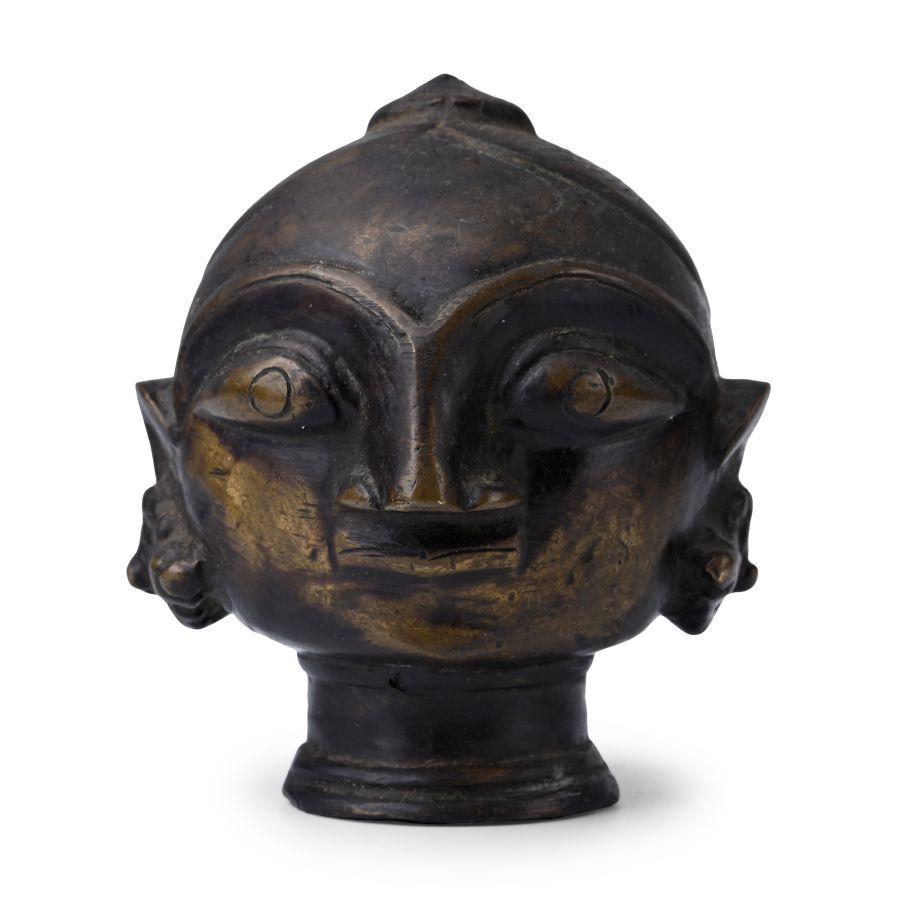
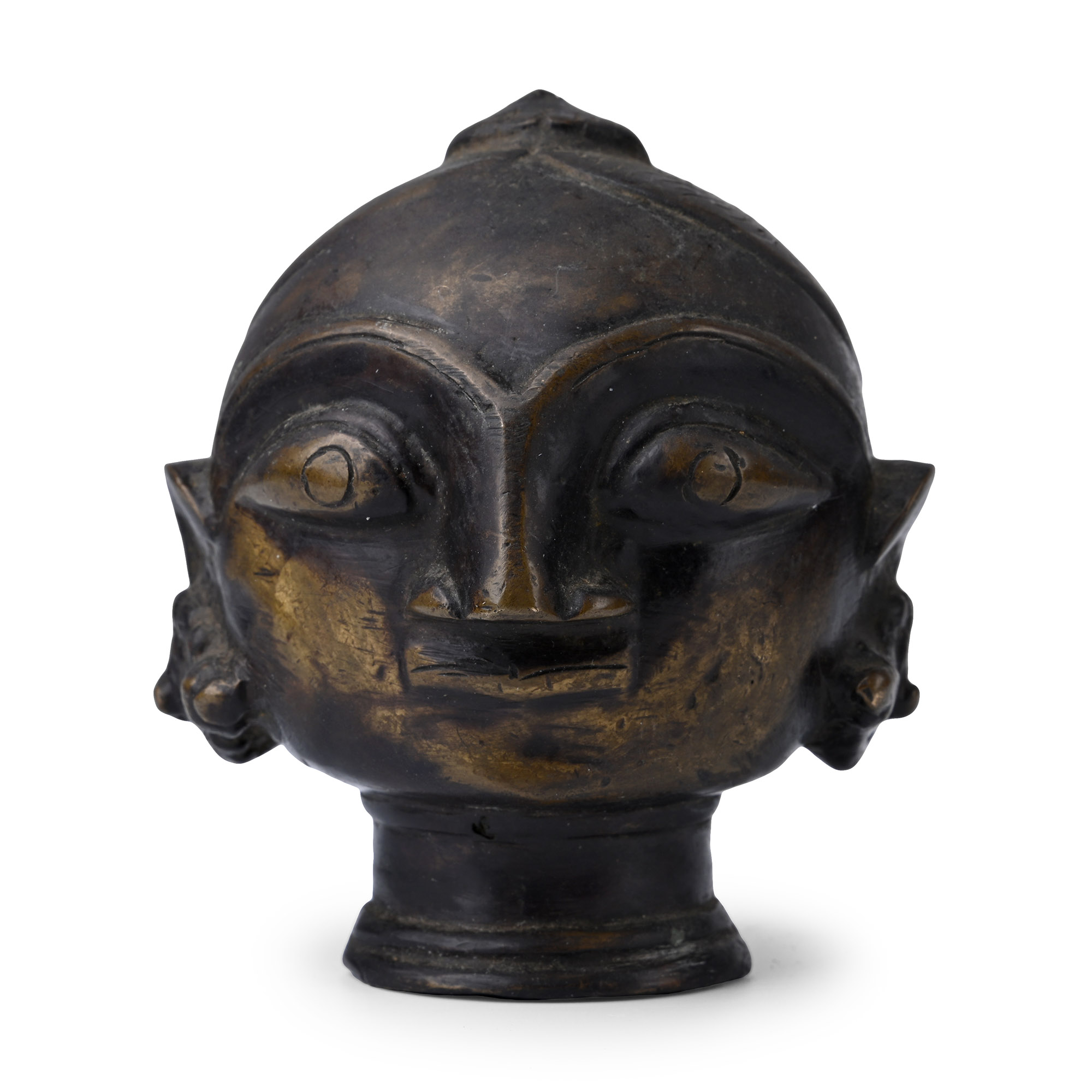
Buddhist Bronze Deity Head
INDIA, LATE 19TH-EARLY 20TH CENTURY A.D.
3 3/4 in. (543 grams, 9.5 cm).
Modelled in the round with emphasised almond-shaped eyes and long curving eyebrows, wearing rosette earrings and a headgear with rosettes, hollow-form. [No Reserve]
ProvenanceAcquired on the UK art market pre 2000.
Property of Nottinghamshire, UK, gentleman.
TimeLine Auctions follows a vetting process to ensure the authenticity and legality of all items, reinforcing our commitment to integrity and responsible trading. Each antiquity, antique, and coin lot undergoes thorough examination by a vetting committee of at least ten external specialists, professional trade association members, scientists, and archaeologists: Our Vetting Process
AUCTIONS:
TimeLine is a leading auction house specialising in antiquities, ancient art, collectables, natural history, coins, medals, and books. Our auctions offer museums, collectors, historians, and enthusiasts the opportunity to acquire unique and historically significant pieces.
-
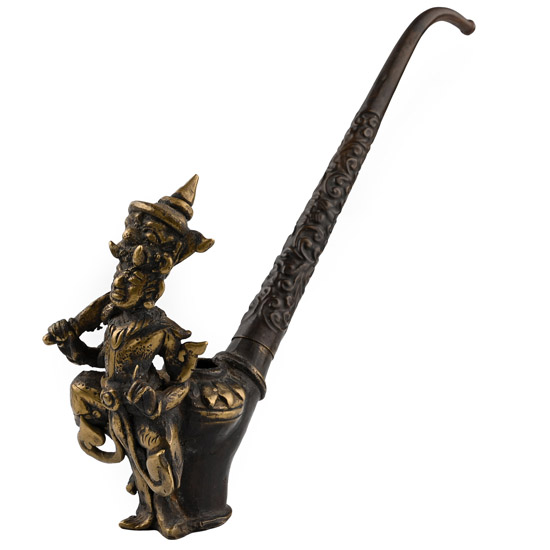
Indian Bronze Figural Opium Pipe
20th century A.D.Sold for (Inc. bp): £65
With separate tapering stem curved at the end and decorated with repoussé scrolls, bowl formed as a deity(?) standing on one leg grasping a leaf-shaped dagger in his right hand, with demonic face above his own with benign expression. 284 grams, 18cm
Fine condition.
Ex property of a Guernsey collector; acquired from Martel Maides, St. Peter Port, Guernsey; formerly acquired in the UK in the early 1990s. From the private collection of John Meredith, acquired since the 1990s; thence by descent. -
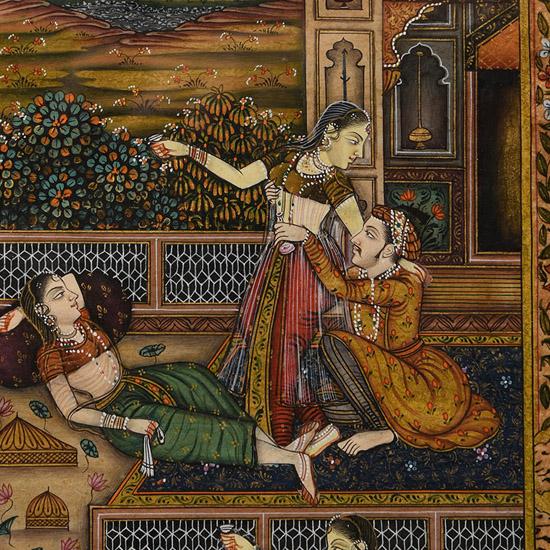
Framed Indian Watercolour Painting with Courtly Scene
19th-early 20th century A.D.Estimate: £100 - 140 (+bp*)
Opening Bid: £50
A rectangular manuscript page depicting a courtly scene with a nobleman embracing a female courtier while others luxuriate around them, in a landscape; calligraphic text panels above and below; mounted in a glazed wooden frame. 710 grams, 34 x 26 cm
Very fine condition.
Acquired on the UK art market, 1980s-1990s. The Woodbridge collection of Indo-Persian art. -
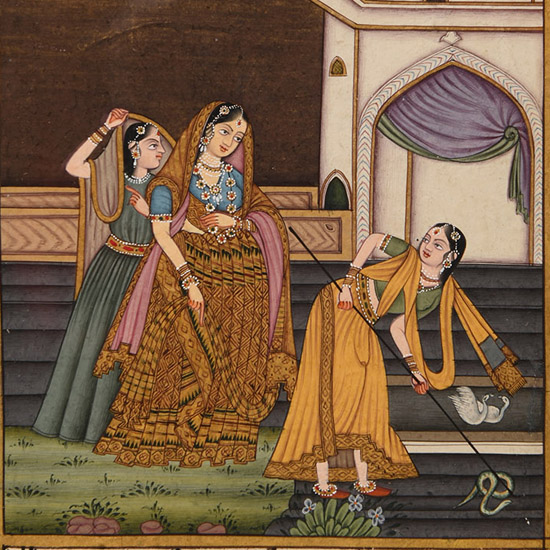
Framed Indian Watercolour Manuscript Leaf with Noble Ladies
19th-early 20th century A.D.Sold for (Inc. bp): £26
A rectangular manuscript page with watercolour scene of three noble females in a landscape, one leaning forward to pierce a snake with a lance(?); panels of nasta'liq text above and below; mounted in a glazed wooden frame. 480 grams, 29.7 x 21 cm
Very fine condition.
Acquired on the UK art market, 1980s-1990s. The Woodbridge collection of Indo-Persian art.
