
Loading, please wait...
LOT 0401
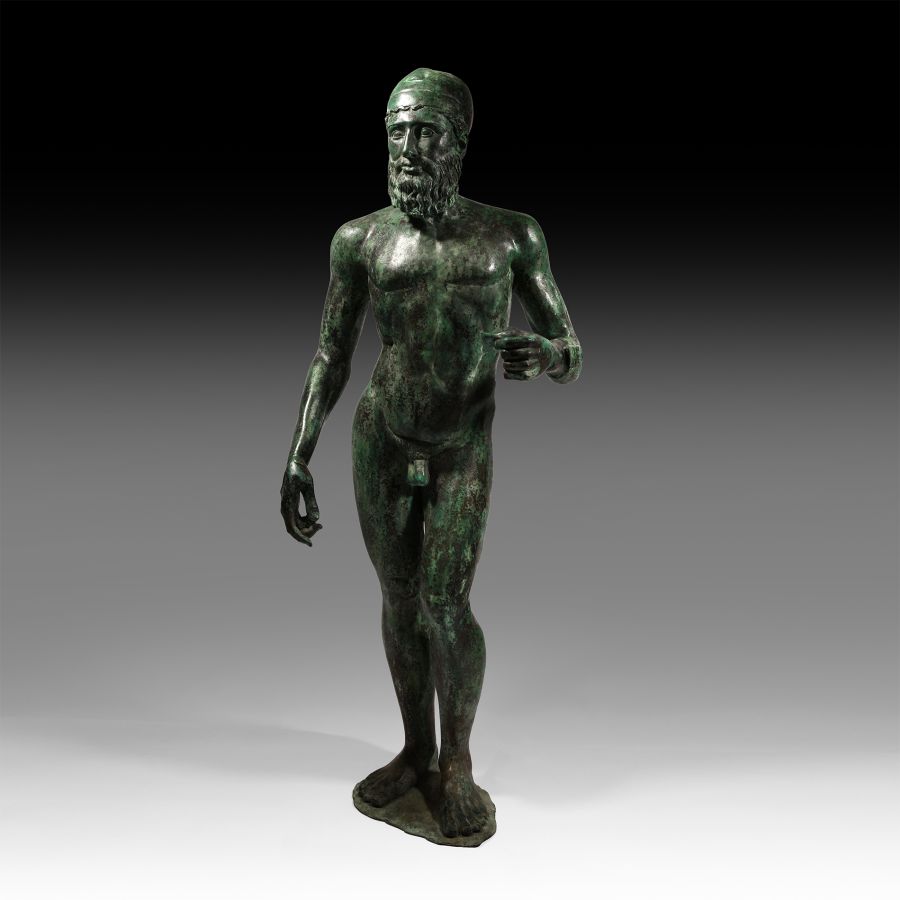
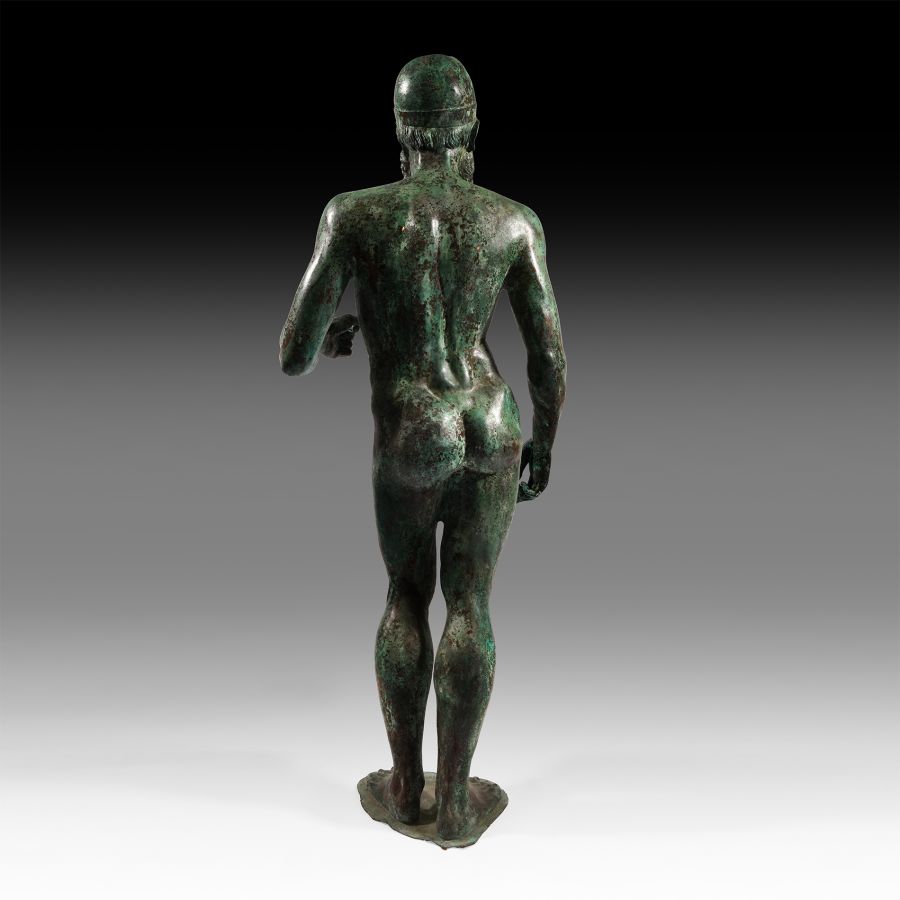
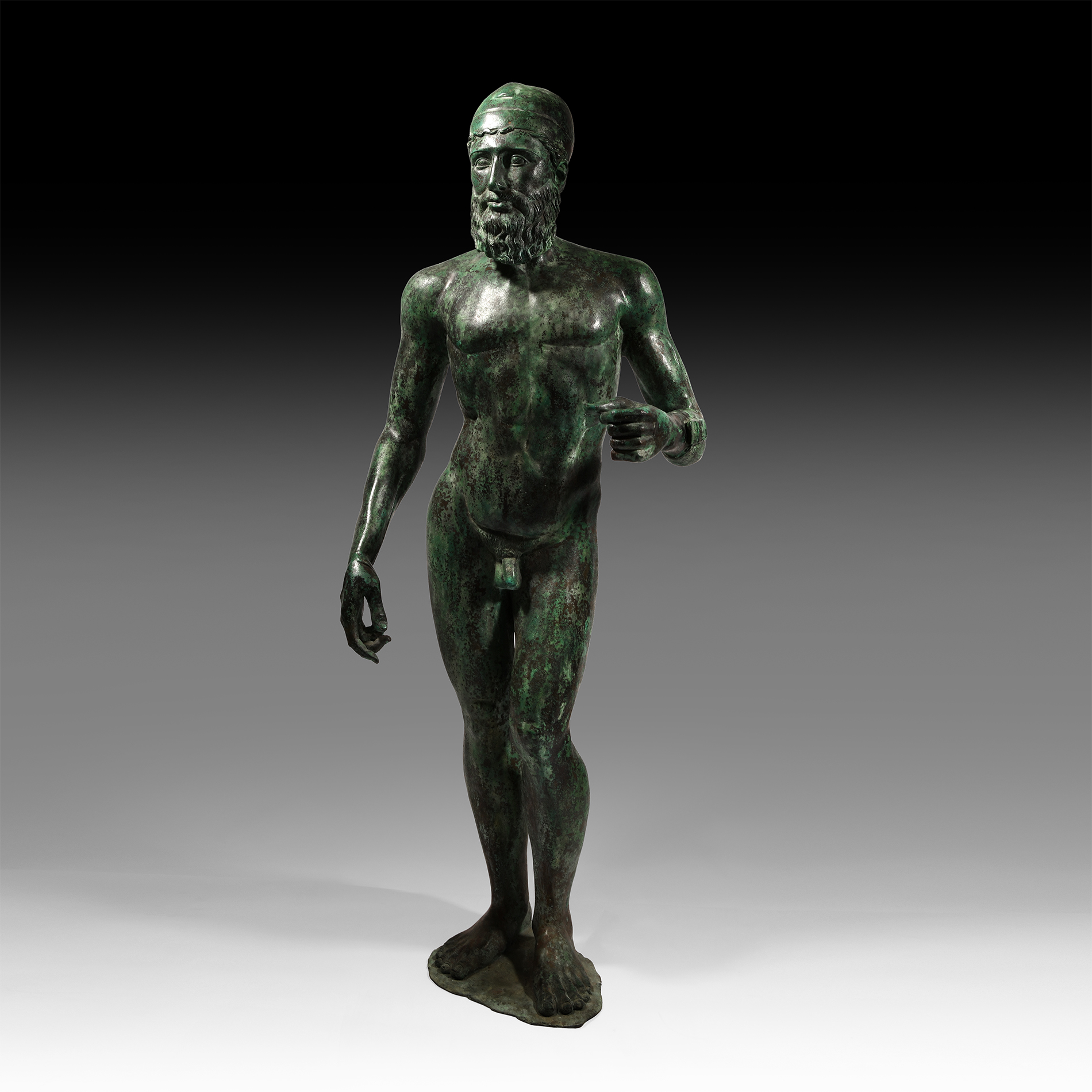
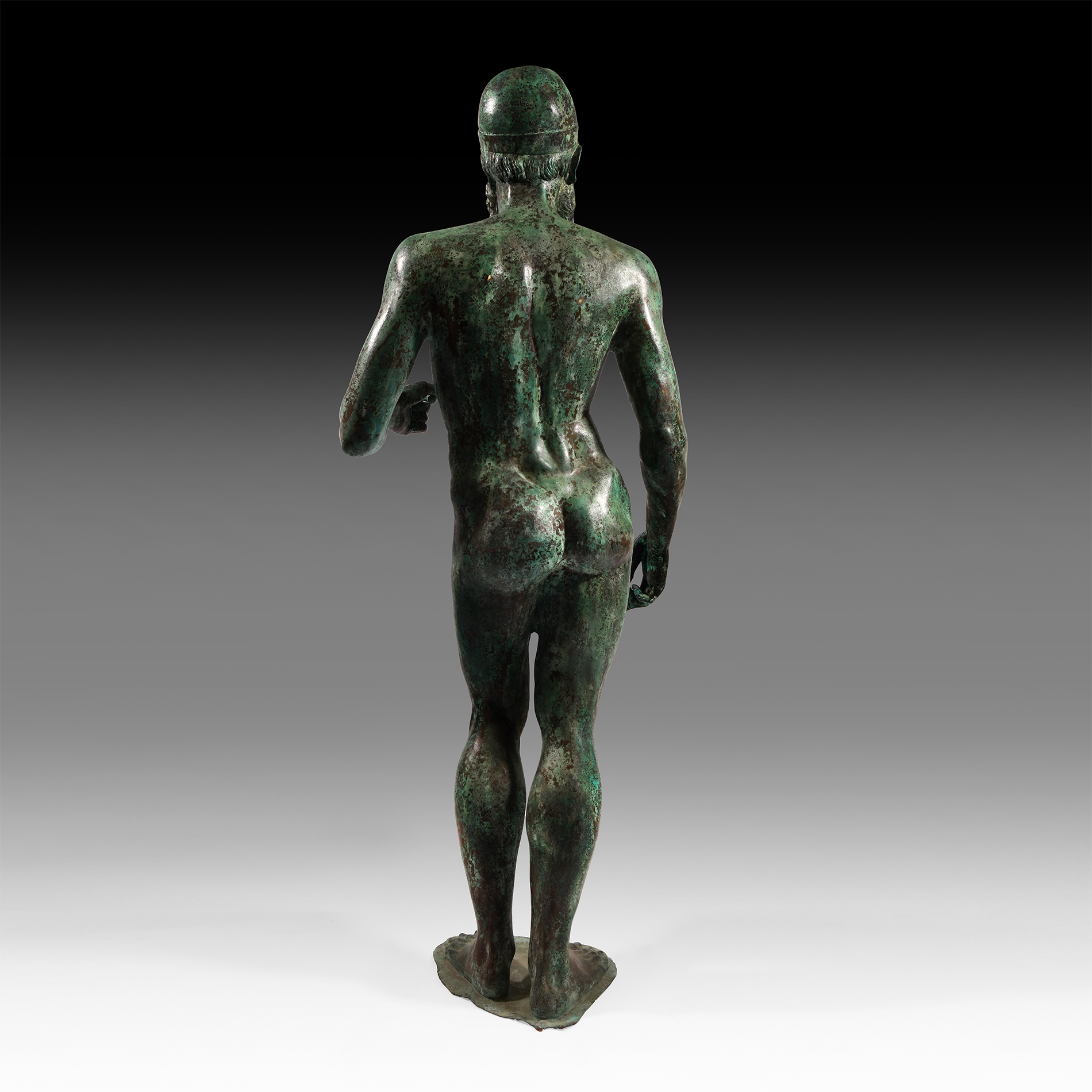
Bronze Statue of the Warrior of Riace
20TH CENTURY A.D.
56 in. (40 kg, 1.42 m high).
A bronze copy of the 'Warrior of Riace', found in Calabria, Italy, standing nude wearing a cap made from the face of the Nemean lion; bracer to the left forearm for attachment of a shield or lion skin cape.
ProvenanceFrench collection, 1960s-early 2000s.
From an important Paris gallery, France.
This lot has been checked against the Interpol Database of stolen works of art and is accompanied by search certificate number no.11692-199339.
The 'Riace Bronzes' are two full-size Greek bronzes of bearded warriors, dating from about 450 B.C. that were found in the sea near Riace, Calabria, southern Italy in 1972. They are now in the Museo Nazionale della Magna Grecia in the city of Reggio Calabria.
CONDITIONTimeLine Auctions follows a vetting process to ensure the authenticity and legality of all items, reinforcing our commitment to integrity and responsible trading. Each antiquity, antique, and coin lot undergoes thorough examination by a vetting committee of at least ten external specialists, professional trade association members, scientists, and archaeologists: Our Vetting Process
AUCTIONS:
TimeLine is a leading auction house specialising in antiquities, ancient art, collectables, natural history, coins, medals, and books. Our auctions offer museums, collectors, historians, and enthusiasts the opportunity to acquire unique and historically significant pieces.
LOT 0401
Bronze Statue of the Warrior of Riace
Estimate £2,500 - 3,500€2,900 - 4,060 (for guidance only)$3,380 - 4,730 (for guidance only)
-
Neoclassical Gemstone Plaque
18th-19th century A.D.Sold for (Inc. bp): £279
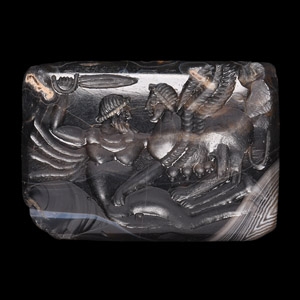
A banded agate intaglio engraved with an ancient Assyrian(?) style figural scene showing a man with sword in hand battling a sphinx-like mythical winged creature with the head of a woman and body of a lion, swollen teats lining the creature's belly; pair of drilled holes for suspension; chipped. 21.6 grams, 43 mm
Fine condition.
Property of a North London gentleman.
Likely an allusion to ancient tales of the monstrous and treacherous sphinx attacking the hero. -
Assyrian Watercolour Painting
19th-20th century A.D.Sold for (Inc. bp): £234
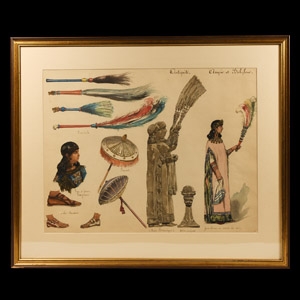
A framed and glazed hand-finished watercolour drawing on paper with French captions, entitled 'Antiquité. Assyrie et Babylone', depicting Assyrian female figures with details of costume, eventails (fly-whisks), chaussures (footwear) parasols (sunshades) and other items. 3.4 kg, 70.5 x 58.5 cm
By repute with Sotheby's, London, UK. Ex London, UK, gallery. Property of a London gentleman. -
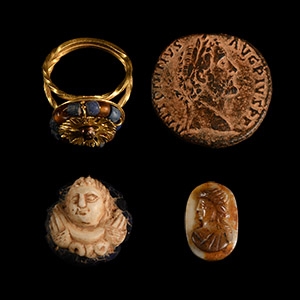
Roman Style Artefact Group
20th century A.D.Sold for (Inc. bp): £111
A mixed group of ancient Roman style artefacts comprising: a sestertius of Antoninus Pius, probably a replica; a cameo gemstone displaying a female bust on profile left; a discoid cameo stone displaying a winged cherub; a gold ring composed of a double-loop band with openwork centre, discoid bezel decorated with polychrome glass beads mounted around a central gold foliate sheet. 37 grams total, 19-30 mm
Family collection formed before 1980. Ex property of a Richmond gentleman.
