
Loading, please wait...
LOT 2039
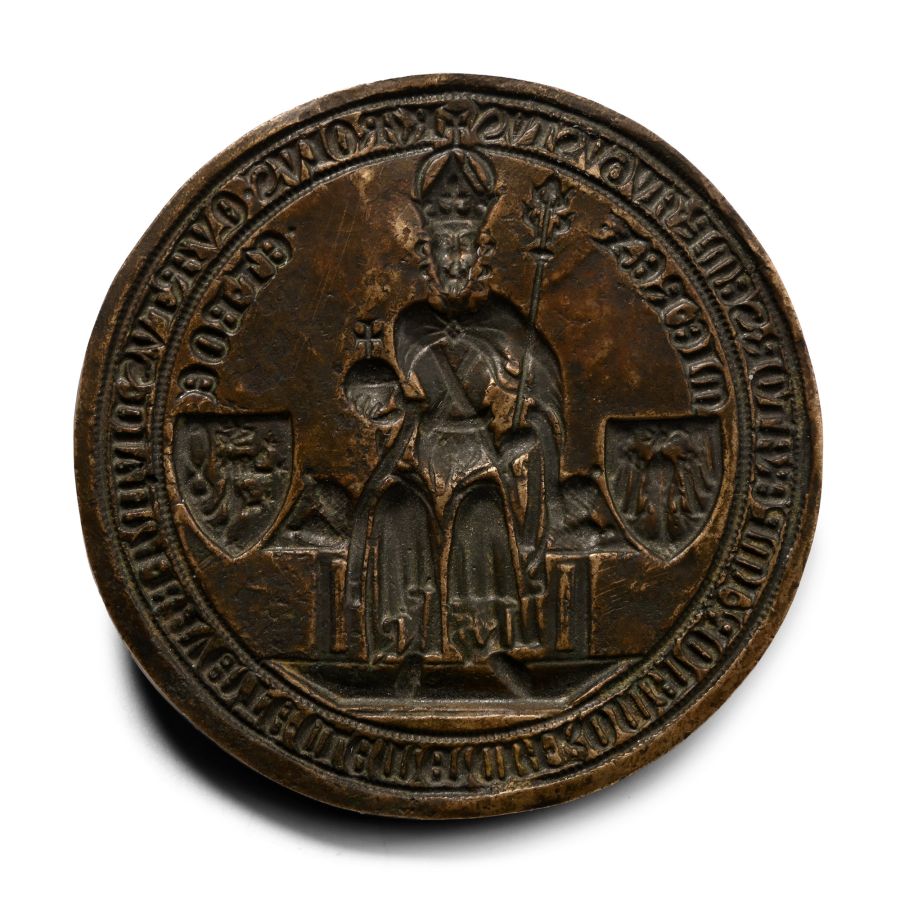
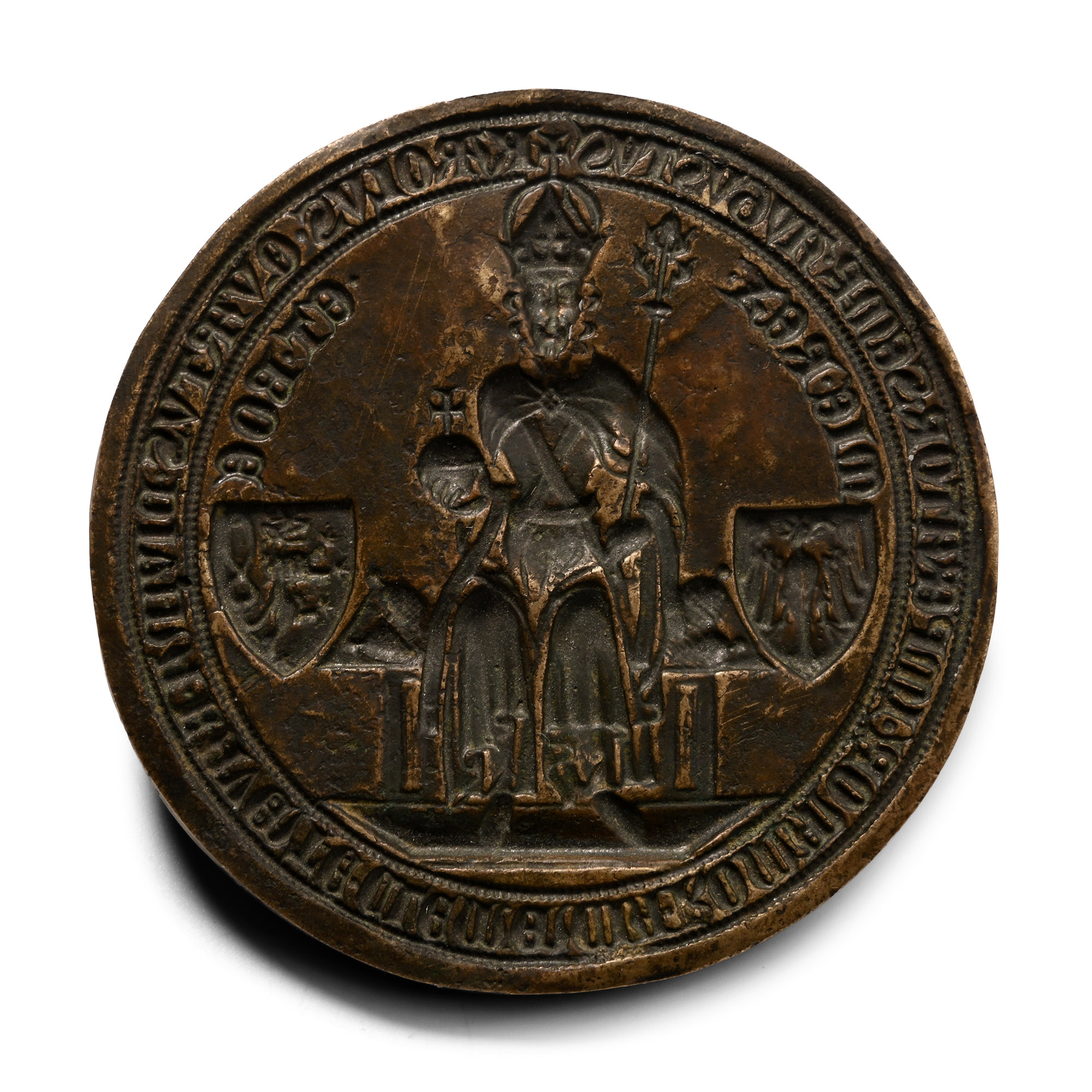
Bronze Seal Matrix with Emperor Charles IV
18TH CENTURY A.D.
2 3/8 in. (143 grams, 62 mm).
Discoid in plan with pierced flange handle to reverse; incuse image of a facing enthroned monarch with orb and sceptre in his hands, crown topped by a cross, two heater shields to the sides, on with a lion rampant and the other with a spread eagle; legend 'MIE.REZ', 'ET. BOE'; outer band with Lombardic legend 'AVGVSTVS. KAROLVS . QVARTVS . DIVINAE.FAVENTE . MEME[...]' referring to Holy Roman Emperor Charles IV.
ProvenancePrivate collection, UK.
CONDITIONTimeLine Auctions follows a vetting process to ensure the authenticity and legality of all items, reinforcing our commitment to integrity and responsible trading. Each antiquity, antique, and coin lot undergoes thorough examination by a vetting committee of at least ten external specialists, professional trade association members, scientists, and archaeologists: Our Vetting Process
AUCTIONS:
TimeLine is a leading auction house specialising in antiquities, ancient art, collectables, natural history, coins, medals, and books. Our auctions offer museums, collectors, historians, and enthusiasts the opportunity to acquire unique and historically significant pieces.
-
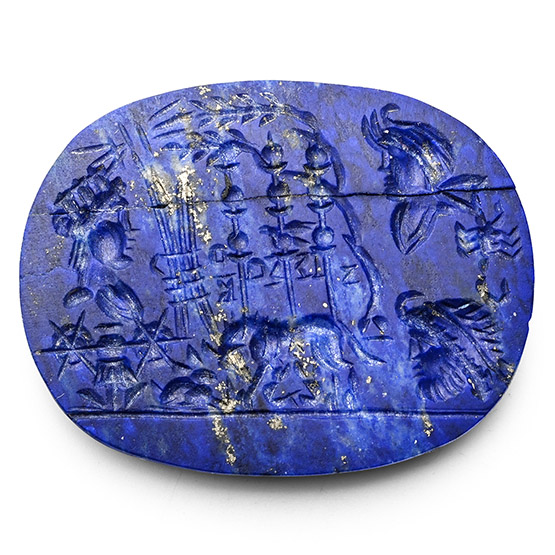
Post-Classical Lapis Lazuli Gemstone with Allegory of Roman Military Power
18th-19th century A.D.Estimate: £300 - 400 (+bp*)
Opening Bid: £150
With incuse scene including three military standards, a laurel frond, three profile busts with crowns, a she-wolf suckling the twins and other items; supplied with a museum-quality impression. 9.07 grams, 35 mm
Acquired on the European art market. Private collection, England. -
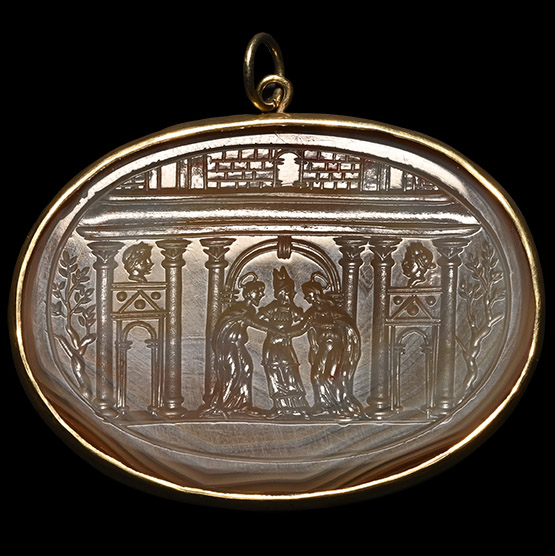
Large Agate Gemstone with the Marriage of the Virgin
Italy, Late 17th century A.D.Sold for (Inc. bp): £1,859
Plaque with narrow border enclosing a figural scene with a colonnade and façade flanked by olive trees; central arch with two nimbate and robed figures clasping hands with a third figure behind them wearing a headdress; set in a gold frame with suspension loop; supplied with a museum-quality impression. 19.61 grams, 54 mm
Private collection, Europe. Acquired on the French art market.
The subject is the marriage ceremony between Mary, 'the Virgin', and Joseph. -
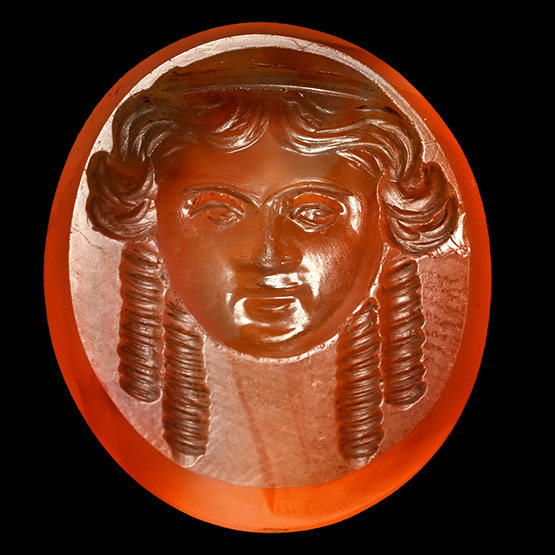
Neoclassical Agate Gemstone with Theatrical Mask
19th century A.D.Estimate: £500 - 700 (+bp*)
Opening Bid: £250
Plano-convex in section with deeply incised facing female mask with ringlets and diadem; supplied with a museum-quality impression. 3.22 grams, 23 mm
with Hotel des Ventes de Monte-Carlo, 2020. Private collection, England.
