
Loading, please wait...
LOT 0880
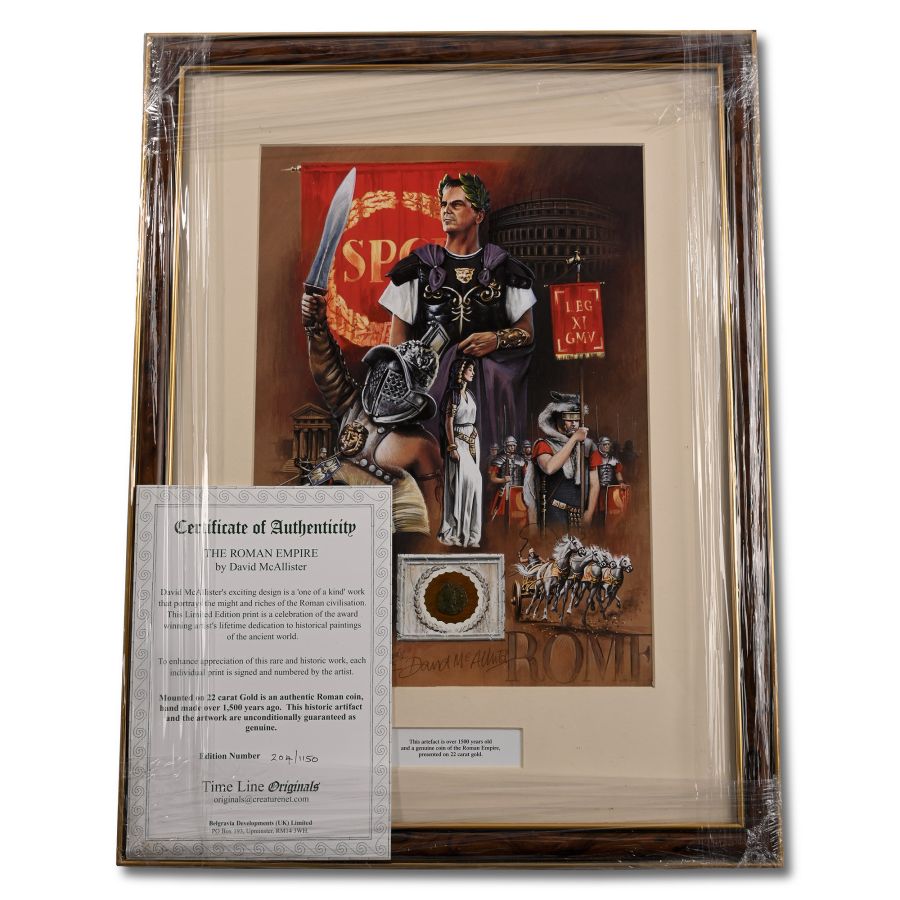
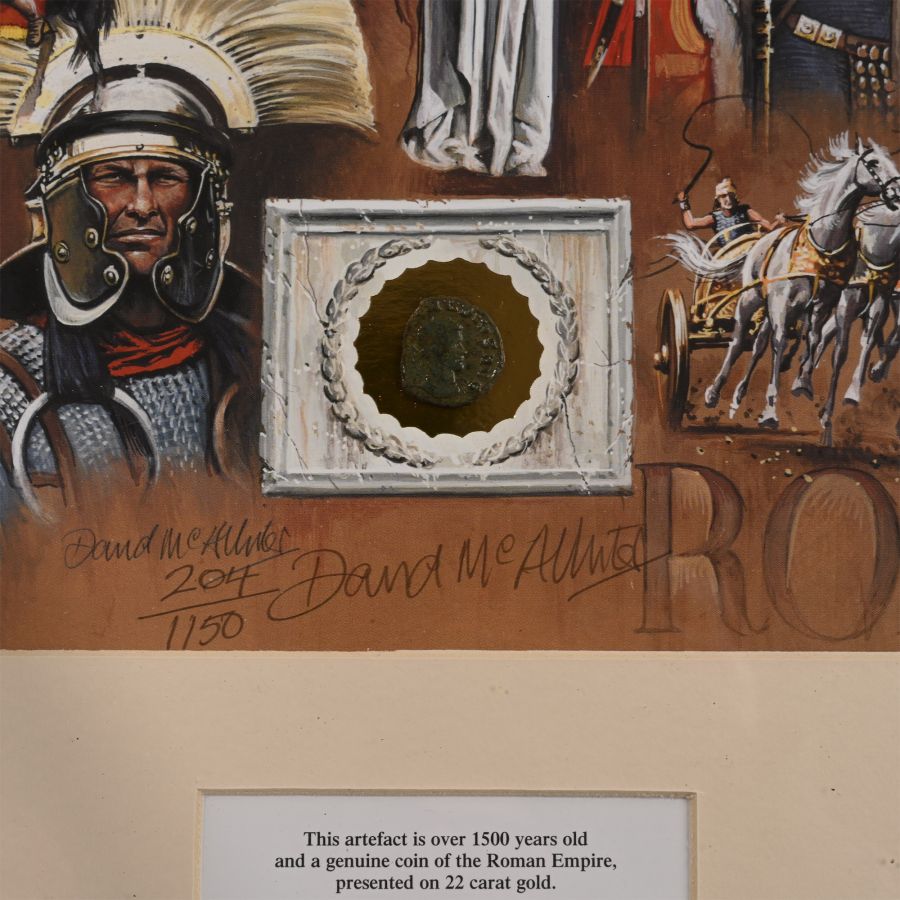
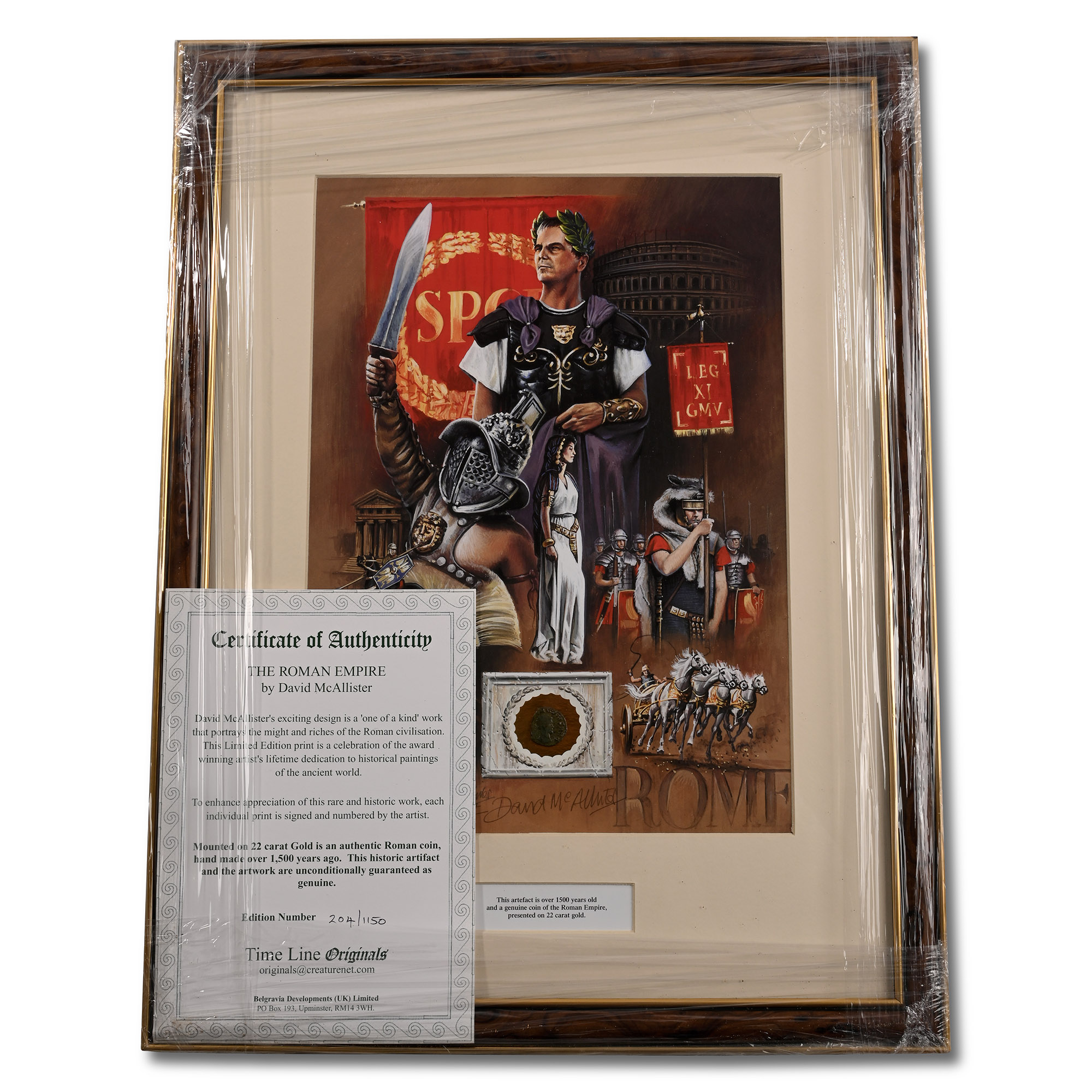
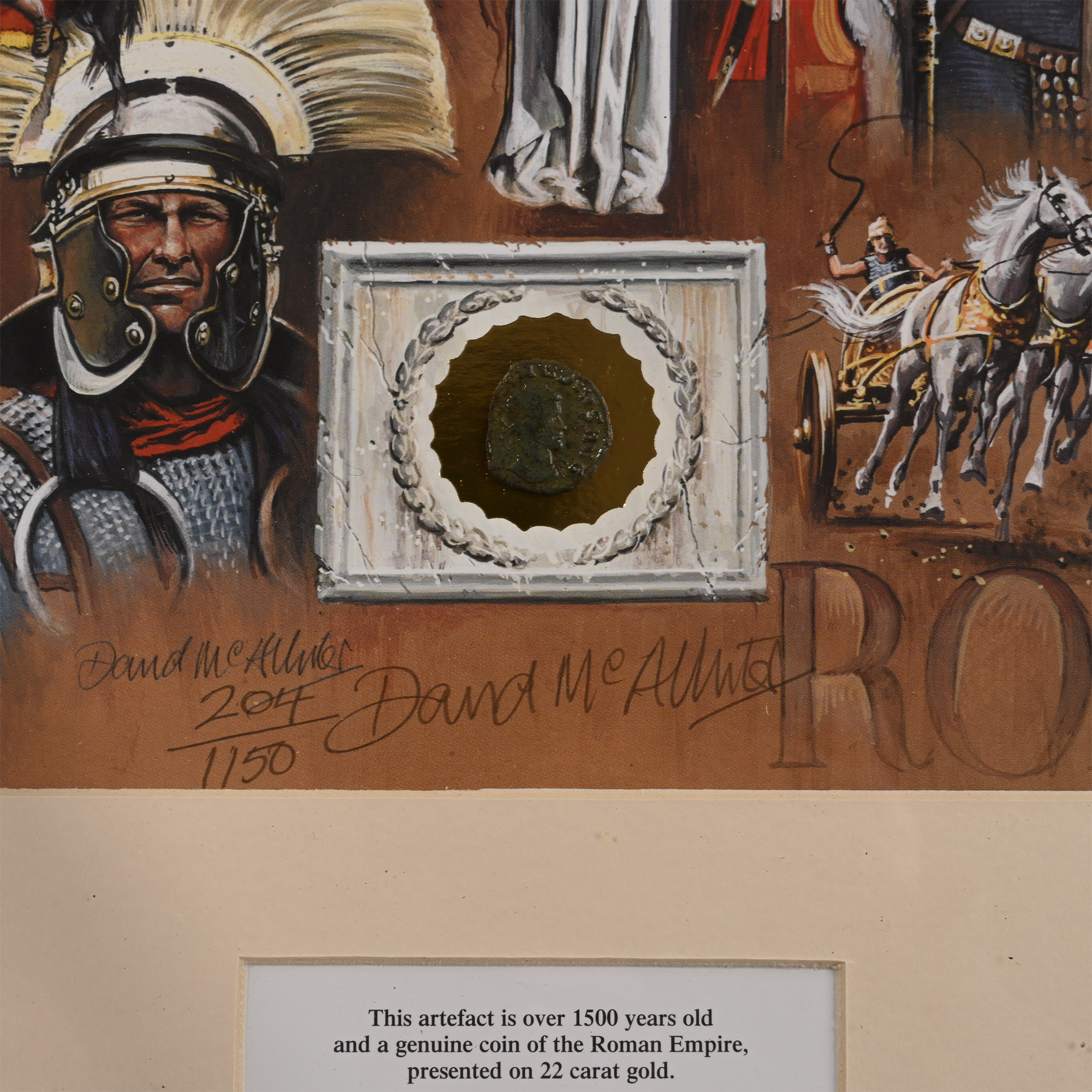
Bronze Roman Coin and Framed Limited Edition Print
3RD CENTURY A.D. AND LATER
19 1/2 x 14 3/4 in. (1.26 kg, 49.5 x 37.5 cm).
The coin of Constantine the Great (272-337 A.D.) mounted on 22 carat gold foil, framed with an art print signed by the artist David McAllister, depicting scenes of Roman military activity; limited edition number 204/1150. [No Reserve]
ProvenanceUK gallery, early 2000s.
Accompanied by a previous numbered certificate of authenticity.
Cf. for parallel scientific reconstructive paintings Wilcox P., McBride A., Rome's Enemies (2), Gallic and British Celts, London, 1985, pl.G.
FootnotesDavid McAllister's exciting design is a 'one of a kind' work that portrays the might and riches of the Roman civilisation. This limited edition print is a celebration of the award winning artist's lifetime dedication to historical paintings of the ancient world. To enhance appreciation of this rare and historic work, each individual print is signed and numbered by the artist.
CONDITIONTimeLine Auctions follows a vetting process to ensure the authenticity and legality of all items, reinforcing our commitment to integrity and responsible trading. Each antiquity, antique, and coin lot undergoes thorough examination by a vetting committee of at least ten external specialists, professional trade association members, scientists, and archaeologists: Our Vetting Process
AUCTIONS:
TimeLine is a leading auction house specialising in antiquities, ancient art, collectables, natural history, coins, medals, and books. Our auctions offer museums, collectors, historians, and enthusiasts the opportunity to acquire unique and historically significant pieces.
-
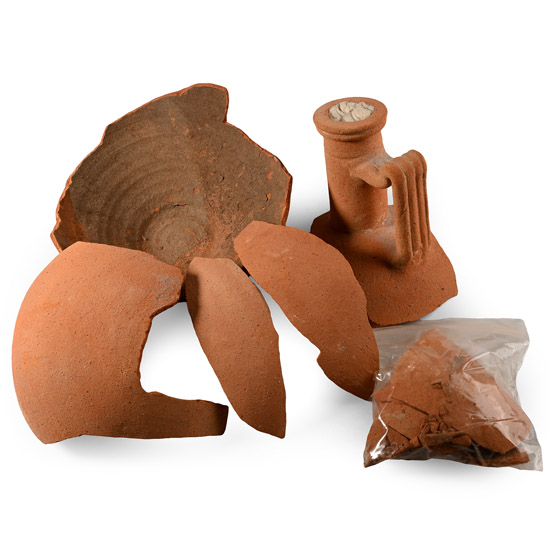
Large Complete Roman Redware Flagon in Pieces for Restoration
2nd-4th century A.D.Sold for (Inc. bp): £52
Complete set of fragments comprising a flagon with flared foot, tubular neck and strap handle. 782 grams total, 3-17 cm
From the private collection of Mr Brian Edwards, New Malden, Surrey, UK, formed from the late 1970s-early 1980s; thence by descent. -
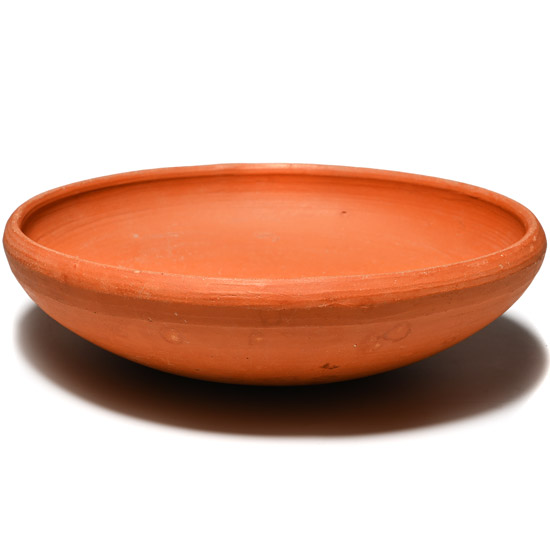
Roman Red Ware Bowl
3rd-4th century A.D.Sold for (Inc. bp): £124
Broad and squat in profile with inturned rim and external carination. 410 grams, 16.7 cm wide
From the collection of David Donlan (1947-2025), a dedicated and lifelong collector with a passion for the ancient world and the natural sciences, forming his collection from 1960s onwards, using many reputable dealers across the United Kingdom, including the well-regarded Coincraft and The Parthenon Gallery. -
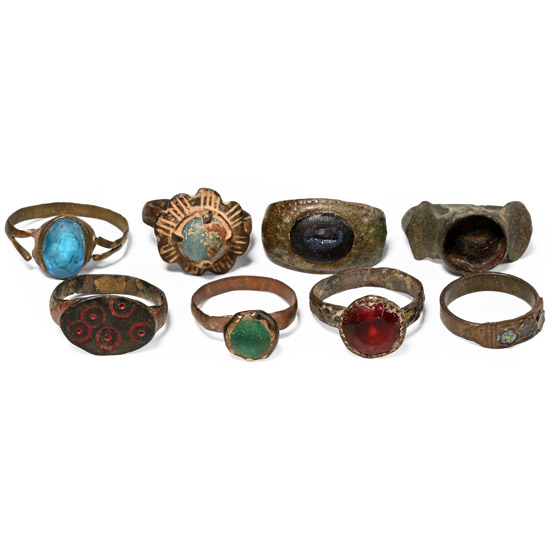
Roman to Post Medieval Bronze Ring Collection
2nd-19th century A.D.Sold for (Inc. bp): £130
Including bezel fragment with inset intaglio Venus, ellipsoid bezel with ring-and-dot motifs, cup bezel with scooped shoulders and other types. 24.2 grams total, 16-25 mm
From the private collection of Mr Brian Edwards, New Malden, Surrey, UK, formed from the late 1970s-early 1980s; thence by descent.
