
Loading, please wait...

LOT 2171
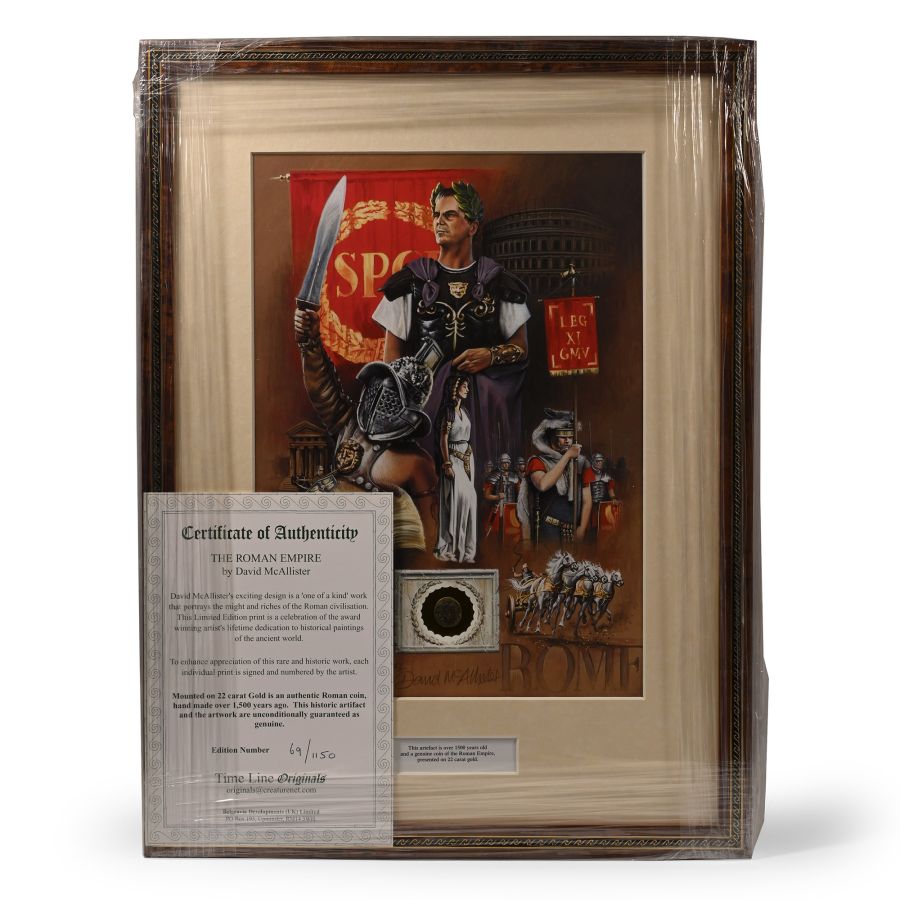
Bronze Roman Coin and Framed Limited Edition Print
3RD CENTURY A.D. AND LATER
19 1/2 x 14 3/4 in. (1.26 kg, 49.5 x 37.5 cm).
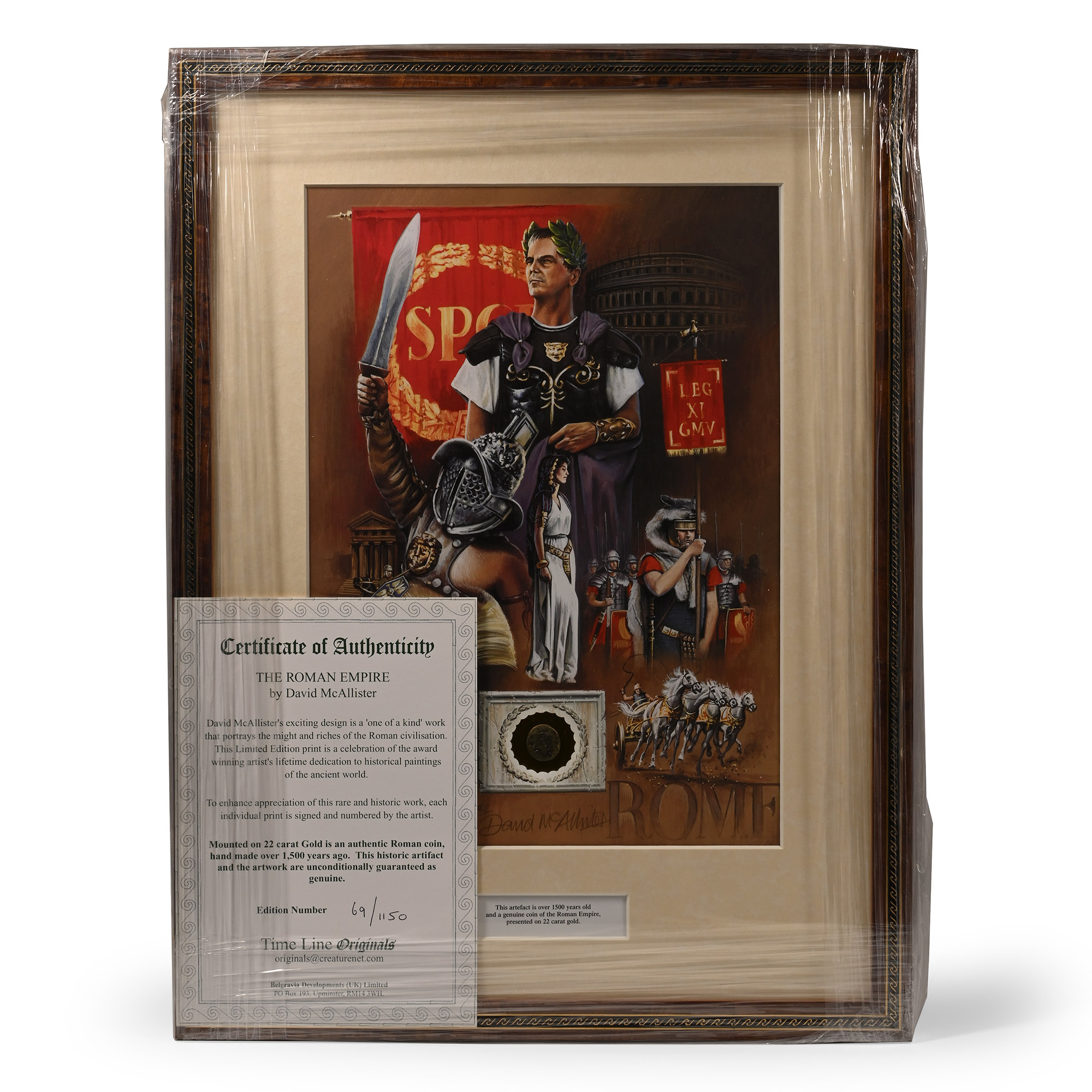
The coin of Constantine the Great (272-337 A.D.) mounted on 22 carat gold foil, framed with an art print signed by the artist David McAllister, depicting scenes of Roman military activity; limited edition number 69/1150. [No Reserve]
ProvenanceUK gallery, early 2000s.
Accompanied by a previous numbered certificate of authenticity.
David McAllister's exciting design is a 'one of a kind' work that portrays the might and riches of the Roman civilisation. This limited edition print is a celebration of the award winning artist's lifetime dedication to historical paintings of the ancient world. To enhance appreciation of this rare and historic work, each individual print is signed and numbered by the artist.
CONDITIONTimeLine Auctions follows a vetting process to ensure the authenticity and legality of all items, reinforcing our commitment to integrity and responsible trading. Each antiquity, antique, and coin lot undergoes thorough examination by a vetting committee of at least ten external specialists, professional trade association members, scientists, and archaeologists: Our Vetting Process
AUCTIONS:
TimeLine is a leading auction house specialising in antiquities, ancient art, collectables, natural history, coins, medals, and books. Our auctions offer museums, collectors, historians, and enthusiasts the opportunity to acquire unique and historically significant pieces.
-
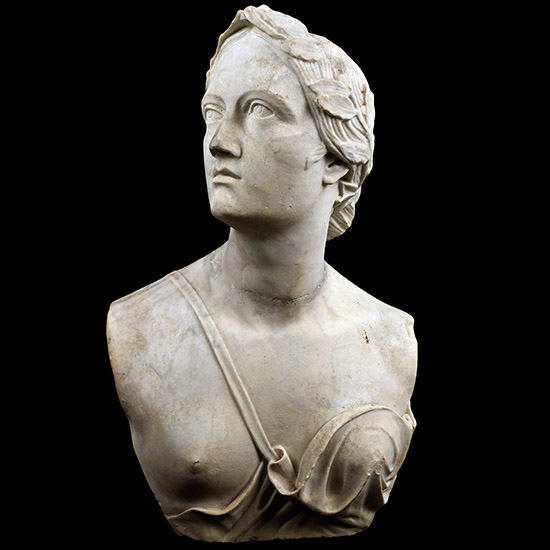
Large White Marble Bust of Diana the Huntress
19th century A.D.Estimate: £2,500 - 3,500 (+bp*)
Opening Bid: £1,250
The goddess shown in an elegant pose with her head turned to the right and her gaze directed upwards, wearing a laurel leaf crown and a loose garment covering her left breast, leaving the right one exposed, narrow quiver strap crossing over her right shoulder; her hair dressed in soft waves and pulled to a chignon at the nape of her neck; old repair on the neck. 66.5 kg, 68 cm high
Acquired on the UK art market. Private collection, London. This lot has been checked against the Interpol Database of stolen works of art and is accompanied by search certificate no.13080-246797.
In the 19th century, many studies of the hunter goddess were inspired by the 'Diana of Versailles', a 2nd-century Roman version in the Greek tradition of iconography, today in the collection of the Louvre Museum, Paris, France. -
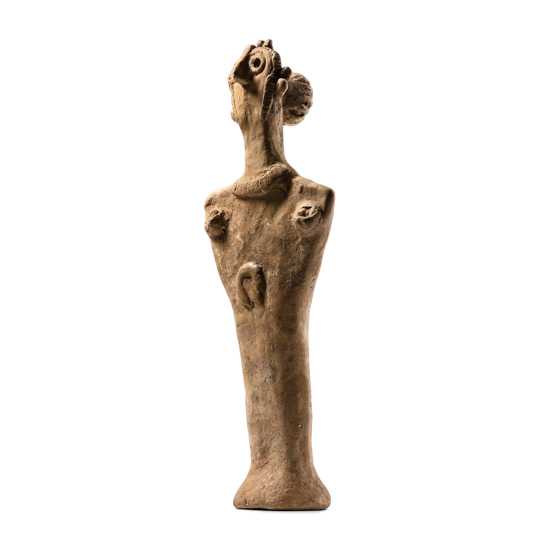
Large Syro-Hittite Style Terracotta Standing Figure
20th century A.D. or earlierSold for (Inc. bp): £7
Modelled in the round, standing, facing, each with pronounced facial features and hairdo. 181 grams, 20 cm
From the private collection of John Meredith, acquired since the 1990s; thence by descent. -
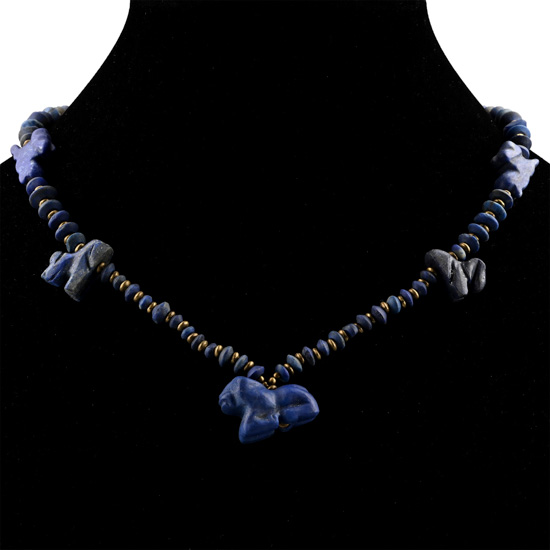
Bactrian Style Lapis Lazuli and Other Bead Necklace String
20th century A.D.Sold for (Inc. bp): £26
Composed of biconical beads interspersed with small metal beads, five lion-shaped amulets; restrung. 40.2 grams, 40.6 cm
From London, UK, gallery collection, 1990s.
