
Loading, please wait...
LOT 2060
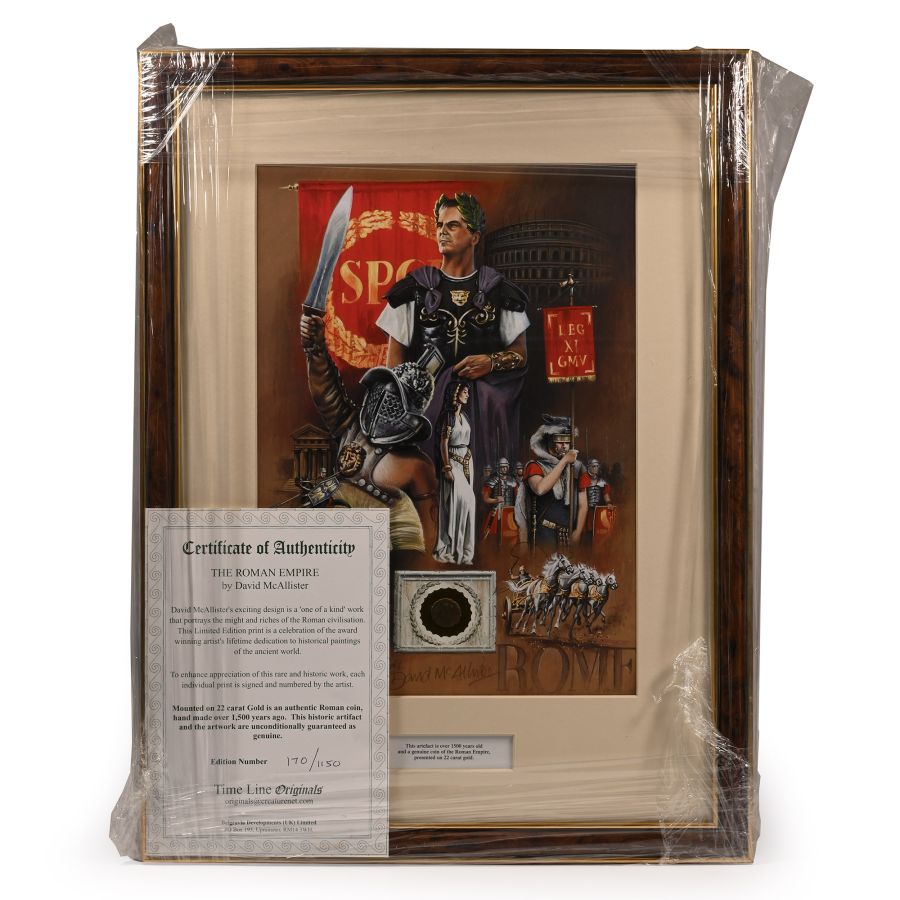
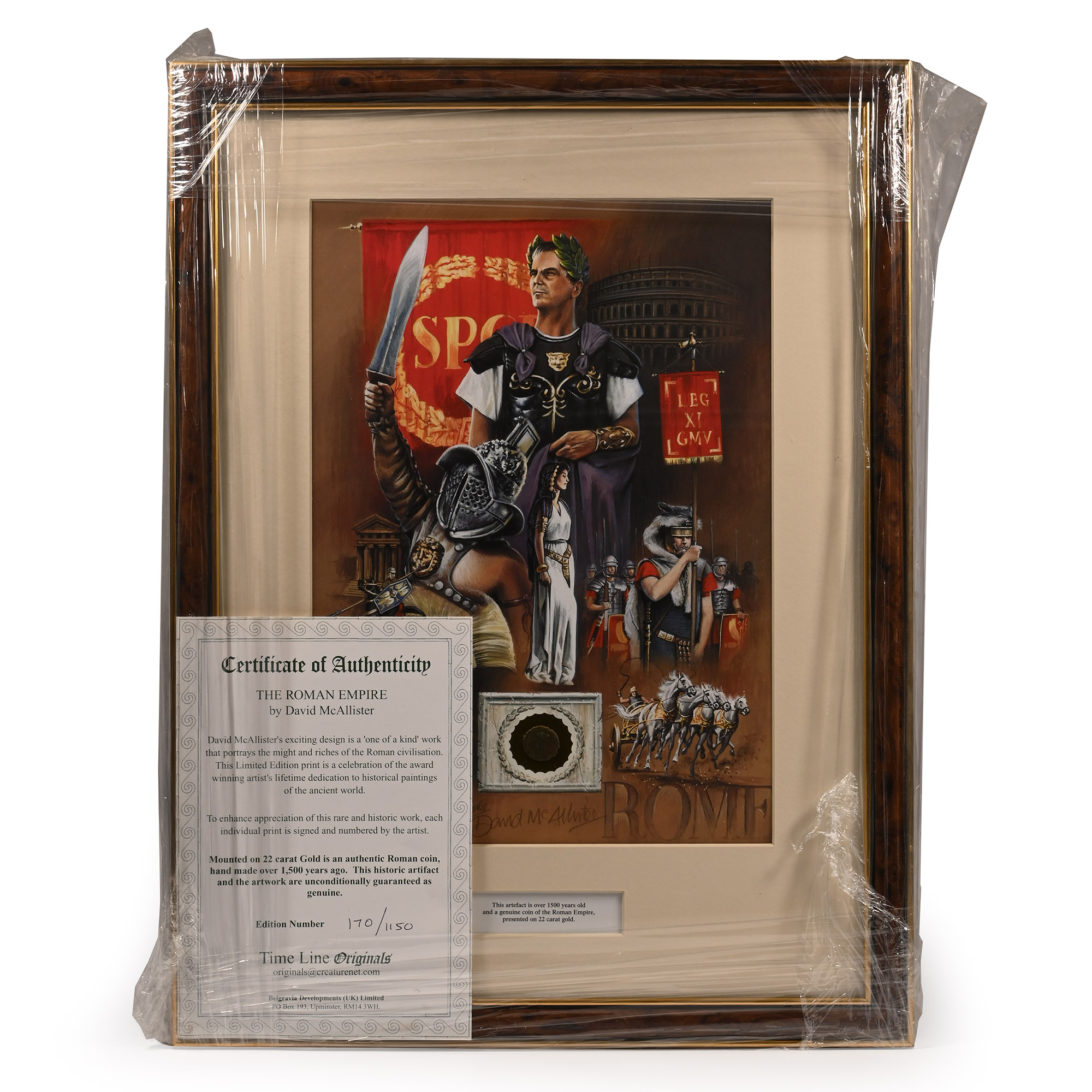
Bronze Roman Coin and Framed Limited Edition Print
3RD CENTURY A.D. AND LATER
19 1/2 x 14 3/4 in. (1.26 kg, 49.5 x 37.5 cm).
The coin of Constantine the Great (272-337 A.D.) mounted on 22 carat gold foil, framed with an art print signed by the artist David McAllister, depicting scenes of Roman military activity; limited edition number 170/1150. [No Reserve]
ProvenanceUK gallery, early 2000s.
Accompanied by a previous certificate of authenticity.
This lot is accompanied by an illustrated lot declaration signed by the Head of the Antiquities Department, Dr Raffaele D'Amato.
Cf. for parallel scientific reconstructive paintings Wilcox P., McBride A., Rome's Enemies (2), Gallic and British Celts, London, 1985, pl.G,
FootnotesDavid McAllister's exciting design is a 'one of a kind' work that portrays the might and riches of the Roman civilisation. This limited edition print is a celebration of the award winning artist's lifetime dedication to historical paintings of the ancient world. To enhance appreciation of this rare and historic work, each individual print is signed and numbered by the artist.
CONDITIONTimeLine Auctions follows a vetting process to ensure the authenticity and legality of all items, reinforcing our commitment to integrity and responsible trading. Each antiquity, antique, and coin lot undergoes thorough examination by a vetting committee of at least ten external specialists, professional trade association members, scientists, and archaeologists: Our Vetting Process
AUCTIONS:
TimeLine is a leading auction house specialising in antiquities, ancient art, collectables, natural history, coins, medals, and books. Our auctions offer museums, collectors, historians, and enthusiasts the opportunity to acquire unique and historically significant pieces.
-
.jpg)
Egyptian Revival Bronze Cross
Late 19th-early 20th century A.D.Estimate: £80 - 100 (+bp*)
Opening Bid: £40
Cruciform pendant with integral loop, obverse with impressed cartouche and hieroglyphs, reverse with hatching. 5.6 grams, 43 mm
From the collection of a gentleman, acquired on the London art market in the 1990s. This lot is accompanied by an illustrated lot declaration signed by the Head of the Antiquities Department, Dr Raffaele D'Amato. -
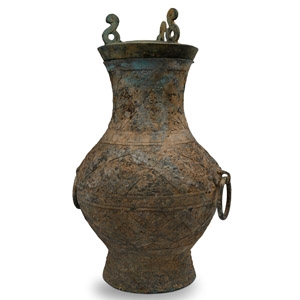
Chinese Archaic Style Vessel
20th century A.D.Sold for (Inc. bp): £117
With piriform profile, flared foot, two lateral taotie panels supporting ring handles, slightly domed lid with three zoomorphic loops. 2.94 kg, 36 cm
From an Oxford, UK, collection. Ex London, UK, gallery. This lot is accompanied by an illustrated lot declaration signed by the Head of the Antiquities Department, Dr Raffaele D'Amato. -
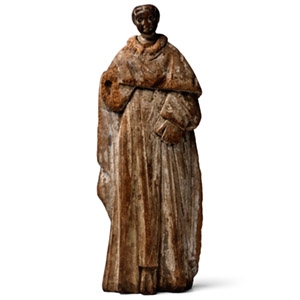
Post Medieval Wooden Statue of a Dominican Priest
Philippines, 18th century A.D.Sold for (Inc. bp): £104
Carved in the round figure in floor-length robe with mantle, left hand supporting a bible; socket for right hand; much pigment remaining. 201 grams, 25.5 cm
Acquired on the UK art market in the 1990s. From the Dr Ince collection, N.W. London, UK. This lot is accompanied by an illustrated lot declaration signed by the Head of the Antiquities Department, Dr Raffaele D'Amato.
