
Loading, please wait...
LOT 0077
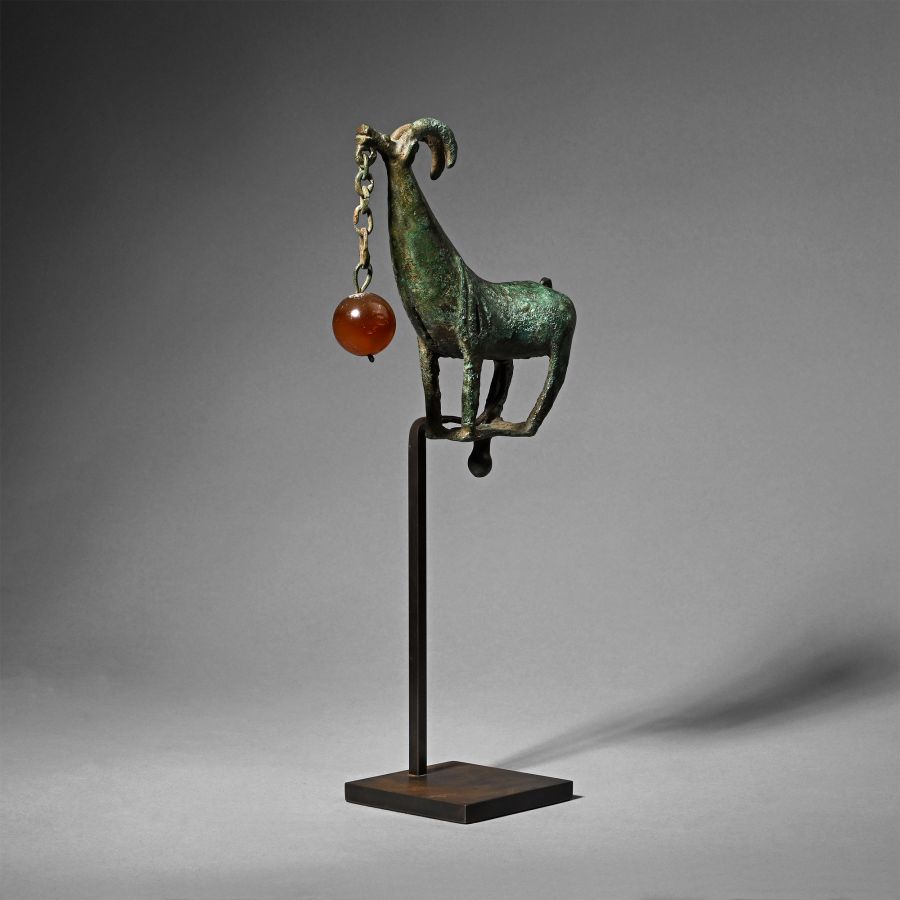
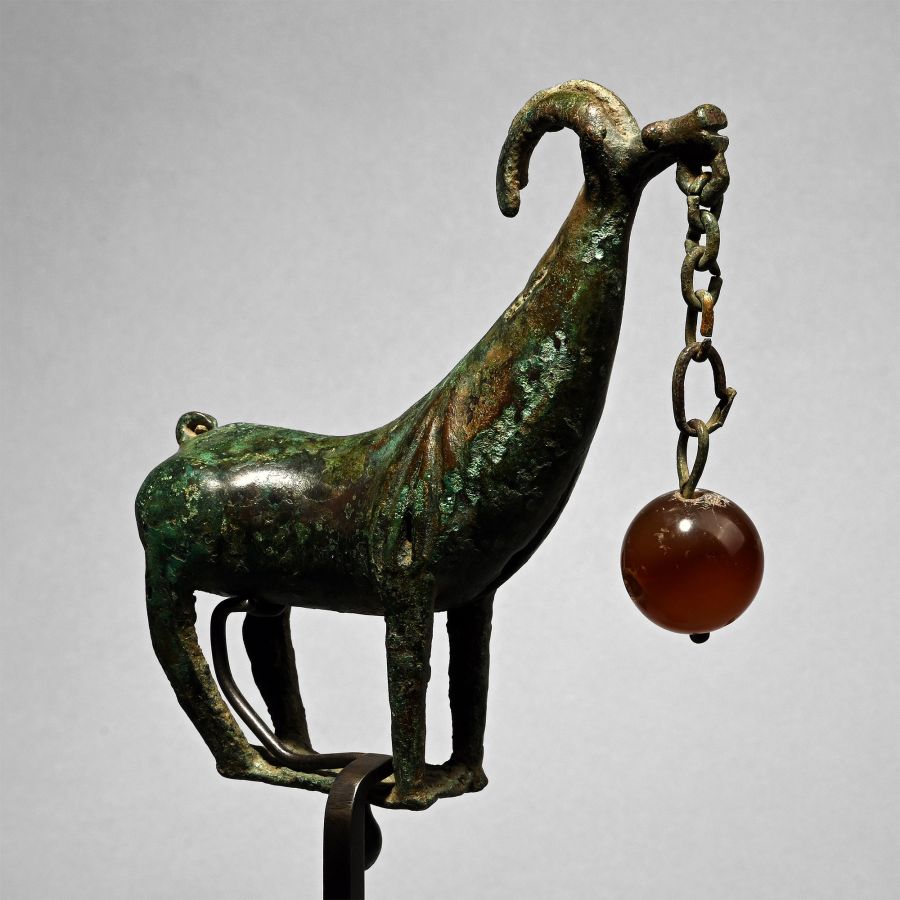
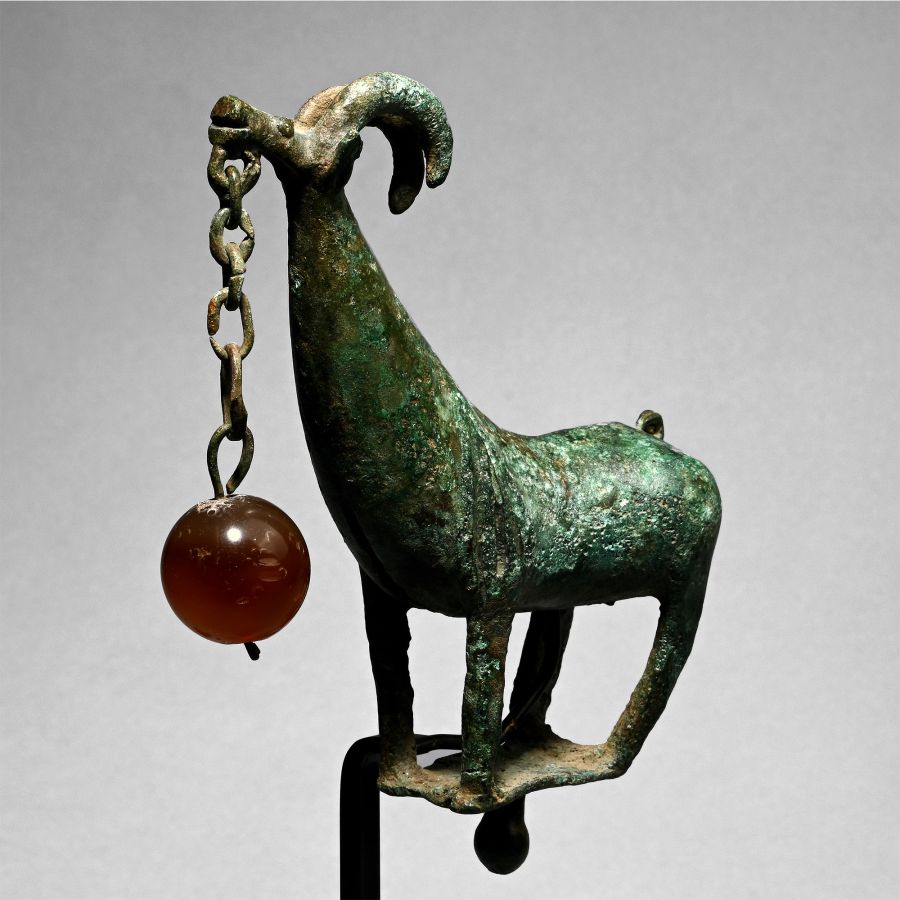
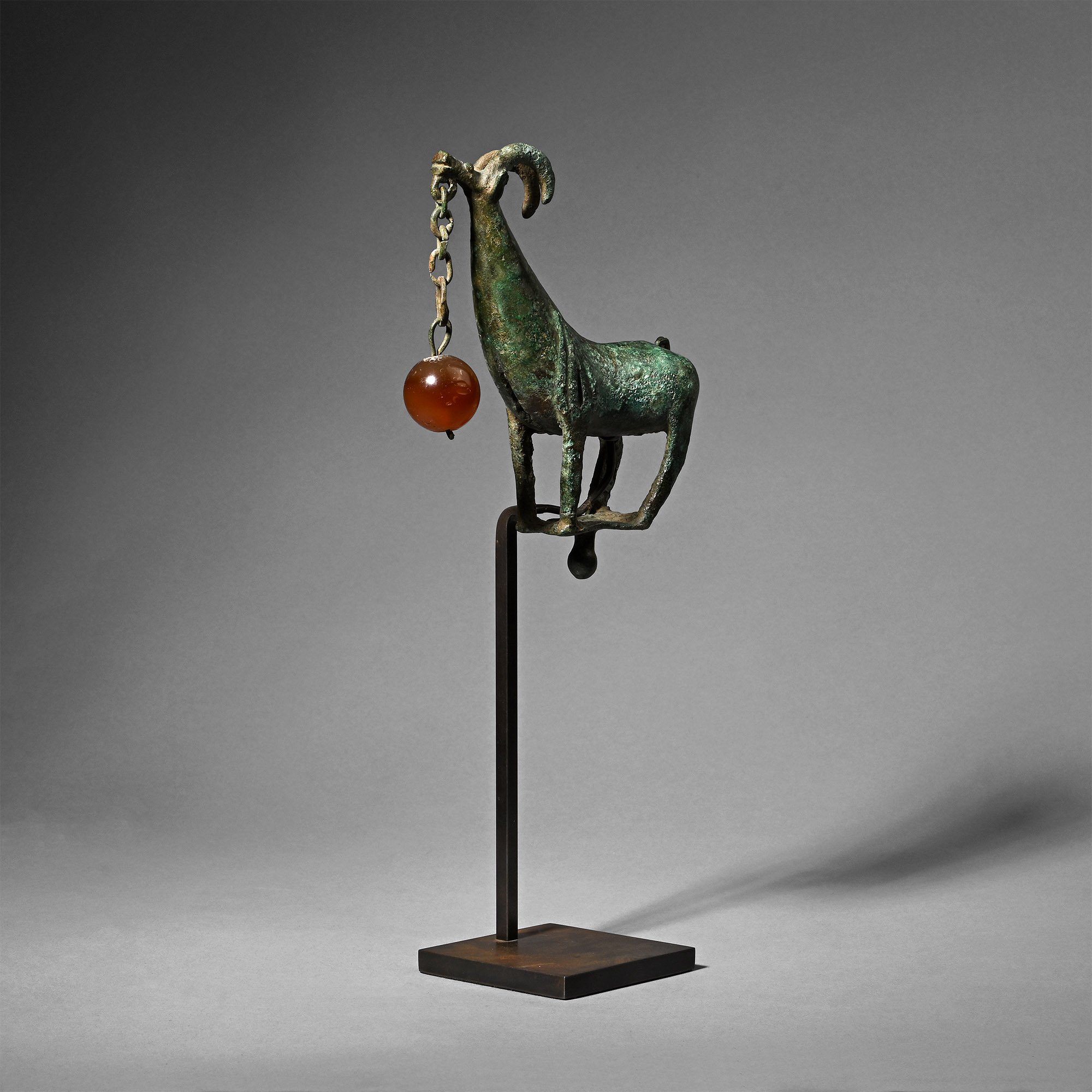
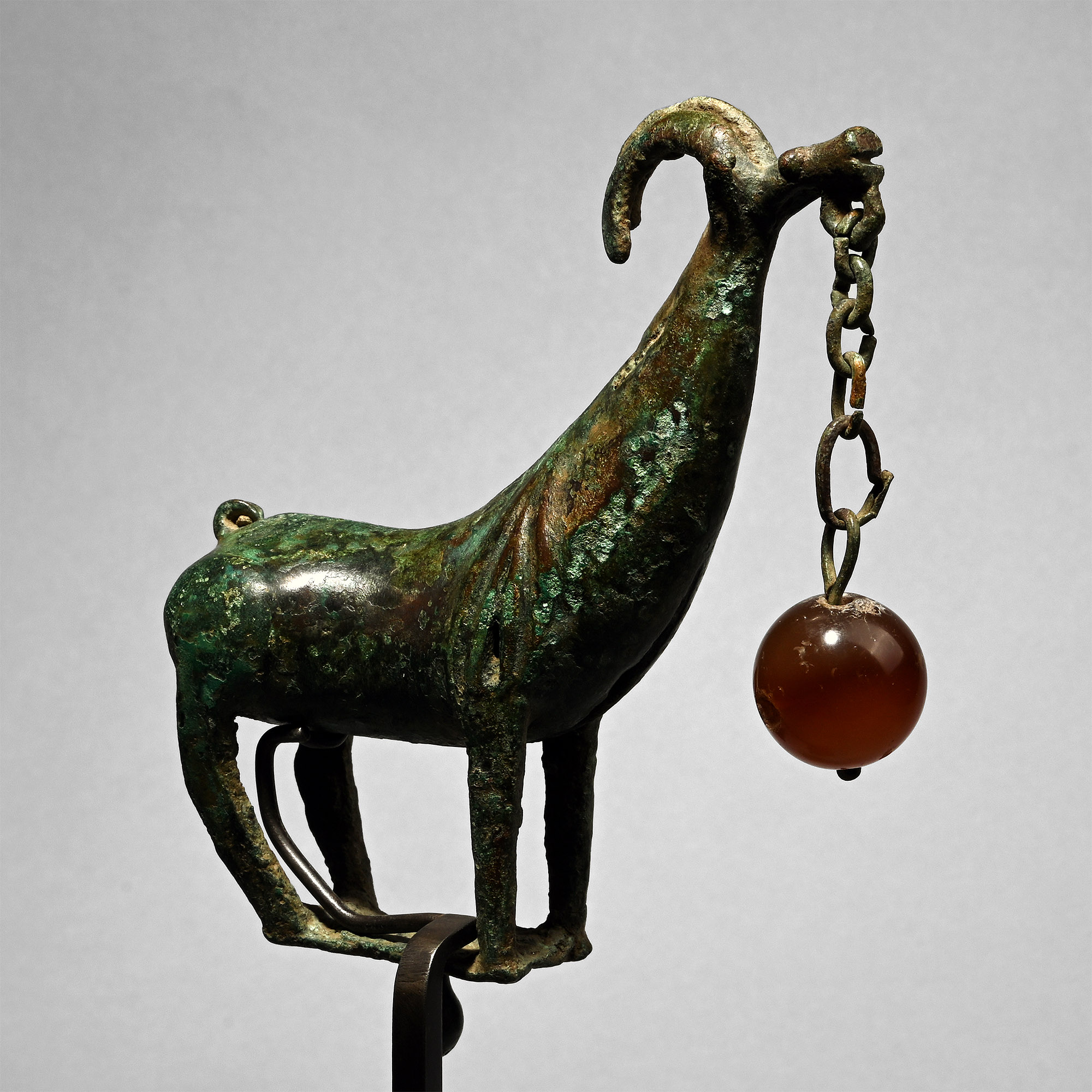
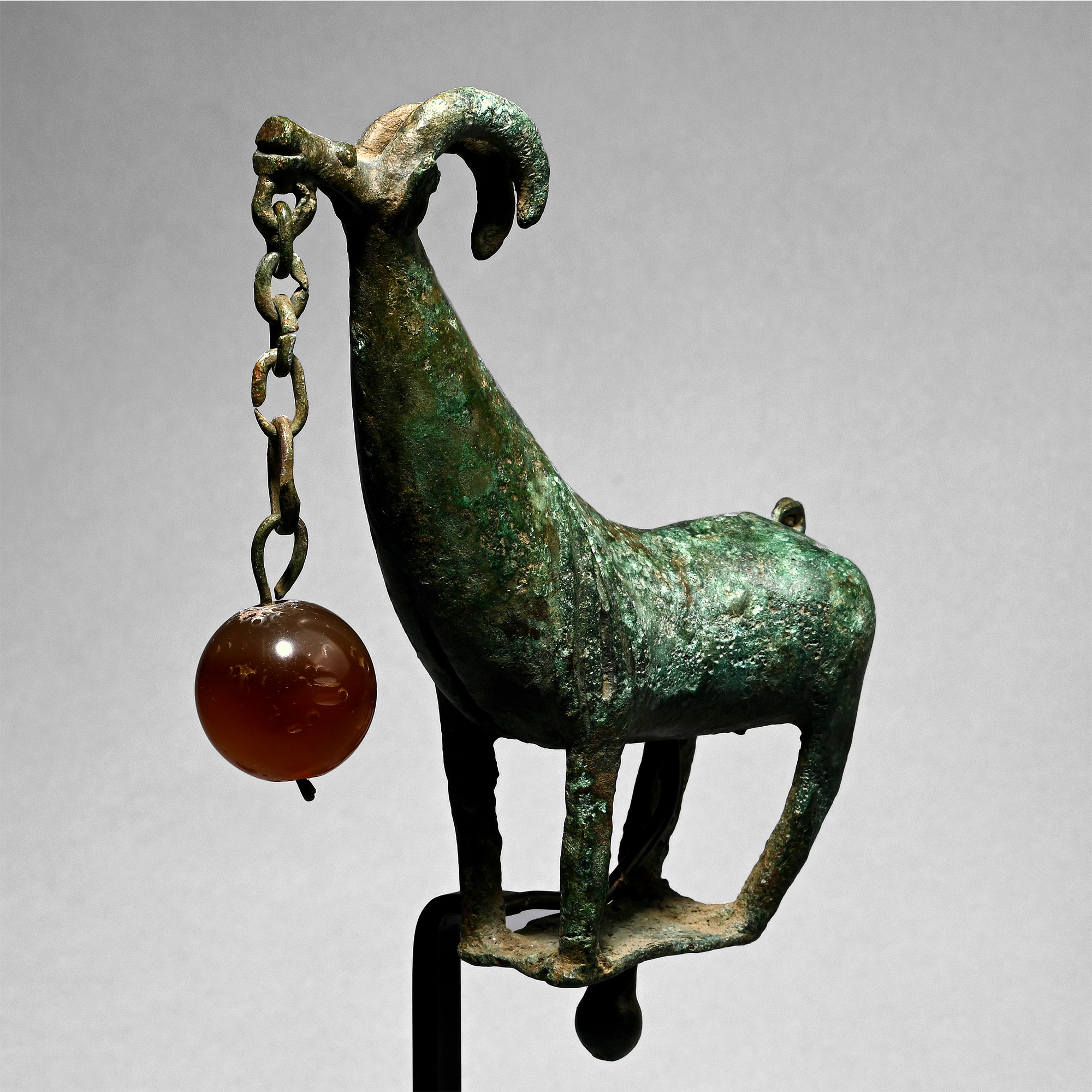
Bronze Military Standard Finial of an Ibex
TRANSCAUCASIA, 13TH-6TH CENTURY B.C.
5 7/8 in. (643 grams total, ibex: 15 cm high).
Wth a rounded body and prominent raised neck, a tubular muzzle with stylised eyes and ears and a small, slightly open mouth; a ring with a chain and a large carnelian sphere beneath the chin; a wide incised groove above the front legs, perhaps intended to represent muscles; a long slit beneath the abdomen; standing on a rectangular platform with a pin for insertion to a wooden shaft; accompanied by a custom-made display stand.
ProvenanceAcquired in Vienna, Austria, in the 1990s.
Collection of N.M., former Israeli Ambassador to Austria (1998–2000).
Private collection, London.
Accompanied by an academic report by Dr Raffaele D’Amato.
This lot has been checked against the Interpol Database of stolen works of art and is accompanied by search certificate number no.13039-247908.
Cf. Loehr, M., ‘The Stag Image in Scythia and the Far East’ in Archives of the Chinese Art Society of America Volume 9, 1955, pp.63-76 and pls.74-76; Davis-Kimball, J., Bashilov A.V., Yablonsky, L., Nomads of the Eurasian Steppes in the Early Iron Age, Berkeley, 1995, p.216, fig.12, for a similar mountain goat as top of a pole; p.272, fig.12, for the finial of a mountain goat from the Arzhan Kurgan; p.323 lett.p., for another similar finial.
FootnotesIn Scythian art, the ibex was often depicted in dynamic ‘animal style’ symbolising life, strength, and perhaps cosmic struggles, potentially linked to seasonal cycles or fertility, showing its sacred status as a totem animal alongside mouflons. The realistically depicted posture of the animal testifies to the ancient masters' keenness of observation and of their skill in rendering the character of the animal in metal. The posture recalls more archaic (7th-6th century B.C.) animal style art found in the Tagar finials.
CONDITIONTimeLine Auctions follows a vetting process to ensure the authenticity and legality of all items, reinforcing our commitment to integrity and responsible trading. Each antiquity, antique, and coin lot undergoes thorough examination by a vetting committee of at least ten external specialists, professional trade association members, scientists, and archaeologists: Our Vetting Process
AUCTIONS:
TimeLine is a leading auction house specialising in antiquities, ancient art, collectables, natural history, coins, medals, and books. Our auctions offer museums, collectors, historians, and enthusiasts the opportunity to acquire unique and historically significant pieces.
LOT 0077
Bronze Military Standard Finial of an Ibex
Estimate £8,000 - 10,000€9,280 - 11,600 (for guidance only)$10,800 - 13,500 (for guidance only)
-
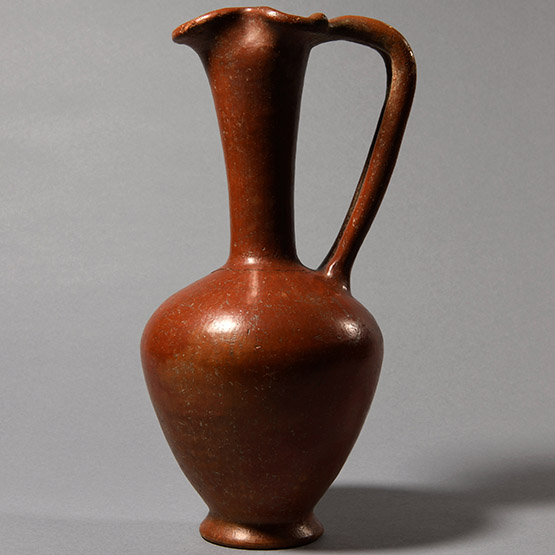
Large Phoenician Ceramic Piriform Jug
Levantine, 8th century B.C.Sold for (Inc. bp): £3,380
With trefoil mouth and integral ribbed handle, covered in a red slip with burnished surface; held in an antique wooden box crate. 1.72 kg, 28 cm
Collected by Miss Patience Townend, in the late 1950s. Thence by descent to the owner’s godmother. By gift to Mrs Lucy Manningham-Buller, circa 2002. Private collection, UK. Accompanied by a copy of a letter from Rupert Chapman, Curator of Levantine Antiquities, in the Middle Eastern Department at the British Museum, dated 4th March 2013, discussing the piece: ‘…there is no doubt in our minds that the piece is genuine, and that it dates to the eighth century B.C....the piece you have is a very fine one… any museum would be very happy to have such a fine example in its collection’. This lot has been checked against the Interpol Database of stolen works of art and is accompanied by search certificate number no.13090-248974.
This object exemplifies the high-quality tableware produced during its historical period, intended for use in the wealthiest homes. -
.jpg)
Greek Miniature Bronze Hydria
Geometric Period, 8th-6th century B.C.Estimate: £500 - 700 (‡+bp*)
Opening Bid: £250
With a bulbous body, flared foot, lateral loop handles to the shoulder and a strap handle to the rear. 23.5 grams, 37 mm
Acquired by a Swiss family in the mid-1980s to late 1990s, thence by descent. Private collection, Switzerland, since the late 1990s. -
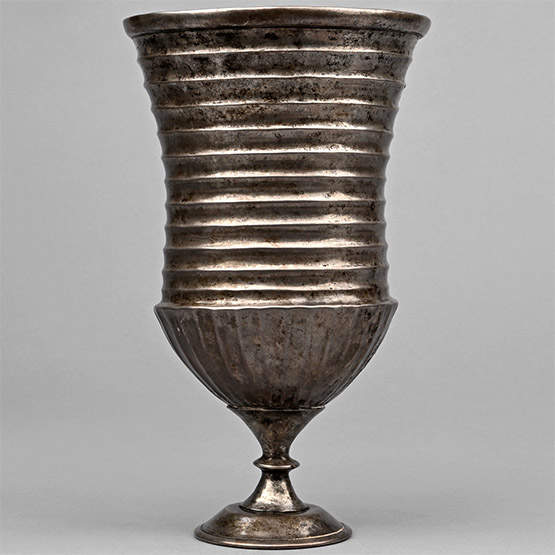
Large Graeco-Parthian Ribbed Silver Goblet
Graeco-Parthian or Gandharan, 1st century B.C.-1st century A.D.Estimate: £20,000 - 30,000 (+bp*)
Opening Bid: £10,000
With carinated ribbed walls, the upper portion cylindrical, the lower ovoid, with a separately made footed base, with the foot characterised by a central horizontal groove. 695 grams, 20 cm high
Robert Haber, New York, 1992. Accompanied by an academic report by Dr Raffaele D'Amato. This lot has been checked against the Interpol Database of stolen works of art and is accompanied by a search certificate number no.13036-248075.
