
Loading, please wait...
LOT 0398
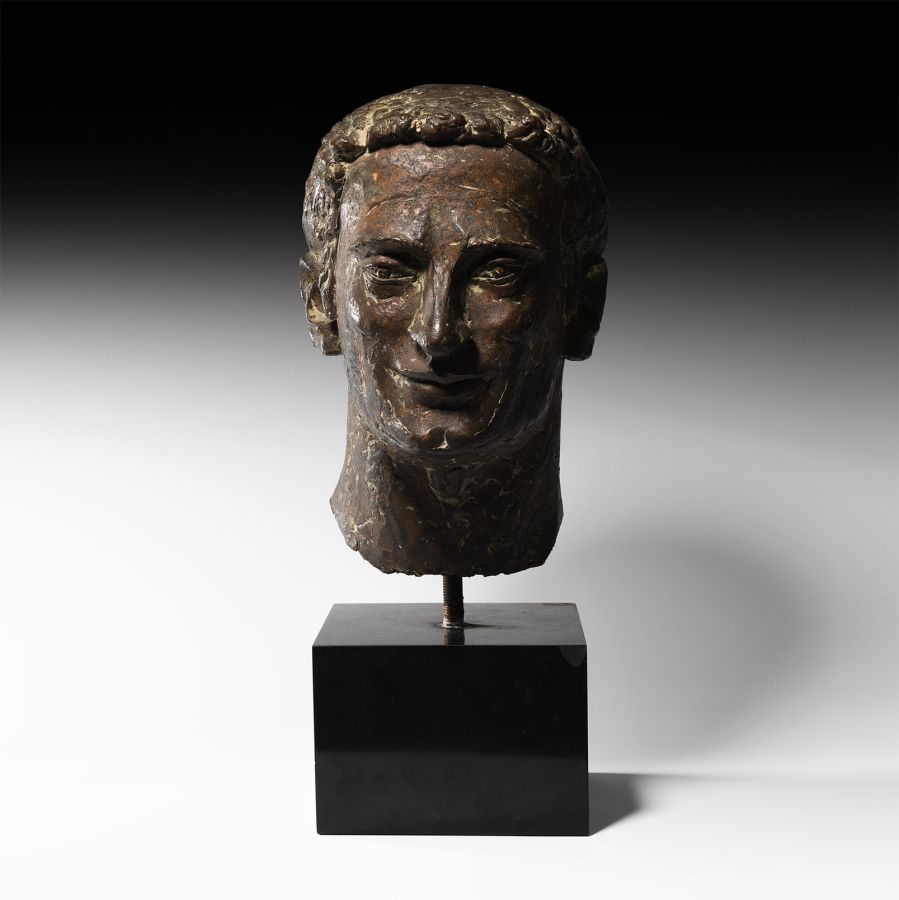
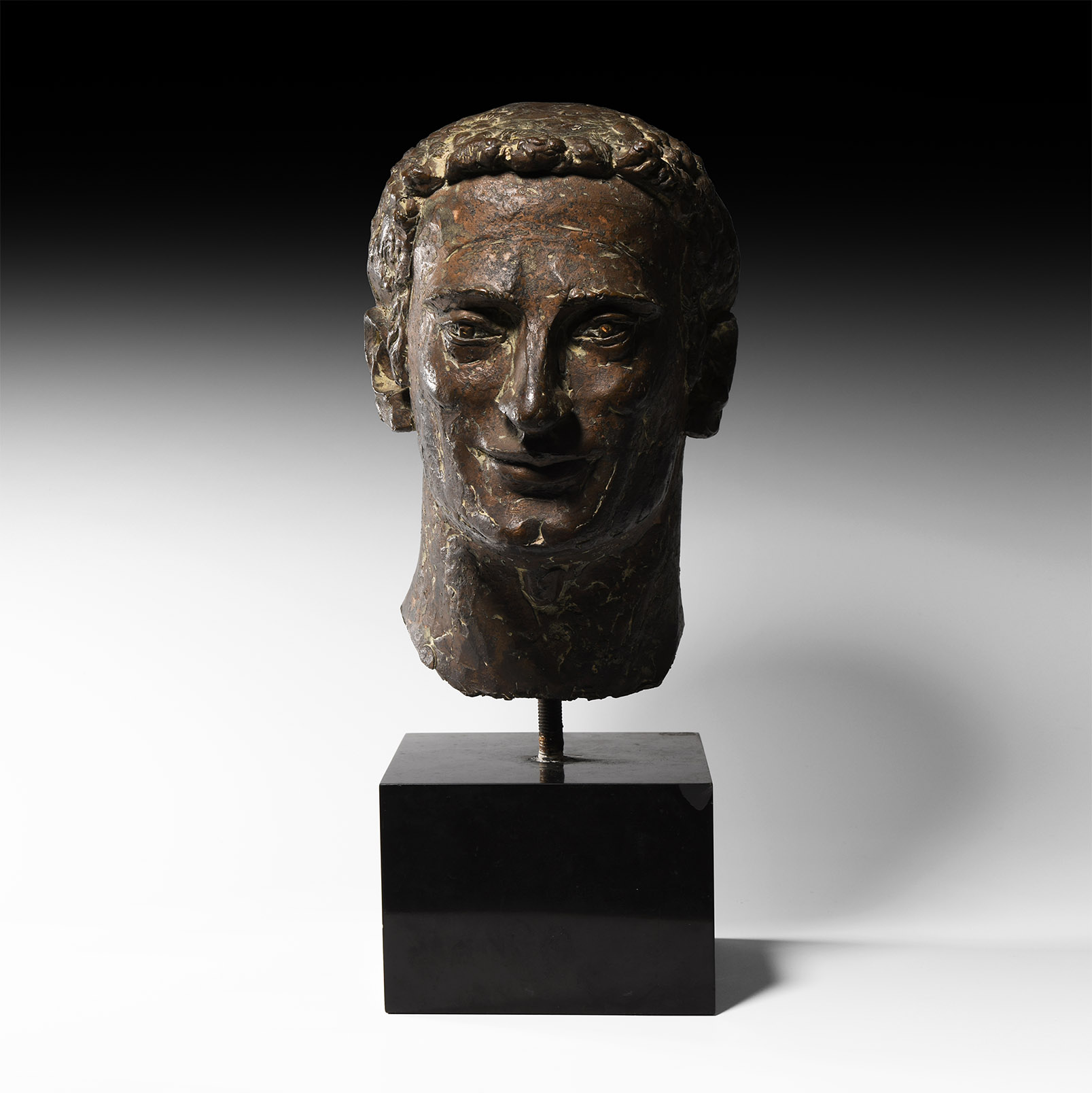
Bronze Head of a Man
20TH CENTURY A.D.
16 1/2 in. (18.4 kg total, 42 cm high including stand).
A hollow-formed bronze bust of a youthful clean-shaven male with short curly hair, with a subtle smiling expression; mounted on a custom-made stand.
ProvenanceFrench collection, 1960s-early 2000s.
From an important Paris gallery, France.
TimeLine Auctions follows a vetting process to ensure the authenticity and legality of all items, reinforcing our commitment to integrity and responsible trading. Each antiquity, antique, and coin lot undergoes thorough examination by a vetting committee of at least ten external specialists, professional trade association members, scientists, and archaeologists: Our Vetting Process
AUCTIONS:
TimeLine is a leading auction house specialising in antiquities, ancient art, collectables, natural history, coins, medals, and books. Our auctions offer museums, collectors, historians, and enthusiasts the opportunity to acquire unique and historically significant pieces.
LOT 0398
Bronze Head of a Man
Estimate £800 - 1,000€930 - 1,160 (for guidance only)$1,080 - 1,350 (for guidance only)
-
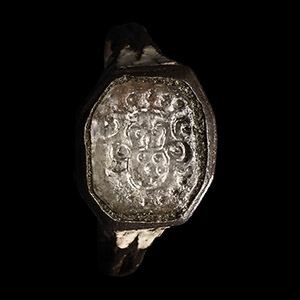
Tudor Period Ring with Armorial Intaglio
Circa 16th-17th century A.D.Sold for (Inc. bp): £72
A ring composed of a slender hoop with octagonal bezel, set with an armorial glass intaglio; remains of polychrome enamelled cells to the vertical faces of the bezel. 5.89 grams, 28.05 mm overall, 19.70 mm internal diameter (approximate size British T 1/2, USA 9 3/4, Europe 21.89, Japan 21)
Found Cambridgeshire in the 1990s. -

Stained Glass Menorah Panel
20th century A.D.Estimate: £300 - 400 (+bp*)
Opening Bid: £120
A rectangular panel of stained glass displaying a menorah within a wreath at its centre; polychrome surrounding shield; the individual glass pieces and the whole with lead cames. 4.3 kg, 55.5 x 61 cm
Fine condition, panes cracked.
Ex London, UK, gallery. Property of a London gentleman. -
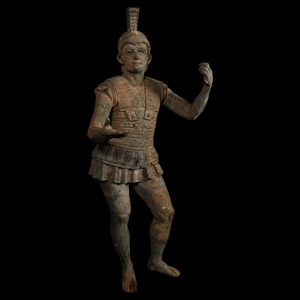
Bronze Statue of an Etruscan Warrior
20th century A.D.Estimate: £3,000 - 4,000 (+bp*)
Opening Bid: £1,500
A hollow-formed bronze copy of the Mars of Todi, a figure of an Etruscan warrior wearing segmented armour to the chest and shoulders, crested helmet, short tunic; the hands in animated pose with left hand open to accept a weapon; holes beneath feet for mounting. 7.6 kg, 61.5 cm high
French collection, 1960s-early 2000s. From an important Paris gallery, France. with Galerie Athena, Brussels, 9 May 2019, lot 393. This lot has been checked against the Interpol Database of stolen works of art and is accompanied by search certificate number no.11691-199344.
The "Mars of Todi" figure is a large, almost life-sized bronze statue of a warrior in armour. It dates from the late 5th - early 4th century B.C., and is believed to have been produced by an Etruscan workman for an Umbrian patron. The figure was probably a votive offering for a religious sanctuary, perhaps sacred to Laran, the Etruscan god of war. It had been buried ritually and left undisturbed until its modern discovery in 1835. It lacks a helmet, and the hands are empty; possibly a patera plate was originally in the open right hand, and a spear gripped in the clenched left hand. The sculptor of the figure followed the Greek contrapposto posture accentuating the carefully modelled lamellar plate armour. The statue bears a short inscription in Umbrian "Ahal Trutitis dunum dede" (Ahal Trutitis gave this gift).
