
Loading, please wait...

LOT 2050
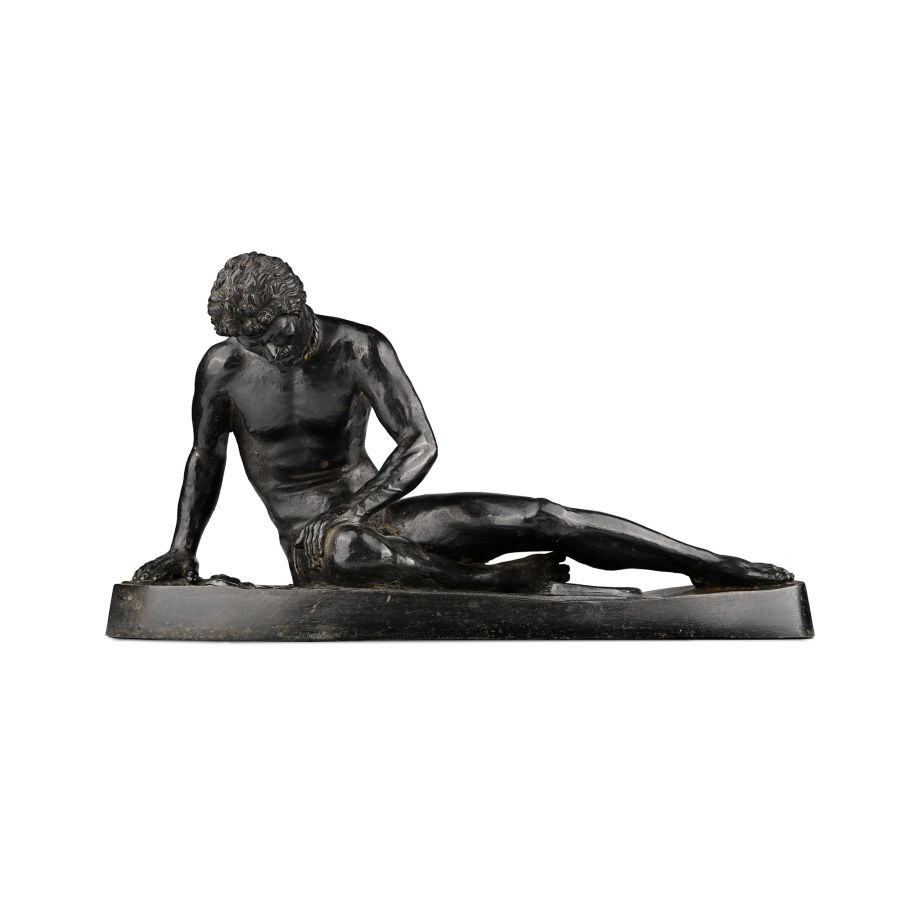
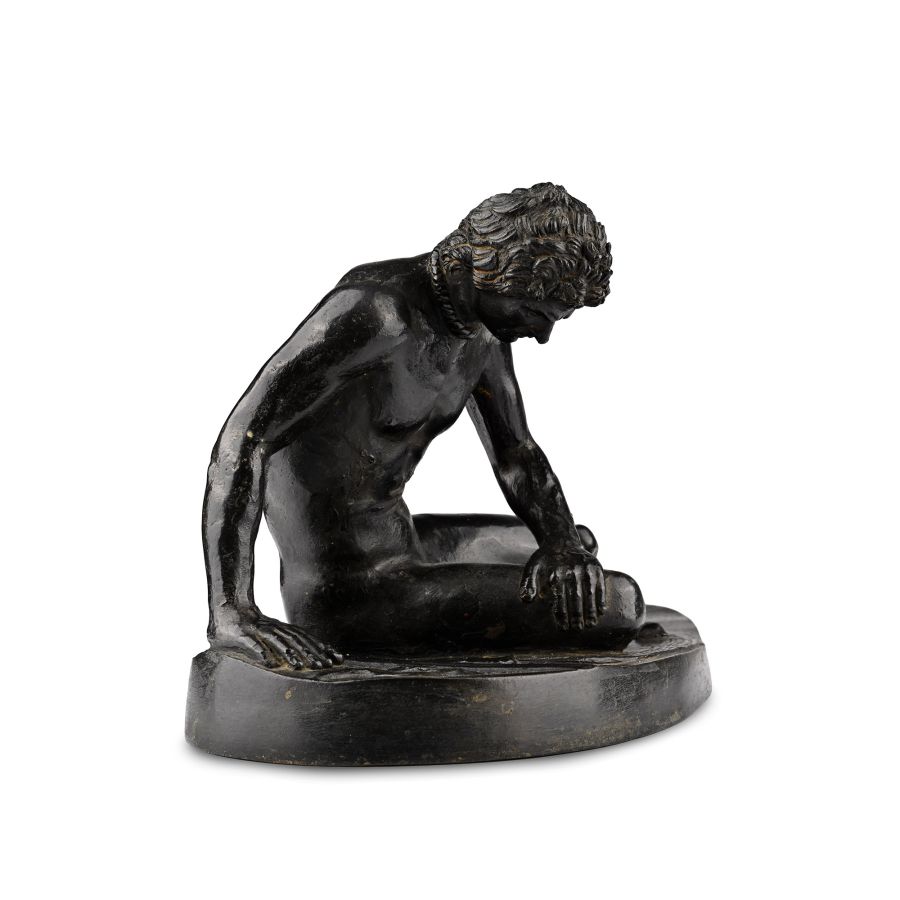
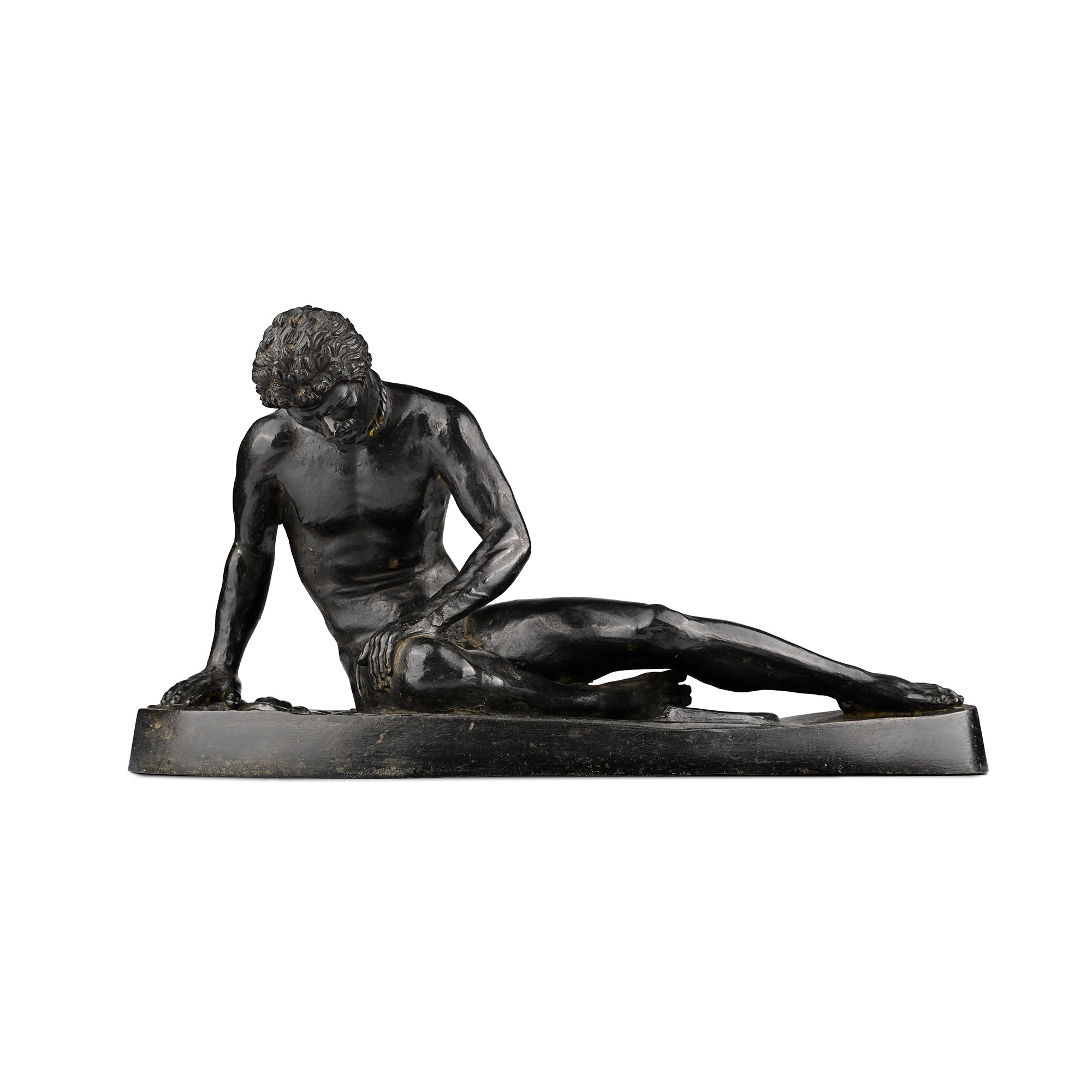
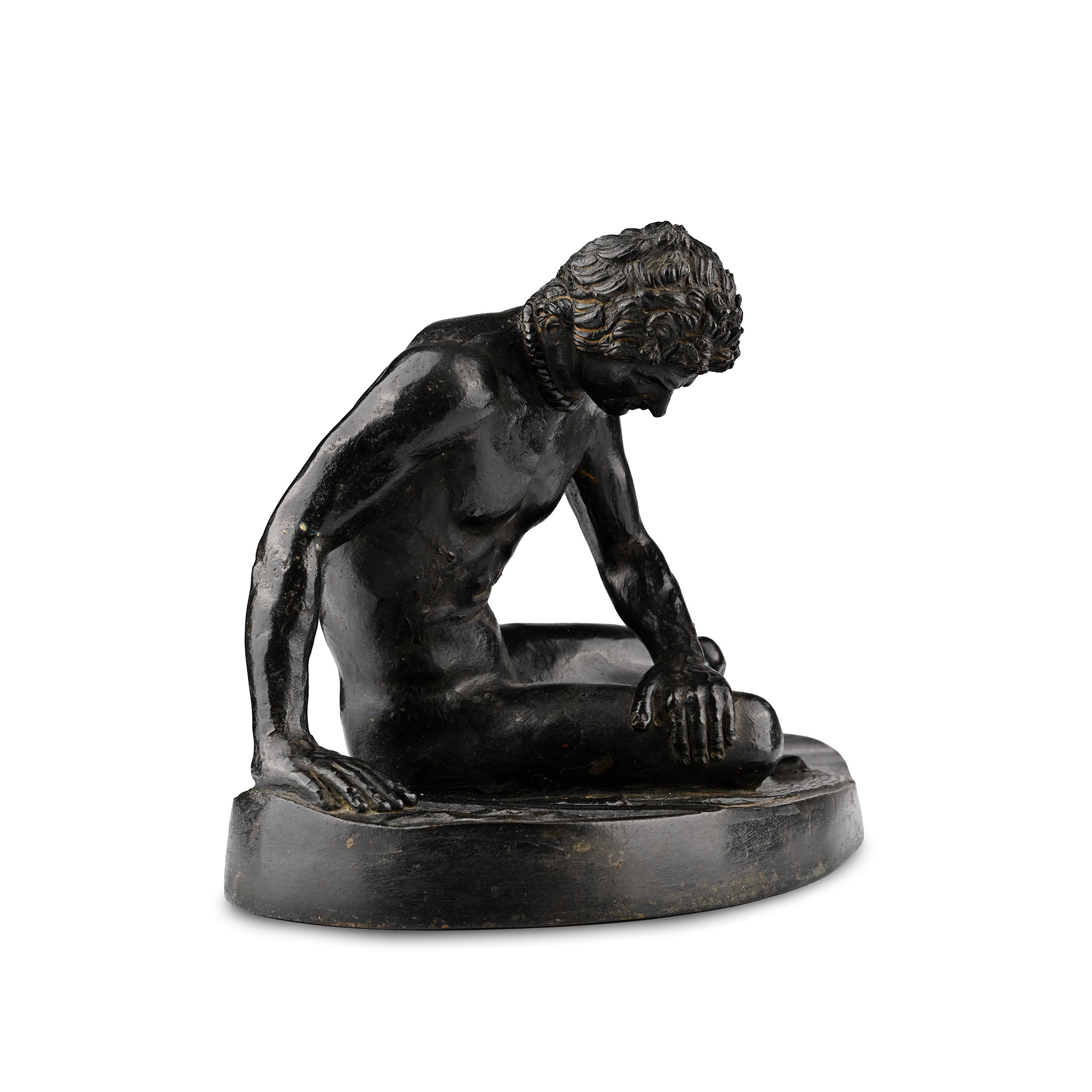
Bronze Grand Tour Statue of 'The Dying Gaul' from the Capitoline Museum
ITALY, CIRCA 1880 A.D.
12 5/8 in. (4 kg, 32 cm).
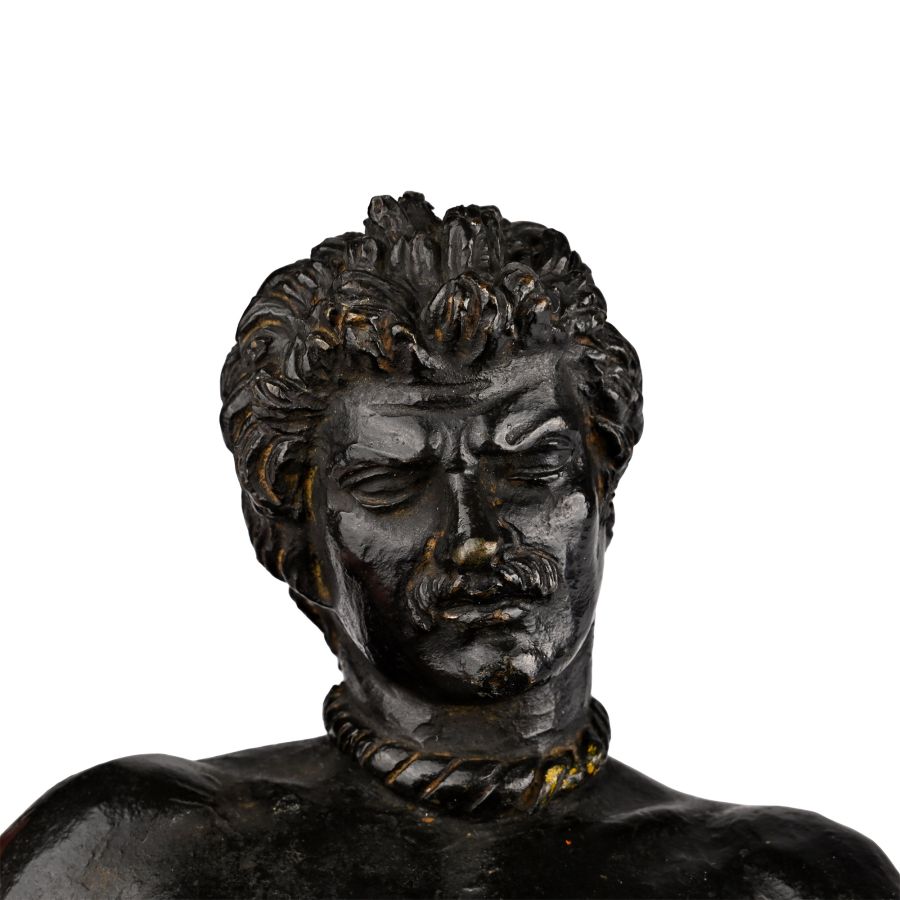
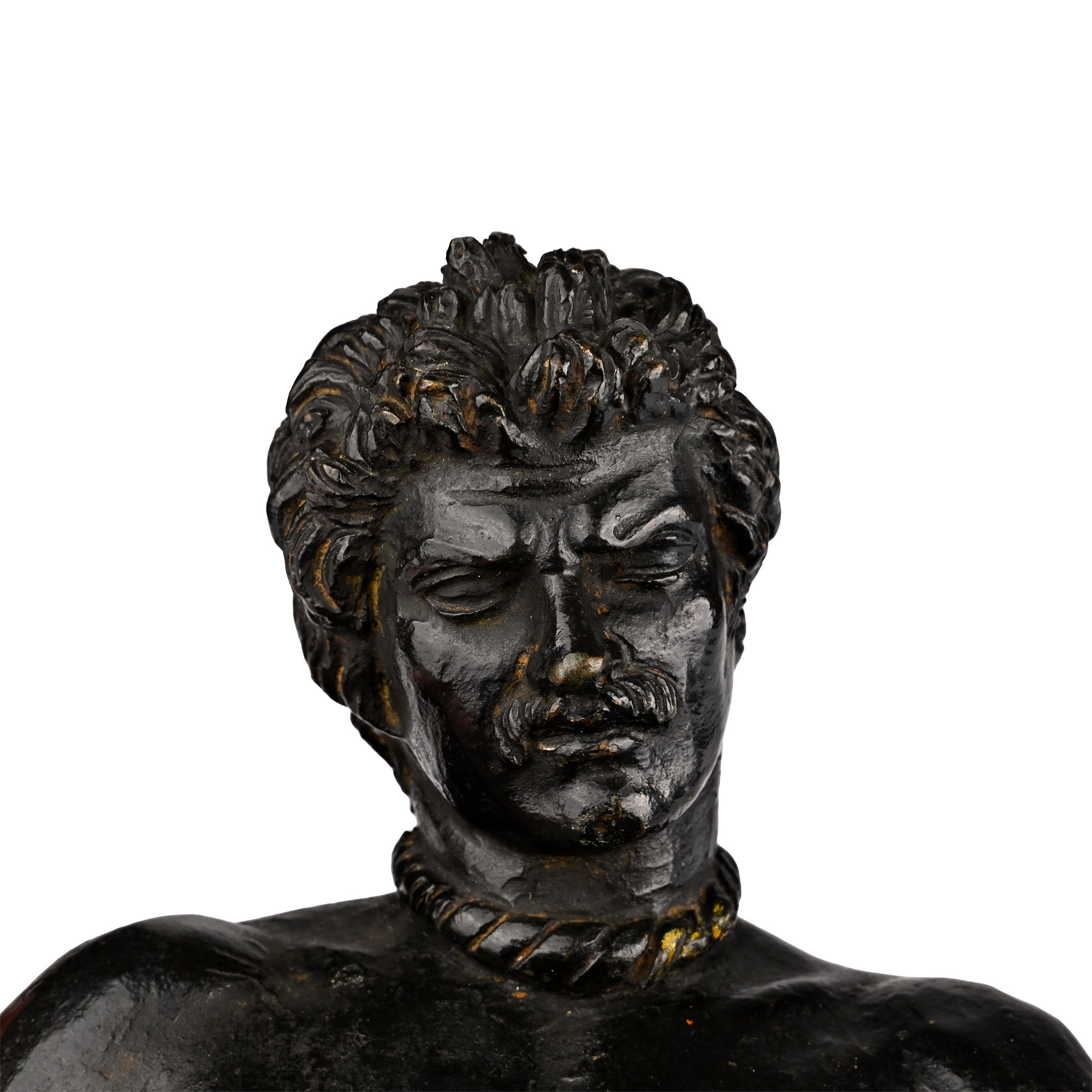
Copy of a Greek sculpture (now lost) from the Hellenistic period (323-31 BC) thought to have been made in bronze; a young Galatian warrior, wounded in the chest by a sword blow and dying, half-lying with his face turned downwards; with typical features of the idealised Celtic warrior: the high cheekbones, the hairstyle with thick and long locks, and the moustache (mytax); resting on a discarded shield with short sword under his right hand, straps and two tubular war-horns.
ProvenanceFrom the private collection of a S.W. London gentleman, acquired in the 1970s.
LiteratureSee Mattei, M., Il Galata Capitolino, Rome, 1998.
FootnotesThe Dying Gaul statue was rediscovered in Rome in the early 17th century, specifically in the 1620s, during excavations for the Villa Ludovisi. It was initially part of the Ludovisi collection and later acquired by Pope Clement XII for the Capitoline Museums.
Except for a torque around the neck (a metal necklace typical of Celtic warriors), the figure is completely naked. It is possible to identify the figure tentatively as the ‘Trumpeter of Epigonos’ mentioned by Pliny (Natural History 34.88).
TimeLine Auctions follows a vetting process to ensure the authenticity and legality of all items, reinforcing our commitment to integrity and responsible trading. Each antiquity, antique, and coin lot undergoes thorough examination by a vetting committee of at least ten external specialists, professional trade association members, scientists, and archaeologists: Our Vetting Process
AUCTIONS:
TimeLine is a leading auction house specialising in antiquities, ancient art, collectables, natural history, coins, medals, and books. Our auctions offer museums, collectors, historians, and enthusiasts the opportunity to acquire unique and historically significant pieces.
LOT 2050
Bronze Grand Tour Statue of 'The Dying Gaul' from the Capitoline Museum
Sold for (Inc. bp): £1,040
-
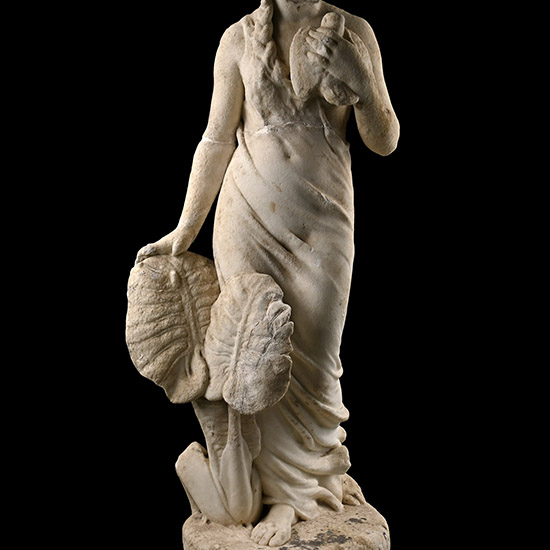
Large Carved Marble Statue of a Headless Maiden Holding a Dove
19th century A.D.Estimate: £1,000 - 1,400 (+bp*)
Opening Bid: £500
Her body depicted in a contrapposto pose with the weight on her right leg, resting her right hand on large plant leaves that surround her; a sheer garment wrapped around her body and plaited over her right shoulder; holding a dove against her chest with her left hand. 51.5 kg, 80 cm high
Private collection, London. -
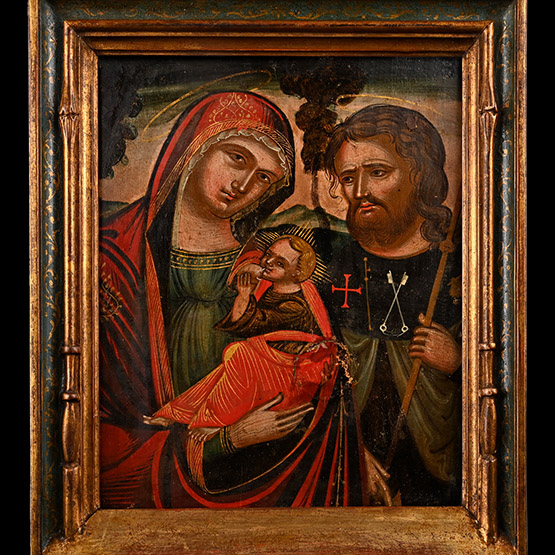
Veneto-Cretan Icon of Marcia Lactans with St Rock
17th century A.D.Estimate: £3,500 - 4,500 (+bp*)
Opening Bid: £1,750
Executed in oil and tempera on a slightly curved wooden panel base depicting the Theotokos (Mother of God), the infant Jesus and Saint Rock on a natural background; Mary with head bowed left wearing a red maphorion mantle over a dark blue robe, with elaborate golden saltires on the shoulders and head of the mantle, fine gold brocade to the hem of the blue robe, nursing the child; the infant Jesus facing away to left, supported on Mary's right arm and dressed in gold tunic, wrapped in a red shawl with gold highlights to folds, both hands holding the mother’s breast; the long-haired Saint Rock covered in a black tabarrino marked with his attributes, the red cross, the pilgrim's staff, the scallop shell and the keys, holds his walking stick in his hand; trees and mountain profiles in the background; gilded wooden frame surrounded by a blue indigo border with gold arabesques; from the Veneto-Cretan guild. 857 grams, 32.5 x 27.5 cm
Acquired on the European art market. Private collection, London, UK. Accompanied by an academic report by Dr Raffaele D’Amato. This lot has been checked against the Interpol Database of stolen works of art and is accompanied by search certificate no. 13065-249292.
The icon presents the type known in Greek as the Galaktotrophousa and in Russia as Mlekopitatelnitsa. Originating from the pagan iconography of Isis nursing Horus, the icon presents the Mother of God nursing the child. As is typical in traditional Orthodox iconography, conscious effort is made to remove the image from reality. That is why Mary’s breast is so oddly depicted and placed near her shoulder — an attempt to avoid any trace of sensuality. -
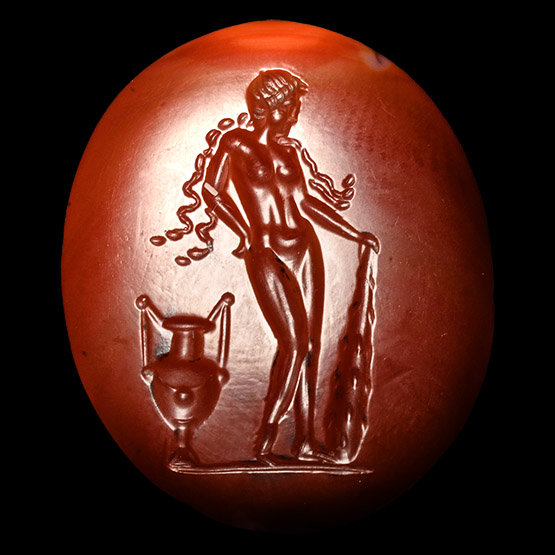
Post-Classical Red Agate Gemstone with Omphale
19th-20th century A.D.Estimate: £500 - 700 (+bp*)
Opening Bid: £250
Elipsoid in plan with domed obverse; intaglio with Omphale standing nude on a baseline, right hand on her hip and supporting her club with her left; at her feet an Apulian trozella vessel; supplied with a museum-quality impression. 4.13 grams, 25 mm
Private collection, England.
The figure bears the classic symbol of Hercules - the club - but the details of her nude body and lack of beard indicate that this is a female. Omphale was the queen of Lydia, daughter of the river Lardanos. According to myth, Hercules was a slave to the beautiful queen for three years and was forced by her to dress as a woman and spin wool, giving up his lion's head. It was Omphale who donned her lion's head and wielded the club, as depicted in this intaglio, an allegory of submission and revenge in love. An interesting post-classical work.
