
Loading, please wait...
LOT 2043
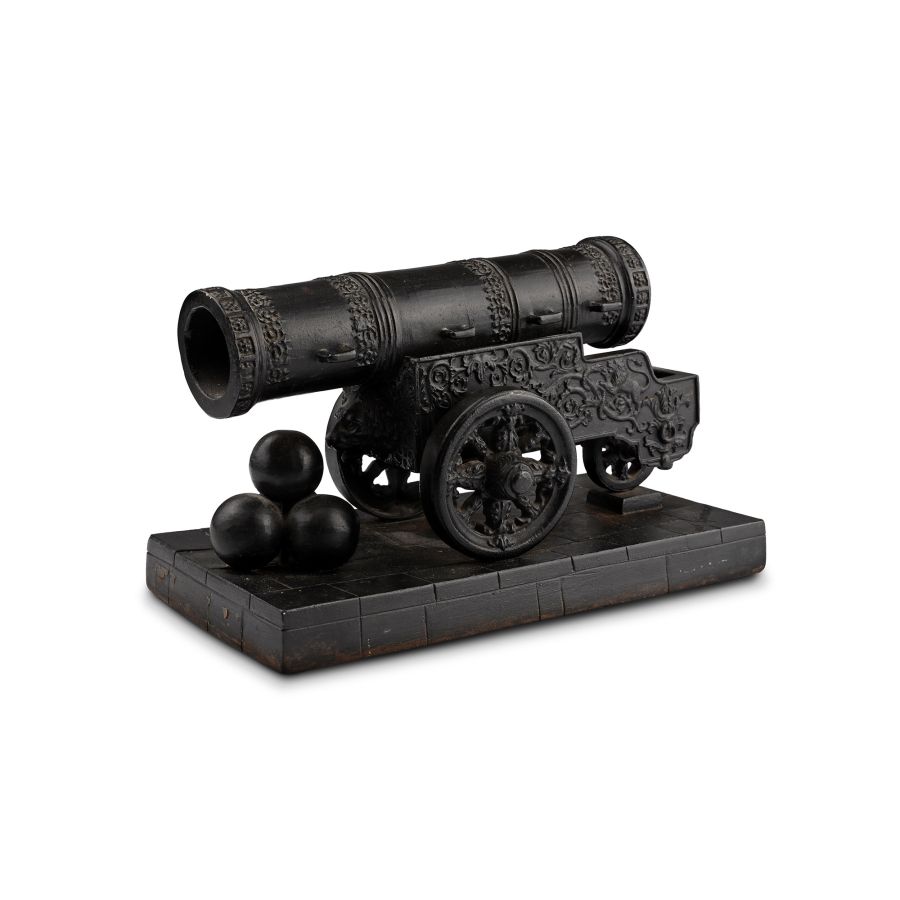
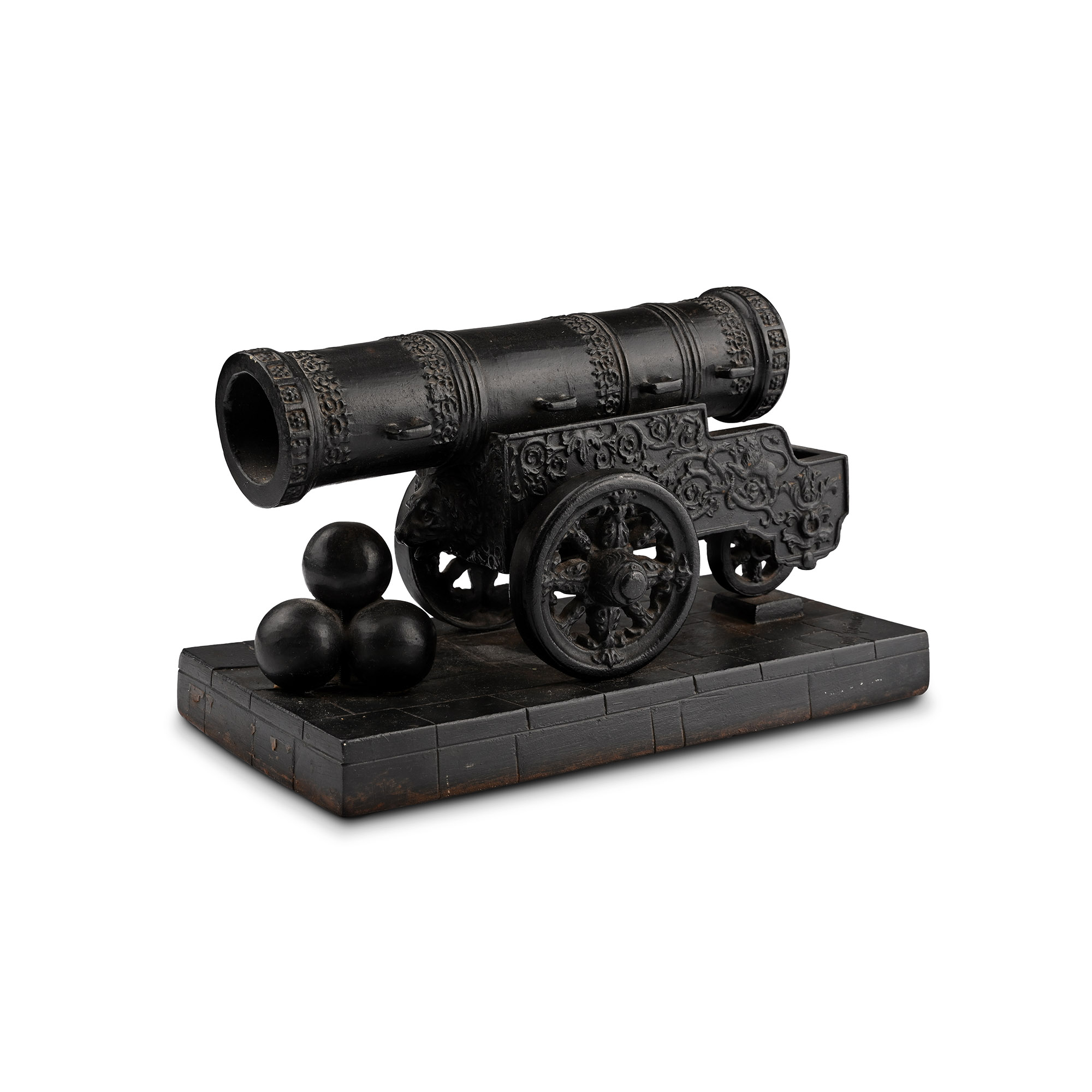
Bronze Grand Tour Moscow Cannon Model
ITALY, LATE 19TH CENTURY A.D.
9 1/2 in. (3.49 kg, 24.1 cm wide).
Miniature of the 'Moscow Cannon' or 'Tsar Cannon', located in the Kremlin; on a wheeled carriage with lion-mask, rampant lion among tendrils and other detailing; pile of cannonballs to the base with 'paving stones' effect and Cyrillic text to one angle; original cast in 1586 by Russian master bronze caster Andrey Chokhov, it is a significant monument of Russian artillery and a major tourist attraction.
ProvenanceFrom the private collection of a S.W. London gentleman, acquired in the 1970s.
This lot is accompanied by an illustrated lot declaration signed by the Head of the Antiquities Department, Dr Raffaele D'Amato.
The original cannon was put into service in 1586 by Tsar Feodor I Ioannovich, son of Ivan IV. It weighed 39.31 tons and had a length of 5.34 metres, an internal diameter of 89 cm, and an external diameter of 1.2 metres. It was the largest cannon in the world of its time. The Tsar Cannon was never used in war, but was likely intended as a display of military might from the beginning. Some researchers argue that this cannon could not fire its two-ton projectiles but its purpose was to fire stone shrapnel.
The cannon is adorned with reliefs, including one of Tsar Feodor on a horse. The original wooden gun carriage was built in the early 19th century, but was destroyed by fire in 1812; the present gun carriage and projectiles were added in 1835.
TimeLine Auctions follows a vetting process to ensure the authenticity and legality of all items, reinforcing our commitment to integrity and responsible trading. Each antiquity, antique, and coin lot undergoes thorough examination by a vetting committee of at least ten external specialists, professional trade association members, scientists, and archaeologists: Our Vetting Process
AUCTIONS:
TimeLine is a leading auction house specialising in antiquities, ancient art, collectables, natural history, coins, medals, and books. Our auctions offer museums, collectors, historians, and enthusiasts the opportunity to acquire unique and historically significant pieces.
-
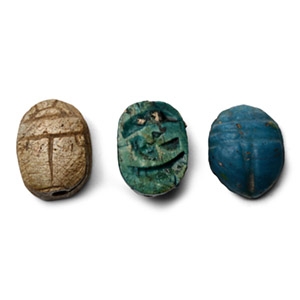
Egyptian Style Stone Scarab Collection
20th century A.D.Sold for (Inc. bp): £20
In blue, green and white faience, two with hieroglyphic legend to the underside; after the antique. 5.14 grams total, 15 mm each
From a Post War collection, a deceased estate. Acquired from a UK provincial auction. From the collection of G.M.R.H., London, UK. This lot is accompanied by an illustrated lot declaration signed by the Head of the Antiquities Department, Dr Raffaele D'Amato. -
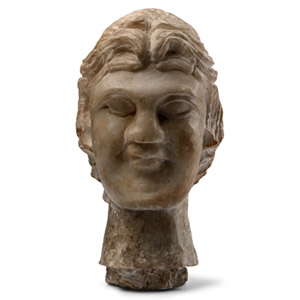
Post Medieval Marble Head of a Woman
20th century A.D.Sold for (Inc. bp): £7
Carved in post-classical style with centre-parted hair developing to a coiled plait, stern facial features, flared neck with mounting panel beneath. 6.6 kg, 21.5 cm
Acquired on the UK art market in the 1990s. From the Dr Ince collection, N.W. London, UK. This lot is accompanied by an illustrated lot declaration signed by the Head of the Antiquities Department, Dr Raffaele D'Amato. -
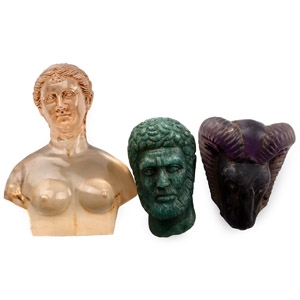
Group of Roman Style Stone Heads
20th century A.D.Sold for (Inc. bp): £312
Including a rock crystal bust of Venus and other types. 244 grams total, 47-73 mm
From the family collection of a Hampstead gentleman; formerly acquired in the 1980s. This lot is accompanied by an illustrated lot declaration signed by the Head of the Antiquities Department, Dr Raffaele D'Amato.
