
Loading, please wait...
LOT 0394
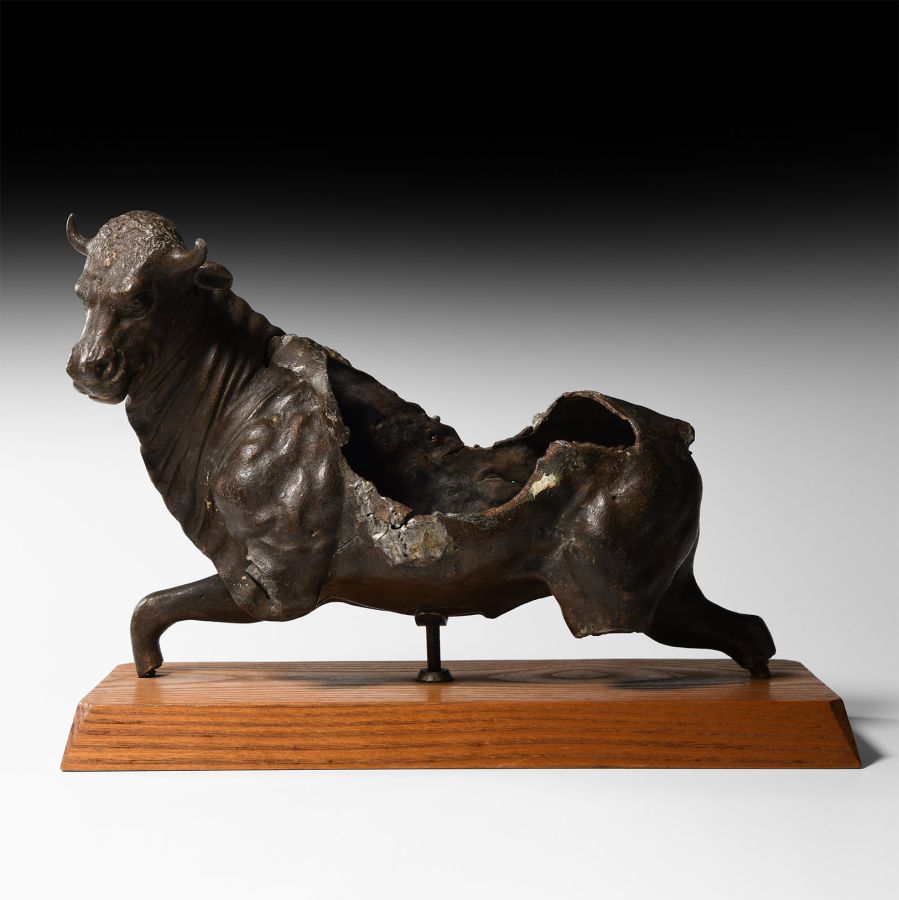
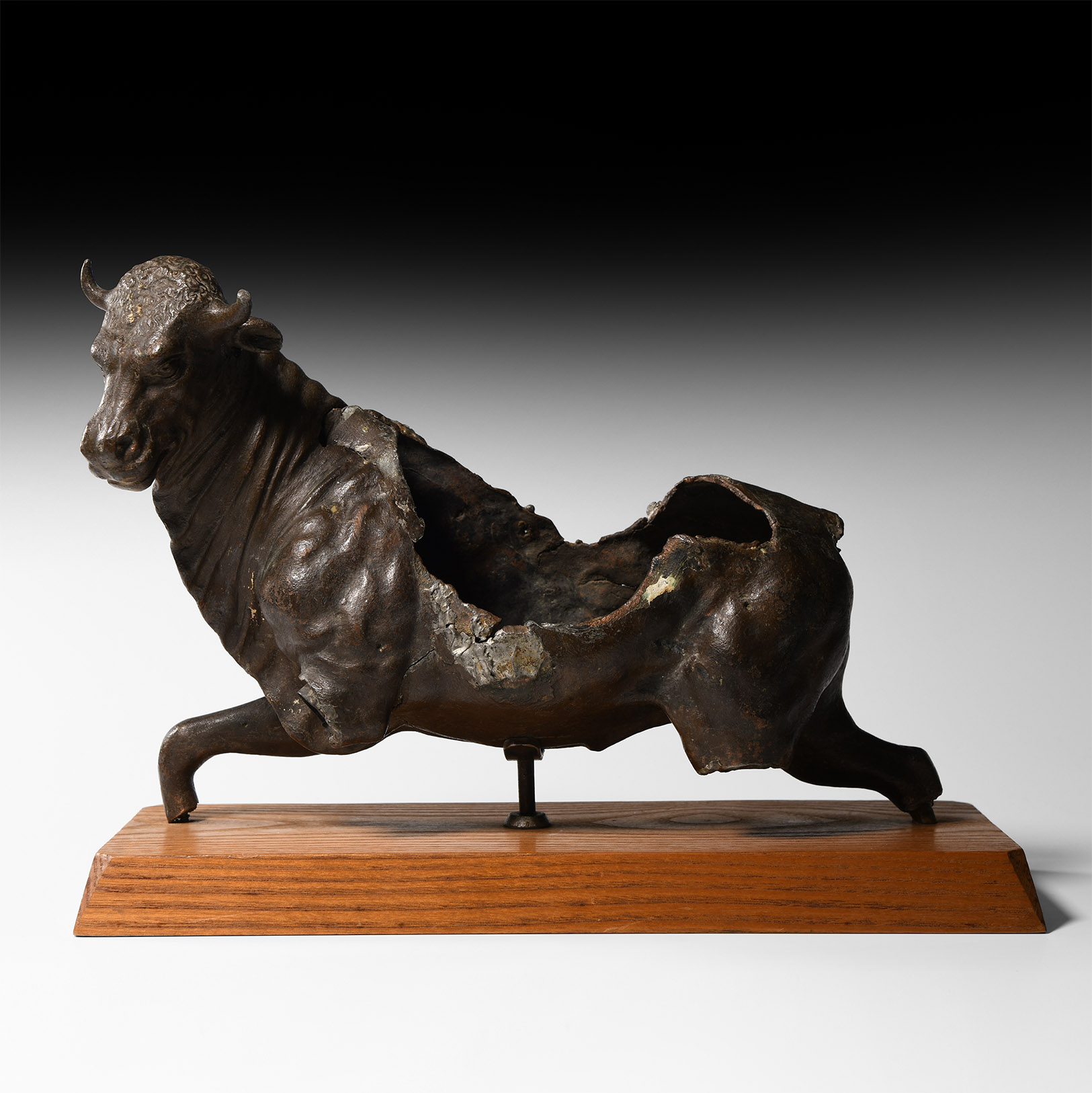
Bronze Fragmentary Bull
20TH CENTURY A.D.
11 7/8 in. (2.4 kg total, 30 cm wide including stand).
A dynamically poised bull, naturalistically modelled looking downwards and slightly to the left, with short curls to the top of the head; mounted on a custom-made display stand.
ProvenanceFrom an important Paris gallery, France.
with Adjug Auctions, Paris, France, 2 February 2020, lot 518.
TimeLine Auctions follows a vetting process to ensure the authenticity and legality of all items, reinforcing our commitment to integrity and responsible trading. Each antiquity, antique, and coin lot undergoes thorough examination by a vetting committee of at least ten external specialists, professional trade association members, scientists, and archaeologists: Our Vetting Process
AUCTIONS:
TimeLine is a leading auction house specialising in antiquities, ancient art, collectables, natural history, coins, medals, and books. Our auctions offer museums, collectors, historians, and enthusiasts the opportunity to acquire unique and historically significant pieces.
LOT 0394
Bronze Fragmentary Bull
Estimate £700 - 900€810 - 1,040 (for guidance only)$950 - 1,220 (for guidance only)
-
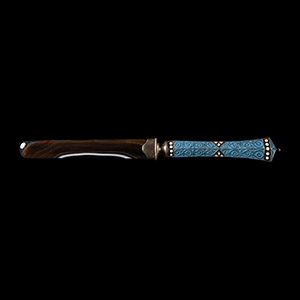
Silver Enamelled Letter Opener with Agate Blade
19th-20th century A.D.Sold for (Inc. bp): £338
A letter opener comprising a blue enamelled handle with reserved scrolled tendril detailing and white enamelled pellets, waisted baluster, lentoid-section nanded agate blade. 19.5 grams, 15.5 cm
English private collection. -
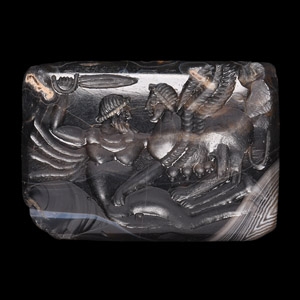
Neoclassical Gemstone Plaque
18th-19th century A.D.Sold for (Inc. bp): £279
A banded agate intaglio engraved with an ancient Assyrian(?) style figural scene showing a man with sword in hand battling a sphinx-like mythical winged creature with the head of a woman and body of a lion, swollen teats lining the creature's belly; pair of drilled holes for suspension; chipped. 21.6 grams, 43 mm
Fine condition.
Property of a North London gentleman.
Likely an allusion to ancient tales of the monstrous and treacherous sphinx attacking the hero. -
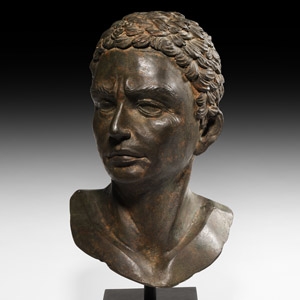
Bronze Head of a Man
19th-20th century A.D.Sold for (Inc. bp): £910
A hollow-formed bronze head of a middle-aged man with tousled hair, stern features, pursed mouth; mounted on a custom-made stand. 5.4 kg total, 39 cm high including stand
French collection, 1960s-early 2000s. From an important Paris gallery, France.
