
Loading, please wait...
LOT 0392
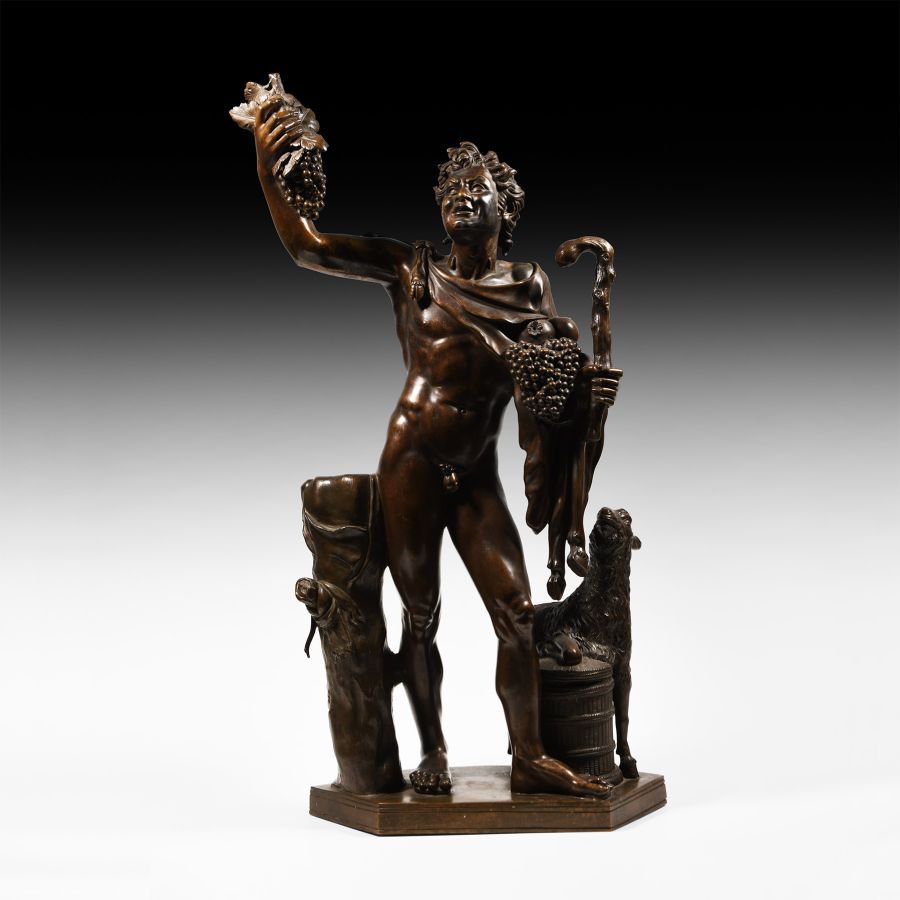
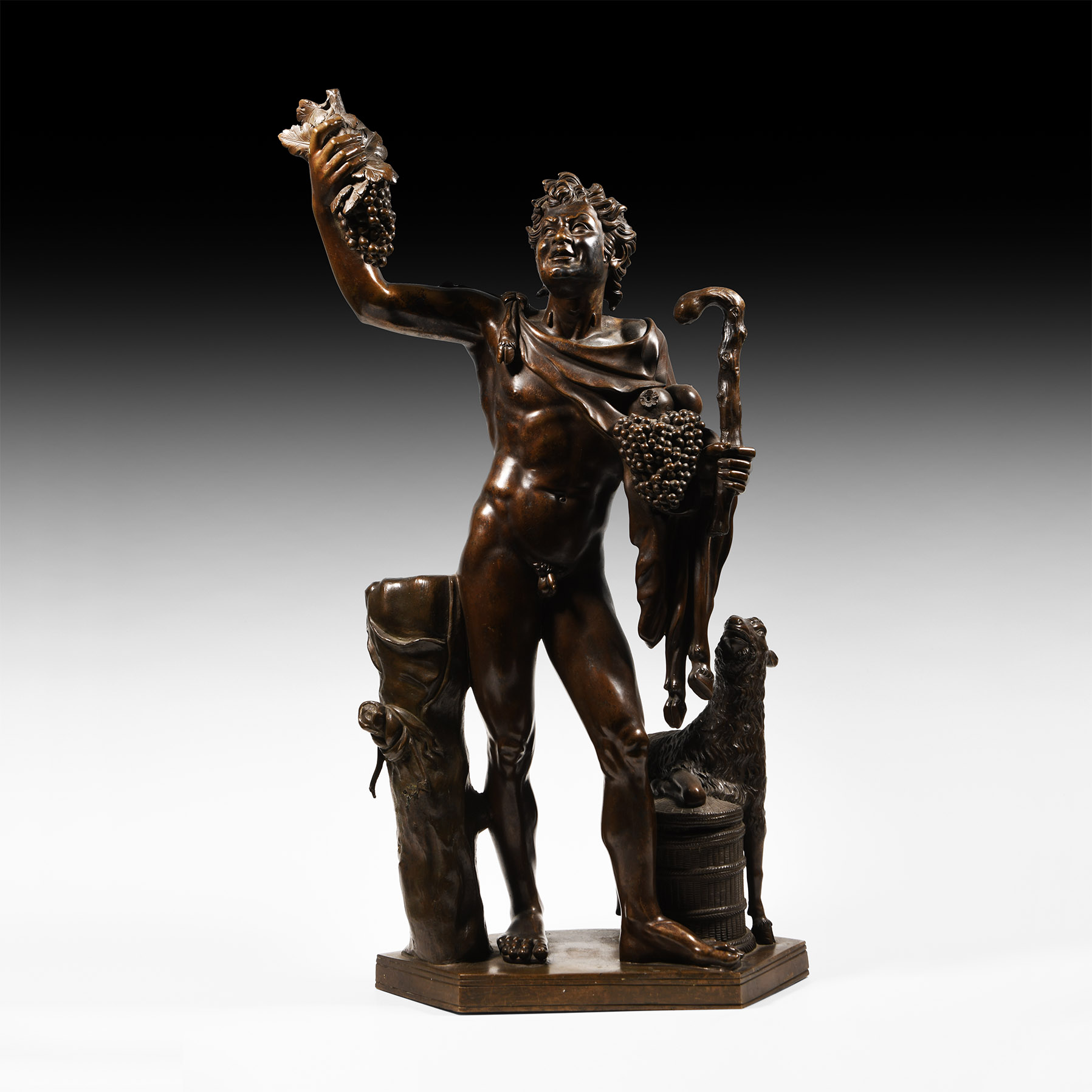
Bronze 'Fauno Rosso' Satyr
19TH CENTURY A.D.
26 1/2 in. (18.5 kg, 67 cm high).
A bronze figure of a satyr standing on a hexagonal base wearing a goatskin mantle tied by the forelegs around his shoulders, with poppy seed-heads and bunches of grapes by the left arm; in his raised right hand, a bunch of grapes and in his left hand a cudgel; stump of a tree by his right leg and barrel beside his left, with a lamb to the rear placing its foreleg on top; modelled after the so-called Fauno Rosso from Hadrian's Villa, now in the Capitoline Museum.
ProvenanceFrom an important Paris gallery, France.
FootnotesHalf-man, half-beast, satyrs were believed to be the children of goats and mountain nymphs. Followers of the god Dionysus, they had a reputation for drunkenness and spent their days participating in orgiastic rituals. They represented the crude and boisterous facets of the stereotypical male persona, particularly of rural man.
CONDITIONTimeLine Auctions follows a vetting process to ensure the authenticity and legality of all items, reinforcing our commitment to integrity and responsible trading. Each antiquity, antique, and coin lot undergoes thorough examination by a vetting committee of at least ten external specialists, professional trade association members, scientists, and archaeologists: Our Vetting Process
AUCTIONS:
TimeLine is a leading auction house specialising in antiquities, ancient art, collectables, natural history, coins, medals, and books. Our auctions offer museums, collectors, historians, and enthusiasts the opportunity to acquire unique and historically significant pieces.
LOT 0392
Bronze 'Fauno Rosso' Satyr
Estimate £1,500 - 2,000€1,740 - 2,320 (for guidance only)$2,030 - 2,700 (for guidance only)
-
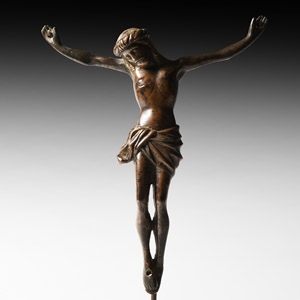
Tudor Period Bronze Corpus Christi
15th-17th century A.D.Estimate: £3,000 - 4,000 (+bp*)
Opening Bid: £1,500
A parcel-gilt bronze Corpus Christi with braided crown of thorns and draped loincloth; pierced at the extended hands and crossed feet; hollow to the reverse; mounted on a custom-made stand. 738 grams total, 23.2 cm high including stand
English private collection. This lot has been checked against the Interpol Database of stolen works of art and is accompanied by search certificate number no.11678-199807. -
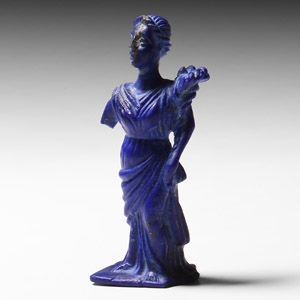
Statuette of Demeter in Lapis Lazuli
18th-19th century A.D.Sold for (Inc. bp): £127
A free-standing Grand Tour statuette of the goddess Demeter, carved from brilliant blue lapis lazuli; modelled in the round standing on an integral polygonal base, wearing a floor-length peplos and mantle, holding a cornucopia. 14.4 grams, 55 mm
Fine condition, right arm lost in antiquity.
Private UK collection. Property of a Cambridgeshire gentleman. -

Greek Draped Female Bronze Torso
20th century A.D.Sold for (Inc. bp): £1,170
A bronze torso of a draped Greek style female figure rendered with naturalistic detailing in the round; hollow; mounted on a custom-made display stand. 32.2 kg total, 78 cm high including stand
French collection, 1960s-early 2000s. From an important Paris gallery, France.
