
Loading, please wait...
LOT 0357
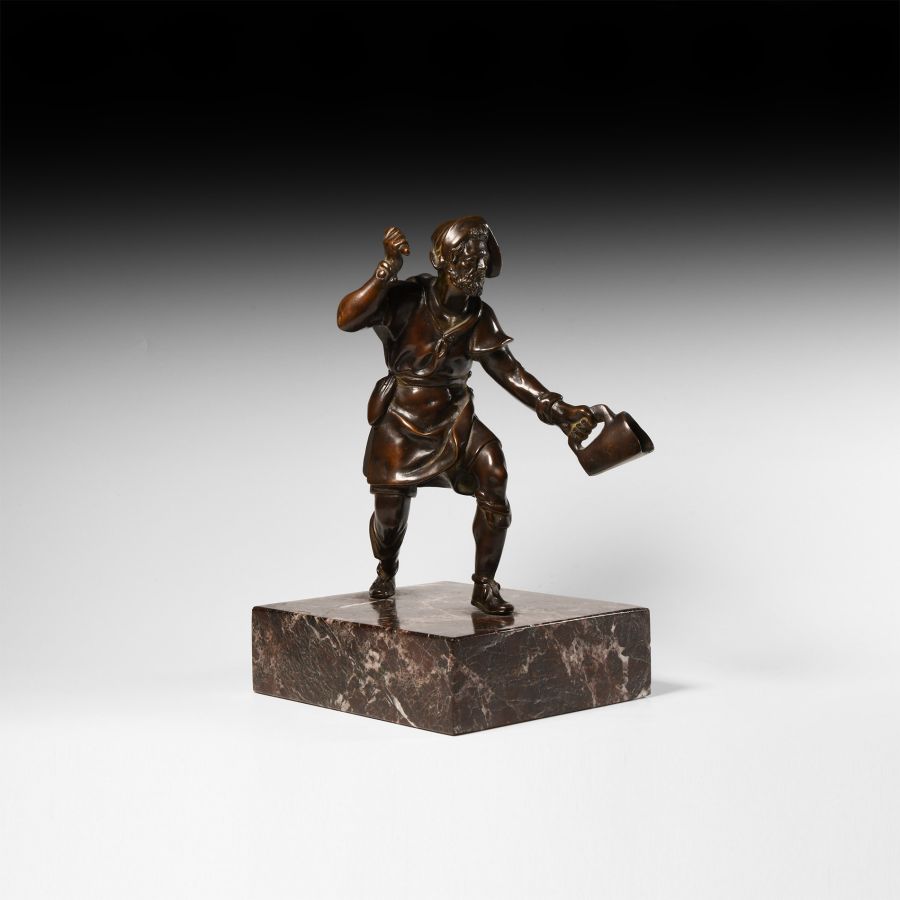
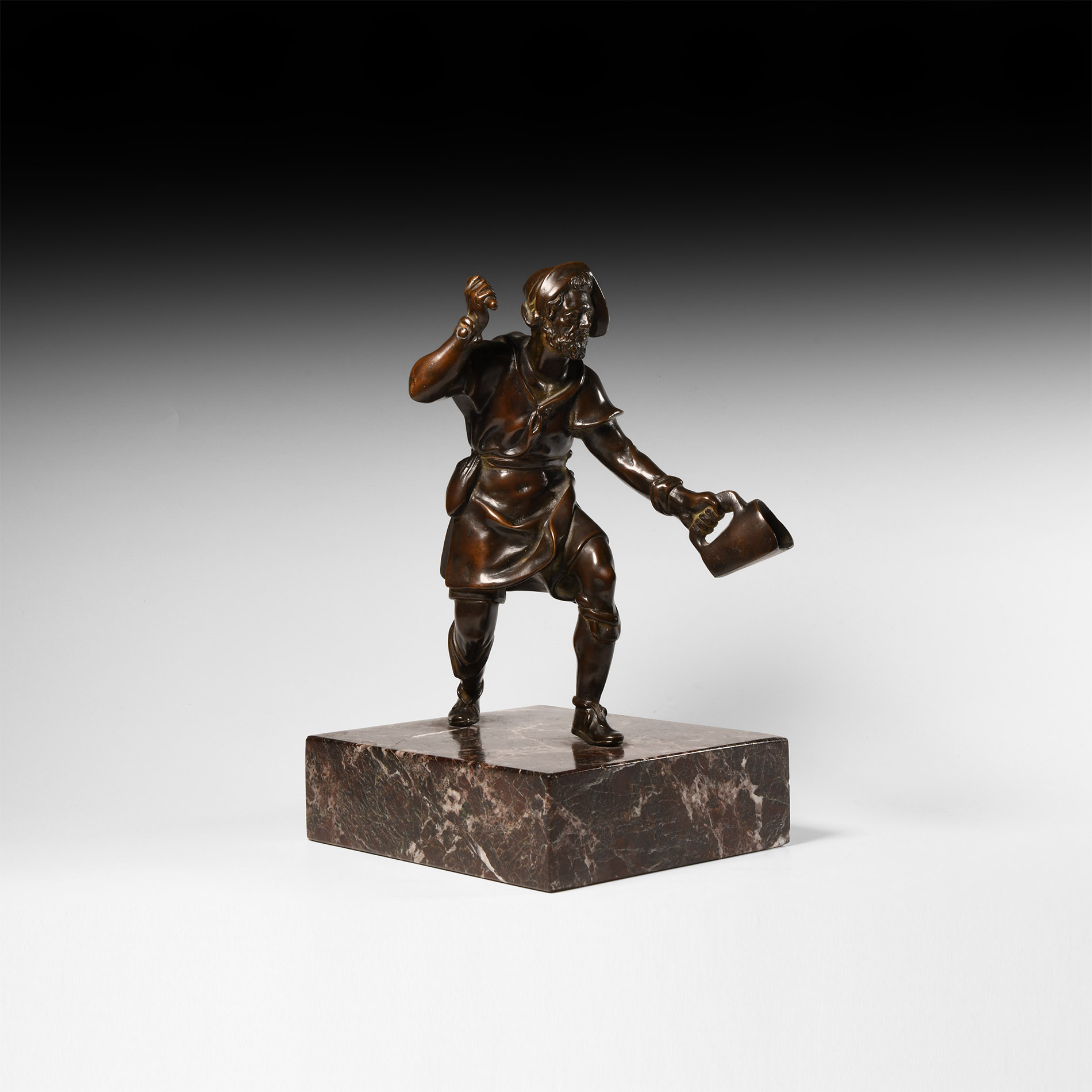
Bronze Bird Catcher Figure
18TH-19TH CENTURY A.D.
10 5/8 in. (6.15 kg total, 27 cm high including stand).
A bronze bird catcher figure clad in garments evoking the Middle Ages, modelled in the round stalking his prey with a cage in one hand and a cudgel or baton held in the other, ready to strike, a number of birds suspended from his belt, together with other pouches; mounted on a veined granite base.
ProvenanceEnglish private collection.
CONDITIONTimeLine Auctions follows a vetting process to ensure the authenticity and legality of all items, reinforcing our commitment to integrity and responsible trading. Each antiquity, antique, and coin lot undergoes thorough examination by a vetting committee of at least ten external specialists, professional trade association members, scientists, and archaeologists: Our Vetting Process
AUCTIONS:
TimeLine is a leading auction house specialising in antiquities, ancient art, collectables, natural history, coins, medals, and books. Our auctions offer museums, collectors, historians, and enthusiasts the opportunity to acquire unique and historically significant pieces.
LOT 0357
Bronze Bird Catcher Figure
Estimate £1,000 - 1,400€1,160 - 1,620 (for guidance only)$1,350 - 1,890 (for guidance only)
-
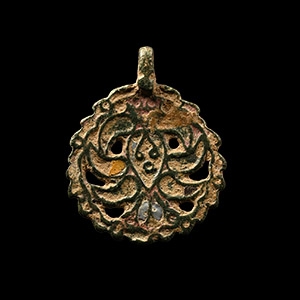
Post Medieval Enamelled Pendant
Circa 18th century A.D.Sold for (Inc. bp): £39
A bronze pendant of discoid form and suspension loop to apex, openwork design comprising a stylised figure with polychrome enamelling. 5.56 grams, 35 mm
Acquired before 2000. From the collection of a European gentleman living in the UK. -
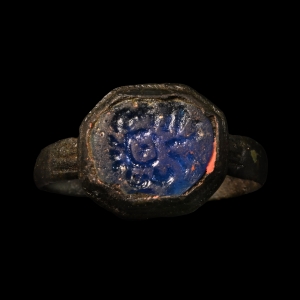
Tudor Period Ring with Intaglio
16th-17th century A.D.Sold for (Inc. bp): £33
A copper-alloy ring composed of a slender hoop supporting an octagonal bezel, set with a blue glass intaglio displaying an enigmatic, possibly pseudo-armorial design. 2.72 grams, 21.50 mm overall, 19.47 mm internal diameter (approximate size British N 1/2, USA 6 3/4, Europe 14.35, Japan 13)
Acquired 1990s. English private collection. Property of an Essex gentleman. -
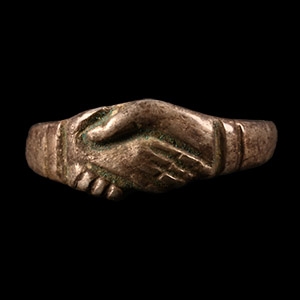
Post Medieval Silver Fede Ring with Clasped Hands
Circa 17th century A.D.Sold for (Inc. bp): £156
A silver mani in fede ring featuring an expanded bezel designed as crudely engraved clasped hands with collared sleeves. 2.84 grams, 21.63 mm overall, 18.93 mm internal diameter (approximate size British R, USA 8 1/2, Europe 18 3/4, Japan 18)
Acquired in the late 1990s-2000. Property of an East London gentleman.
The 'hands clasped in faith' imagery represents the hands of the couple joined in marriage in this and earlier periods.
