
Loading, please wait...
LOT 1977
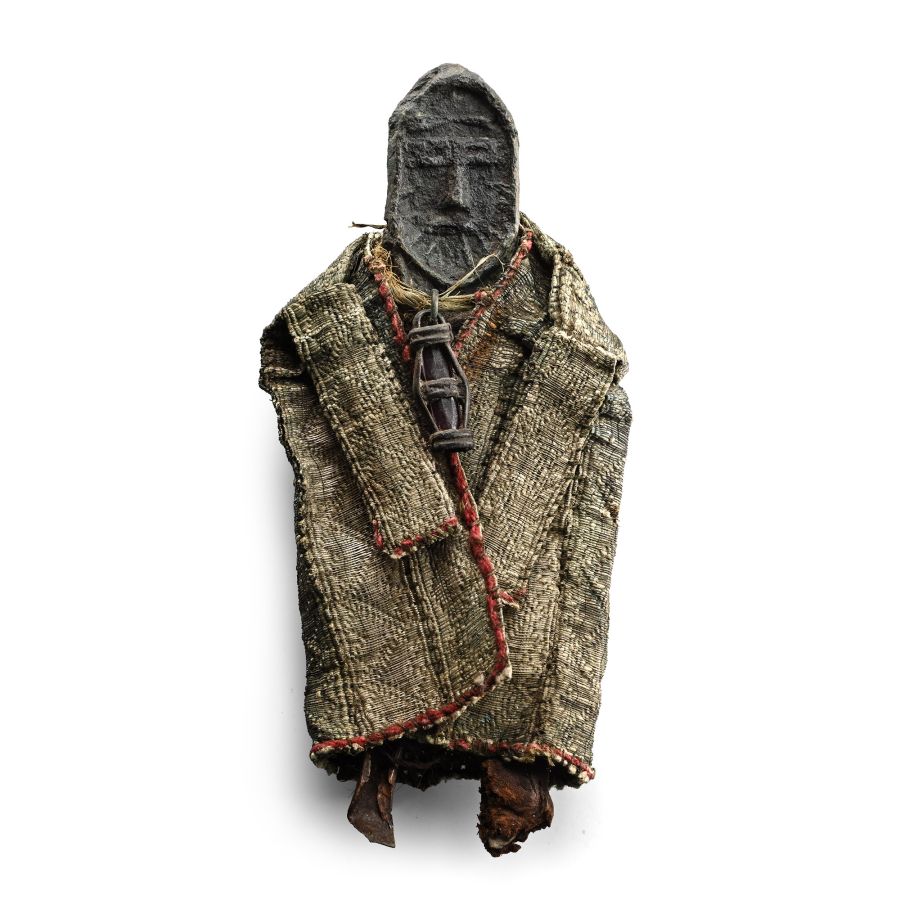
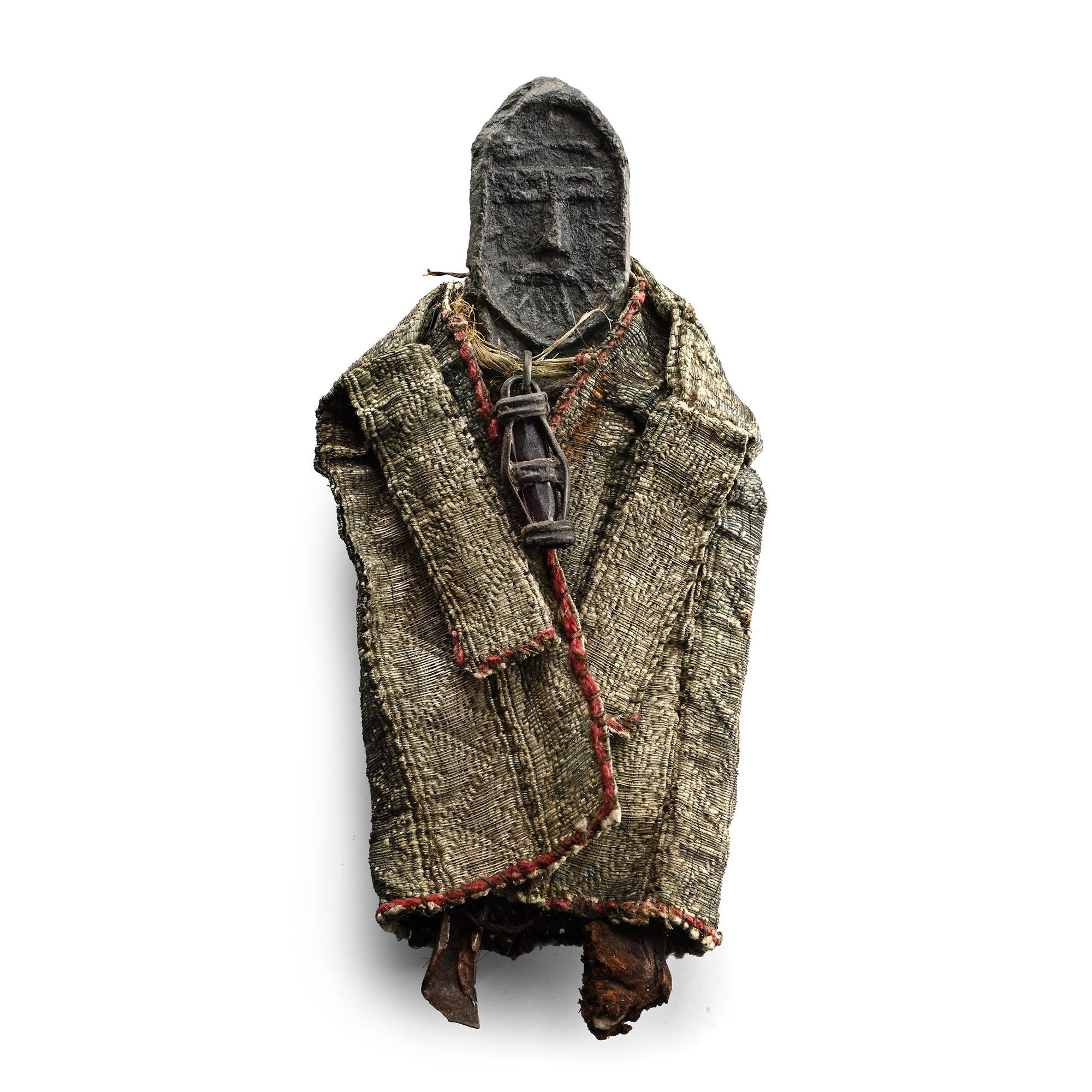
Bronze Anthropomorphic Clothed Ancestral Effigy
SIBERIA, CIRCA 17TH-18TH CENTURY A.D.
5 3/4 in. (105 grams, 14.8 cm).
Anthropomorphic figure (ittarma) with low-relief facial features, radiating beard, raised rim, bronze lantern-shaped pendant on cord around the neck; outer garment a sleeved coat in silken textile with open front; beneath, a fabric undergarment.
ProvenanceFrom the private collection of a London gentleman, from his grandfather's collection formed before the early 1970s.
LiteratureSee Bogordayeva A.A. Features of images representing the deceased of the Northern Khanty and Mansi in the second half of the 20th — early 21st century in Вестник археологии, антропологии и этнографии (Tyumen Scientific Centre SB RA) no.2(45), pp. 117–131.
FootnotesSuch effigies, called itterma or ittarma are regarded as a temporary vessel for the soul of a deceased person. They were intended to maintain contact between the surviving descendants and the spirit world.
CONDITIONTimeLine Auctions follows a vetting process to ensure the authenticity and legality of all items, reinforcing our commitment to integrity and responsible trading. Each antiquity, antique, and coin lot undergoes thorough examination by a vetting committee of at least ten external specialists, professional trade association members, scientists, and archaeologists: Our Vetting Process
AUCTIONS:
TimeLine is a leading auction house specialising in antiquities, ancient art, collectables, natural history, coins, medals, and books. Our auctions offer museums, collectors, historians, and enthusiasts the opportunity to acquire unique and historically significant pieces.
-
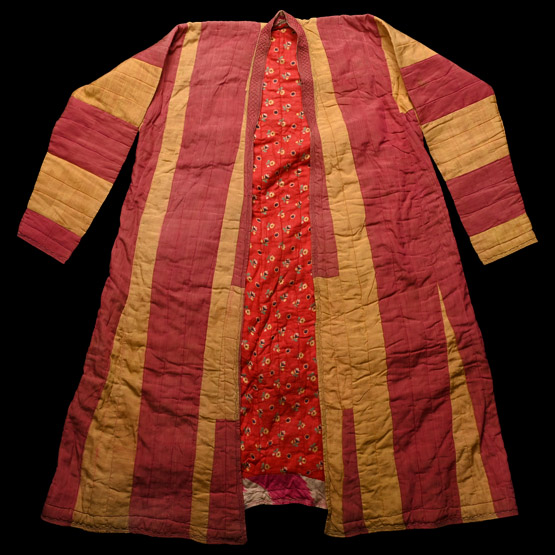
Uzbek Double-Sided Tunic
20th century A.D.Sold for (Inc. bp): £59
Reversible fabric sleeved garment with crimson and mustard panels to one side, printed floral fabric to reverse. 1 kg, 113 cm
Private collection, UK. -
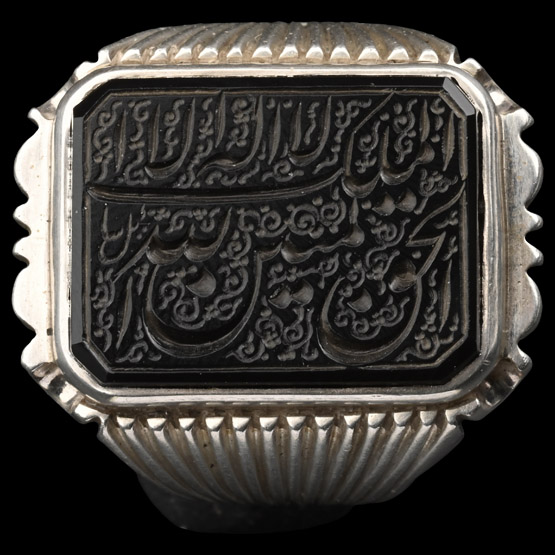
Silver-Coloured Metal Ring with Calligraphic Gem
Late 20th-21st century A.D.Sold for (Inc. bp): £234
With broad hoop and vertical ribbing to the shoulders, plaque with inset cloison, nastaliq calligraphic text on a field of flowers and tendrils. 20.19 grams, 28.17 mm overall, 20.55 mm internal diameter (approximate size British U, USA 10, Europe 22.52, Japan 21)
Private collection, UK. -
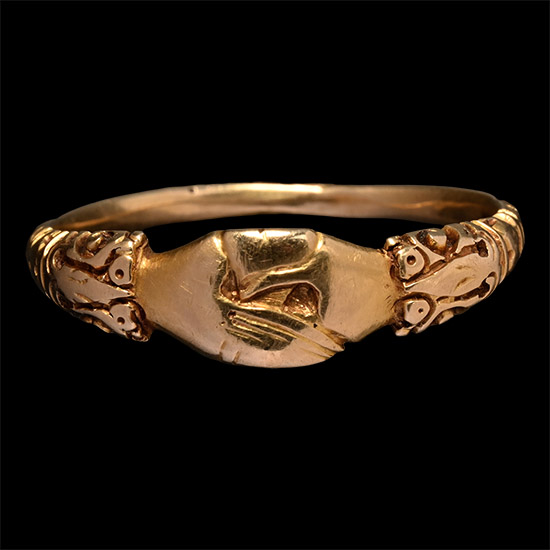
Post Medieval Gold Fede Ring
England, 16th-17th century A.D.Sold for (Inc. bp): £1,690
Slender shank and expanding shoulders formed as lace cuffs, the bezel a pair of clasped hands gripping a heart. 3.71 grams, 23.07 mm overall, 20.14 mm internal diameter (approximate size British T, USA 9 1/2, Europe 21.26, Japan 20)
Private collection, Europe. Acquired on the English art market.
The two clasping hands with elaborate cuffs clutch a heart. This ring features the ancient fede motif of two hands clasped together, however in their grasp is a heart. These symbols represented love and fidelity. The ring was likely a token of love symbolising everlasting devotion, or possibly a betrothal ring. The word Fede takes its name from the Italian word for faith or trust with the two clasped hands symbolising an attachment that usually led to marriage. The motif of the two clasped hands was already in use in ancient Rome, it was a symbol of pledging of vows, which derives from the Roman ‘dextarum iunctio’ (right hand joined). Fede rings remained popular throughout Europe until well into the 19th century with their peak of manufacture during the Middle Ages and the Renaissance.
