
Loading, please wait...

LOT 1801
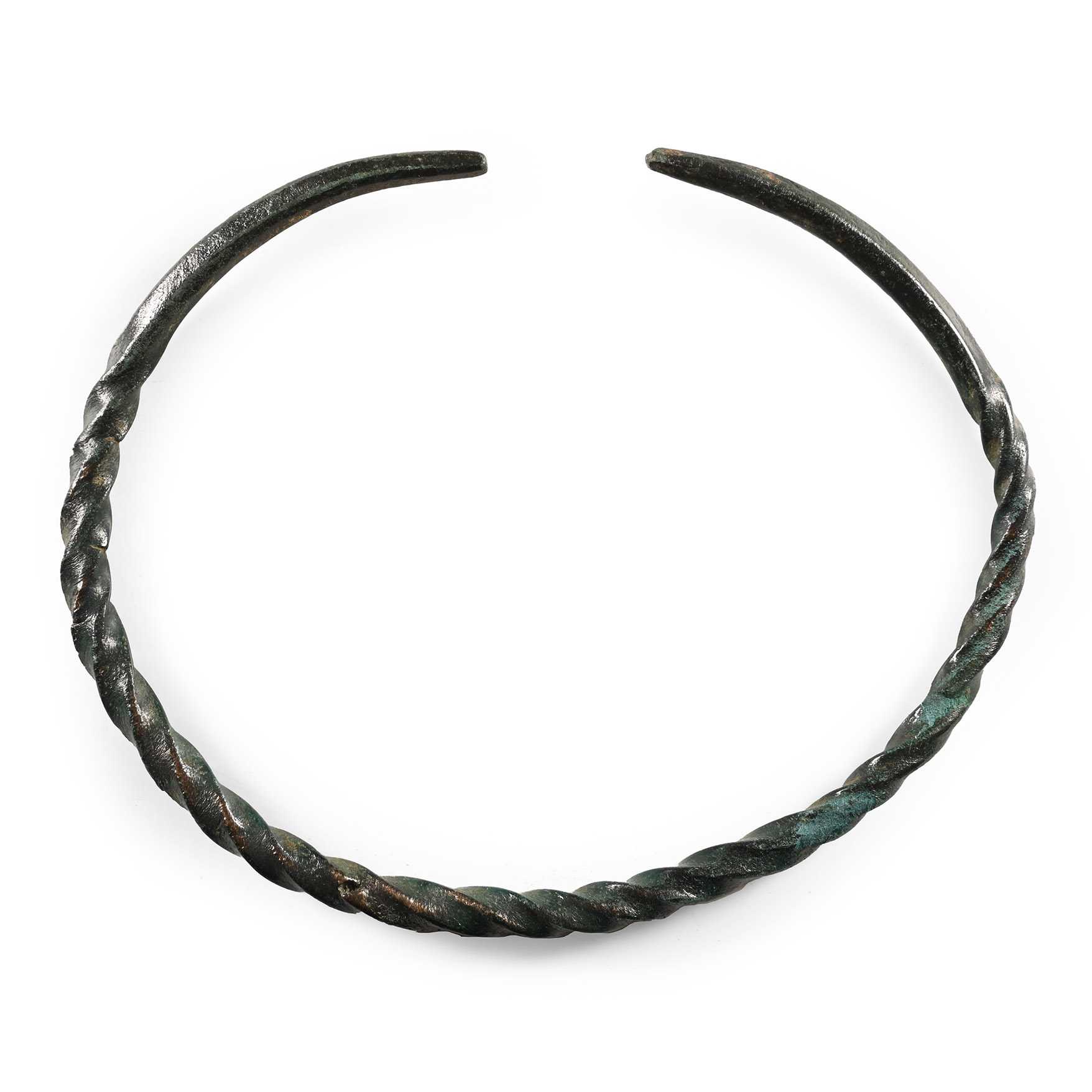
Bronze Age Twisted Arm Ring
CENTRAL EUROPE, 2ND-1ST MILLENNIUM B.C.
4 1/4 in. (39 grams, 11 cm).
Of penannular form, tapered finials, twisted shank.
ProvenanceEx German collection, 1990s.
This lot is accompanied by an illustrated lot declaration signed by the Head of the Antiquities Department, Dr Raffaele D’Amato.
TimeLine Auctions follows a vetting process to ensure the authenticity and legality of all items, reinforcing our commitment to integrity and responsible trading. Each antiquity, antique, and coin lot undergoes thorough examination by a vetting committee of at least ten external specialists, professional trade association members, scientists, and archaeologists: Our Vetting Process
AUCTIONS:
TimeLine is a leading auction house specialising in antiquities, ancient art, collectables, natural history, coins, medals, and books. Our auctions offer museums, collectors, historians, and enthusiasts the opportunity to acquire unique and historically significant pieces.
-

Bronze Age Twisted Bar Neck Torc
Central Europe, 2nd-1st millennium B.C.Sold for (Inc. bp): £143
Round in section with twisted body, scrolled finials. 65 grams, 15 cm
Ex German collection, 1990s. This lot is accompanied by an illustrated lot declaration signed by the Head of the Antiquities Department, Dr Raffaele D’Amato. -

Bronze Age Ceremonial Penannular Arm-Ring Pair
Central Europe, 2nd millennium B.C.Estimate: £200 - 300 (+bp*)
Opening Bid: £100
Comprising two heavy penannular arm-rings with round-section bodies. 242 grams total, 10.8-11.1 cm
Acquired in Europe before 1992. Ex Swiss collection. This lot is accompanied by an illustrated lot declaration signed by the Head of the Antiquities Department, Dr Raffaele D’Amato. -

Bronze Age Single-Edged Knife
1st millennium B.C.Sold for (Inc. bp): £20
With a curved blade and a thick flat-section tang. 13 grams, 13 cm
Acquired 1980-2015. Ex Abelita family collection. This lot is accompanied by an illustrated lot declaration signed by the Head of the Antiquities Department, Dr Raffaele D’Amato.
