
Loading, please wait...
LOT 1135
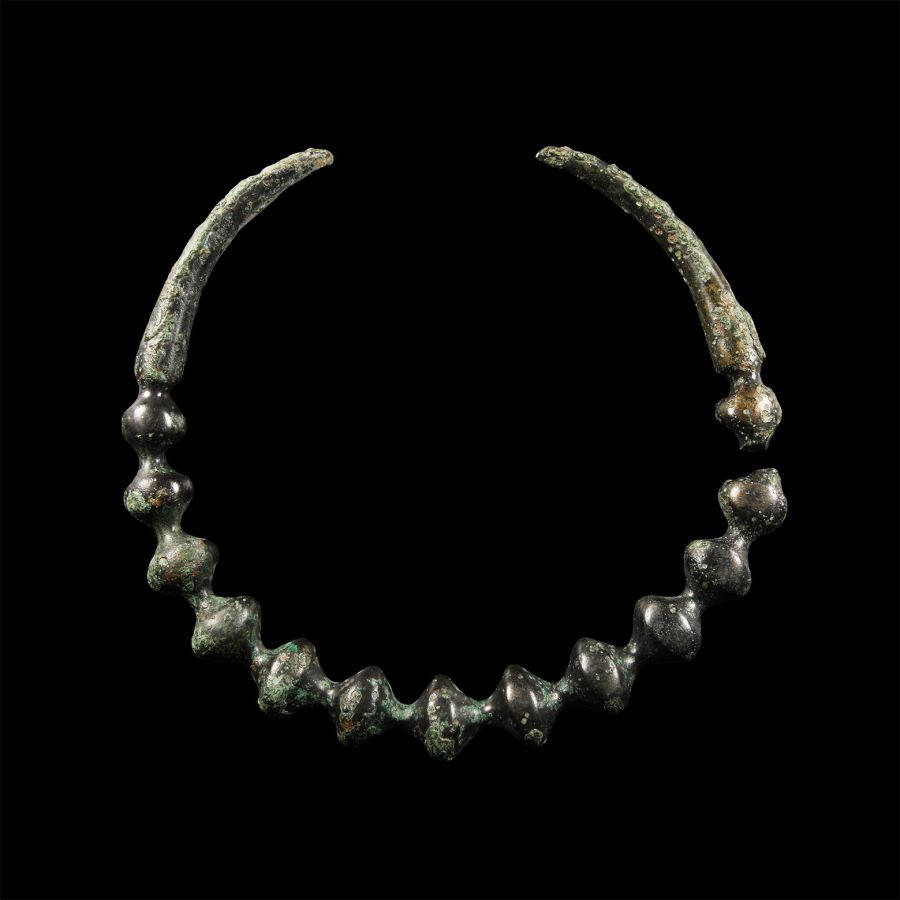
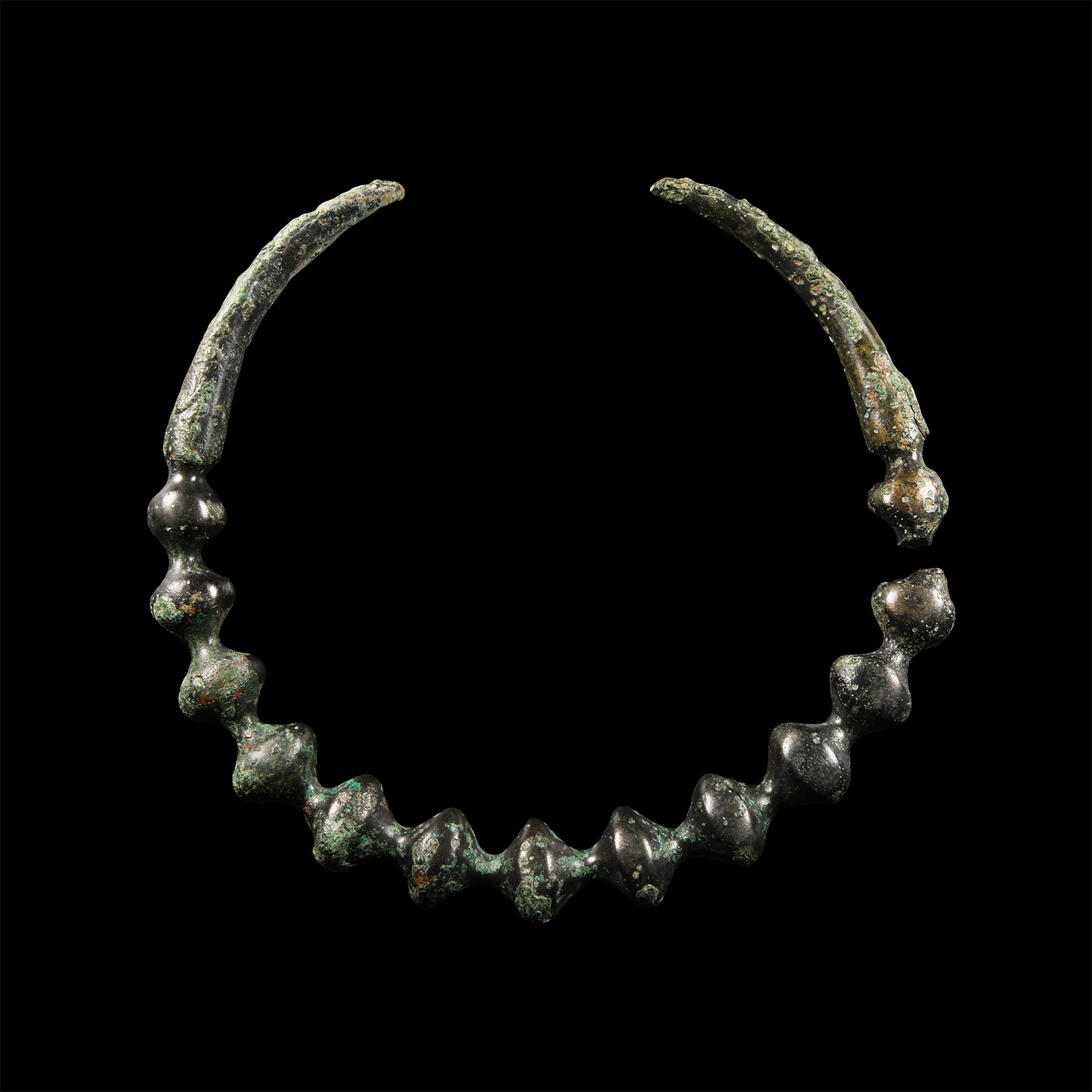
Bronze Age Torc with Bulbs
2ND-1ST MILLENNIUM B.C.
6 1/4 in. (298 grams total, 16 cm wide).
A bronze penannular torc displaying graduated biconical bulbs to the body, tapering plain terminals. [2, No Reserve]
ProvenanceEarly 1990s London collection.
Acquired on the UK art market.
From a private collection, Lancashire, UK.
Cf. similar fragment of a torc in the collection of the British Museum, London, under accession number 1984,0704.1.
CONDITIONTimeLine Auctions follows a vetting process to ensure the authenticity and legality of all items, reinforcing our commitment to integrity and responsible trading. Each antiquity, antique, and coin lot undergoes thorough examination by a vetting committee of at least ten external specialists, professional trade association members, scientists, and archaeologists: Our Vetting Process
AUCTIONS:
TimeLine is a leading auction house specialising in antiquities, ancient art, collectables, natural history, coins, medals, and books. Our auctions offer museums, collectors, historians, and enthusiasts the opportunity to acquire unique and historically significant pieces.
-
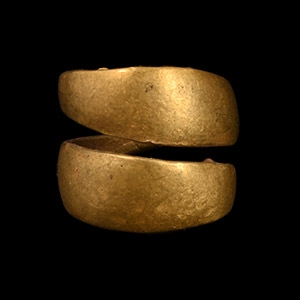
Bronze Age Gold Hair Ring
3rd-1st century B.C.Sold for (Inc. bp): £260
A spiralling gold hair ring with overlapping arms, each with an expanded central section. 2.72 grams, 12 mm
Acquired 1980-2015. Ex Abelita family collection. -
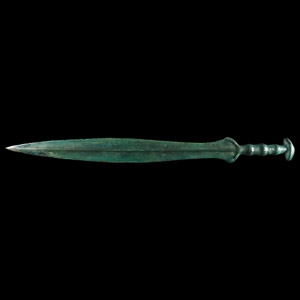
Central European Bronze Age Votive Dagger with Hilt
16th-11th century B.C.Sold for (Inc. bp): £3,900
A bronze hilted dagger; blade with waisted profile and raised midrib to both faces, crescentic guard and ribbed grip, domed pommel. 235 grams, 40 cm
Private collection G.R Coope, 1930s-2011. Property of a Sussex, UK, teacher. Accompanied by an academic report by Dr Raffaele D'Amato. -
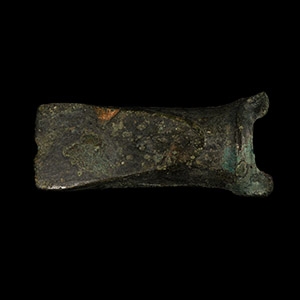
Bronze Age Socketted Axehead
1st millennium B.C.Sold for (Inc. bp): £117
A bronze socketted axehead with wedge-shaped chamfered cheeks, near-vertical cutting edge, raised rib to upper and lower face. 239 grams, 96 mm
Acquired before 2000. From the collection of a European gentleman living in the UK.
