
Loading, please wait...


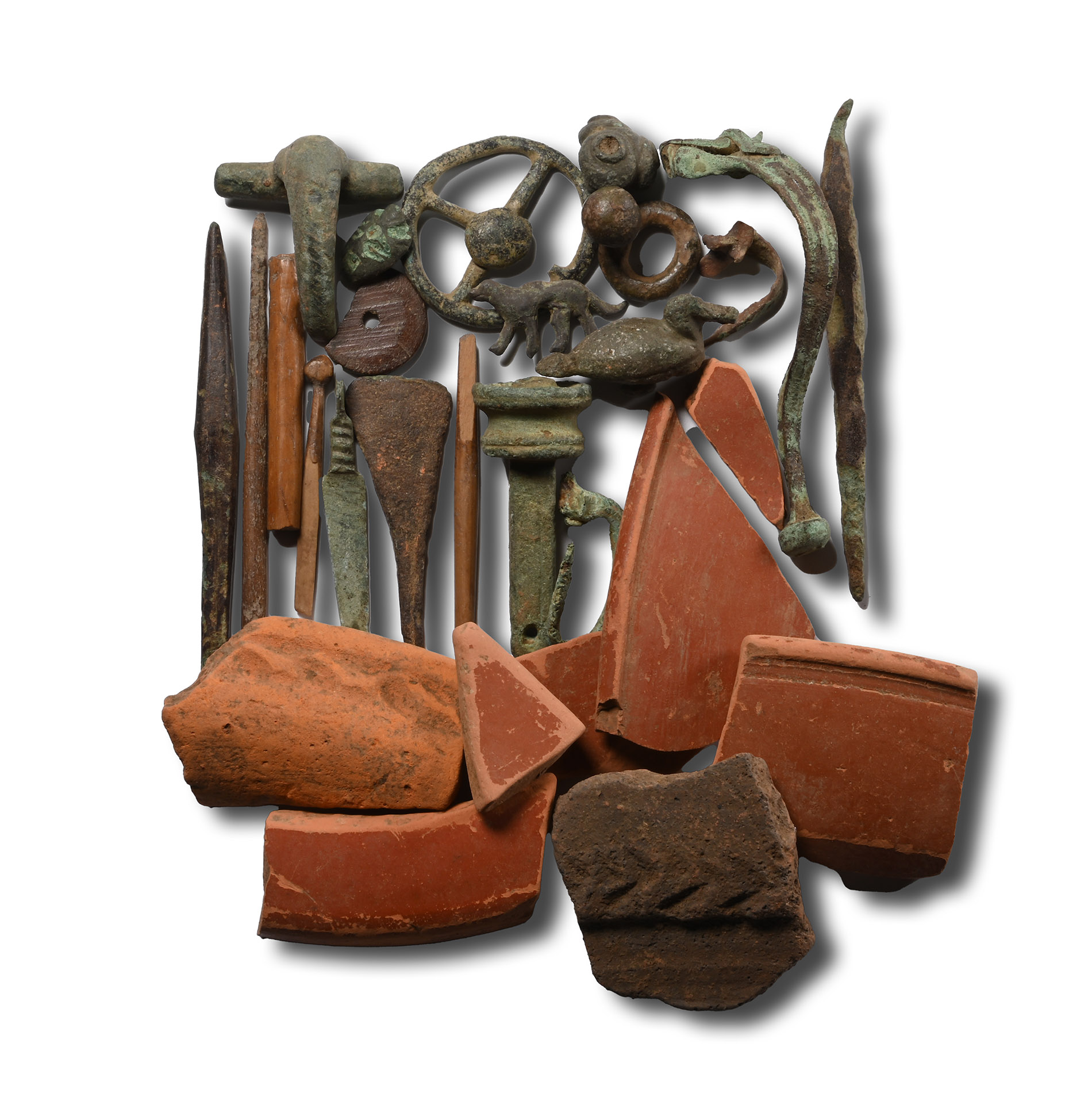
LOT 0869
Bronze Age to Roman Bronze Artefact Group
1ST MILLENNIUM B.C.-4TH CENTURY A.D.
1/2 - 3 in. (166 grams total, 12-74 mm).
Comprising: terracotta bowl fragments; bow brooch fragments; a looped fastener; two awls; a small duck mount; bone pin fragments; a looped nail cleaner; and others. [28, No Reserve]
ProvenanceFound on various UK sites since 1974.
Property of an Essex collector.
This lot is accompanied by an illustrated lot declaration signed by the Head of the Antiquities Department, Dr Raffaele D’Amato.
TimeLine Auctions follows a vetting process to ensure the authenticity and legality of all items, reinforcing our commitment to integrity and responsible trading. Each antiquity, antique, and coin lot undergoes thorough examination by a vetting committee of at least ten external specialists, professional trade association members, scientists, and archaeologists: Our Vetting Process
AUCTIONS:
TimeLine is a leading auction house specialising in antiquities, ancient art, collectables, natural history, coins, medals, and books. Our auctions offer museums, collectors, historians, and enthusiasts the opportunity to acquire unique and historically significant pieces.
-
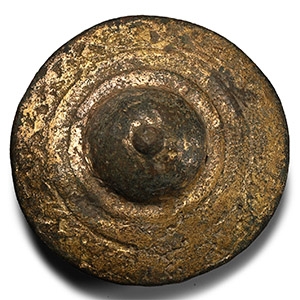
Roman Gilt-Bronze Brooch
1st-3rd century A.D.Sold for (Inc. bp): £130
Broad disc with concentric circles, central dome with knop, two attachment pins to reverse. 45.2 grams, 57 mm
Acquired from Brigantia Antiques, York, UK, circa 1995. Ian Wilkinson collection, Nottinghamshire, UK, formed since 1985. This lot is accompanied by an illustrated lot declaration signed by the Head of the Antiquities Department, Dr Raffaele D’Amato. -
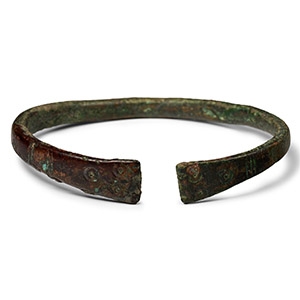
Roman Decorated Bronze Bracelet
1st-4th century A.D.Sold for (Inc. bp): £91
D-shaped in section splaying to triangular finials with ribbing and ring-and-dot ornament. 16.5 grams, 55 mm
Acquired from Ancient & Orient, 1980s-1990s. Ian Wilkinson collection, Nottinghamshire, UK, formed since 1985. This lot is accompanied by an illustrated lot declaration signed by the Head of the Antiquities Department, Dr Raffaele D’Amato. -
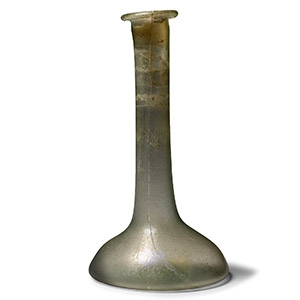
Roman Glass Candlestick Unguentarium
2nd-3rd century A.D.Estimate: £600 - 800 (‡+bp*)
Opening Bid: £270
With low conical body and slightly convex wall, dimple base; tall cylindrical neck flaring to mouth with inward-folded rim; slightly iridescent surface. 37.2 grams, 13.6 cm
Ex P. Martens, The Netherlands, formed between 1974-1984. Accompanied by a copy of an Art Loss Register certificate no.S00075481. This lot is accompanied by an illustrated lot declaration signed by the Head of the Antiquities Department, Dr Raffaele D’Amato.
