
Loading, please wait...
LOT 1284
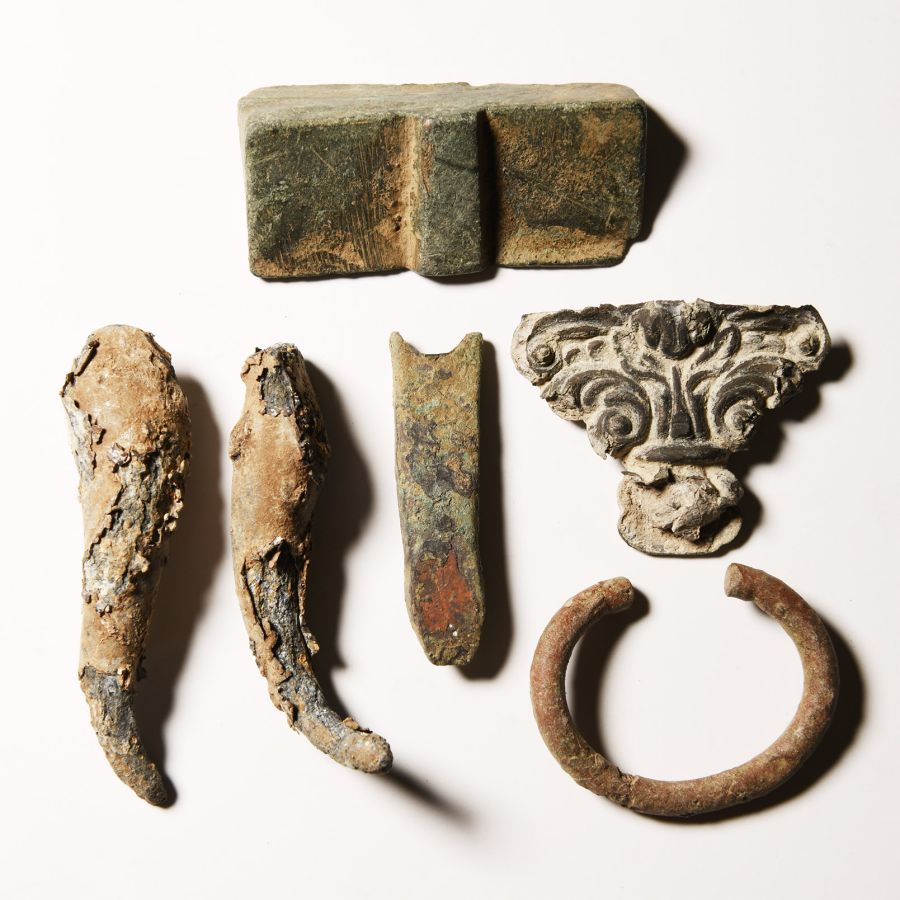
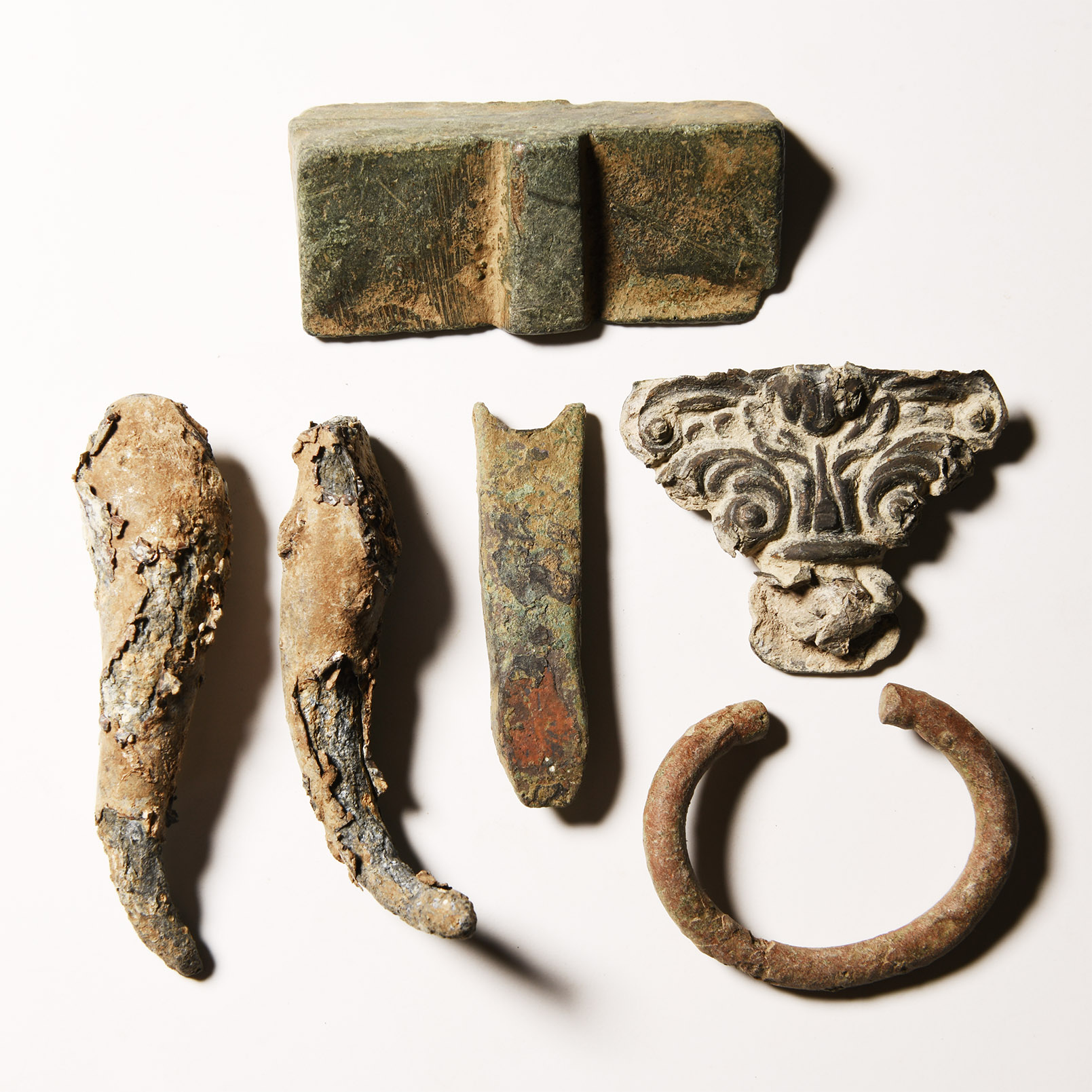
Bronze Age to Post Medieval Artefact Collection
2ND MILLENNIUM B.C.-18TH CENTURY A.D.
1 3/4 - 2 3/4 in. (244 grams total, 45-70 mm).
Comprising: rectangular bronze plaque with fluted surface; pair of bronze curved horns; round-section C-shaped child's bracelet; baroque furniture mount with scrolled palmette detailing; small bronze chisel with scooped end. [6, No Reserve]
ProvenanceFound Berkshire, UK, by M. Ruczynski; the mount found Boxford in 2016.
Accompanied by a copy of a report for the Bronze Age Chisel by the British Museum's Portable Antiquities Scheme (PAS) with report no.BERK-DEF089.
See Pendleton, C.F., Bronze Age Metalwork in Northern East Anglia. A Study of its Distribution and Interpretation, B.A.R. British Series 279, Oxford, 1999, for discussion.
CONDITIONTimeLine Auctions follows a vetting process to ensure the authenticity and legality of all items, reinforcing our commitment to integrity and responsible trading. Each antiquity, antique, and coin lot undergoes thorough examination by a vetting committee of at least ten external specialists, professional trade association members, scientists, and archaeologists: Our Vetting Process
AUCTIONS:
TimeLine is a leading auction house specialising in antiquities, ancient art, collectables, natural history, coins, medals, and books. Our auctions offer museums, collectors, historians, and enthusiasts the opportunity to acquire unique and historically significant pieces.
-
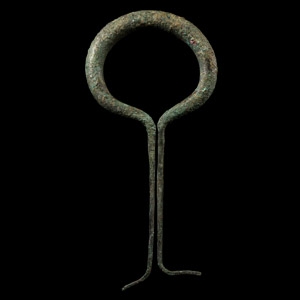
Large Bronze Age Chariot Terret Ring
10th-6th century B.C.Sold for (Inc. bp): £46
A heavy duty oval-shaped ring the ends tapering either side into fixing spikes. 354 grams, 21 cm
Ex old English collection. London art market, 1980s. -
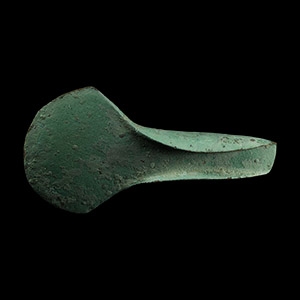
'The Stainmore' Bronze Age Flat Axe with Exceptional Crystalline Patina
2nd millennium B.C.Sold for (Inc. bp): £3,380
Composed of a fan-shaped head with bevelled face and convex cutting edge, flanges creating two elliptical side faces. 424 grams, 15.5 cm
Found whilst searching with a metal detector in Stainmore, Cumbria, UK, in 2012. Ex private U.K. collection. -
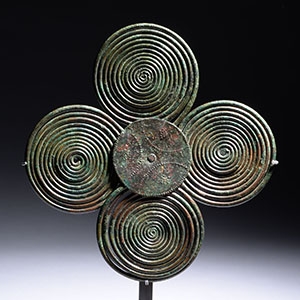
Huge Bronze Age Spiral Brooch
850-750 B.C.Sold for (Inc. bp): £5,200
Formed as four coils of rod radiating around a central disc with pointillé decoration; substantial pin and catch to the reverse; mounted on a custom-made stand. 567 grams total, 23 cm high including stand
From the collection of Dr. Peter W. Biertz (1914-2000), Wolsfeld, Germany, by August 1990. Recorded in a letter from Dr Hans Nortmann, Rhein, Landesmuseum Trier, 8 August 1990. This lot has been checked against the Interpol Database of stolen works of art and is accompanied by search certificate number no.11880-207712.
