
Loading, please wait...
LOT 1112
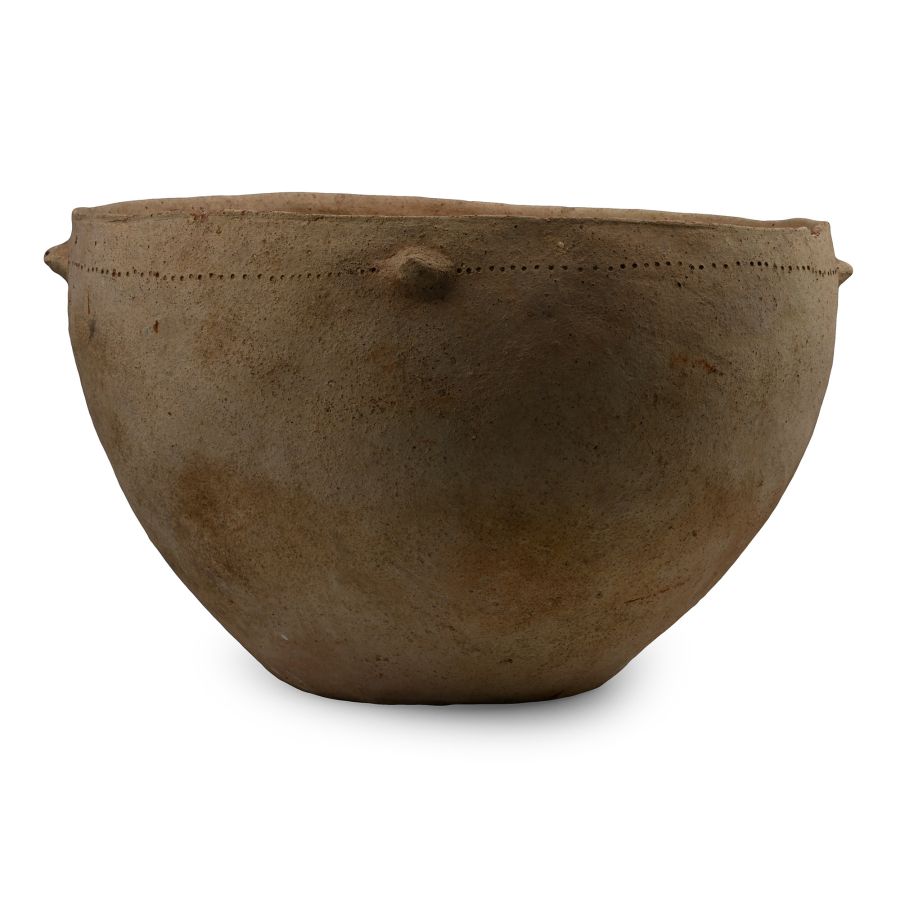
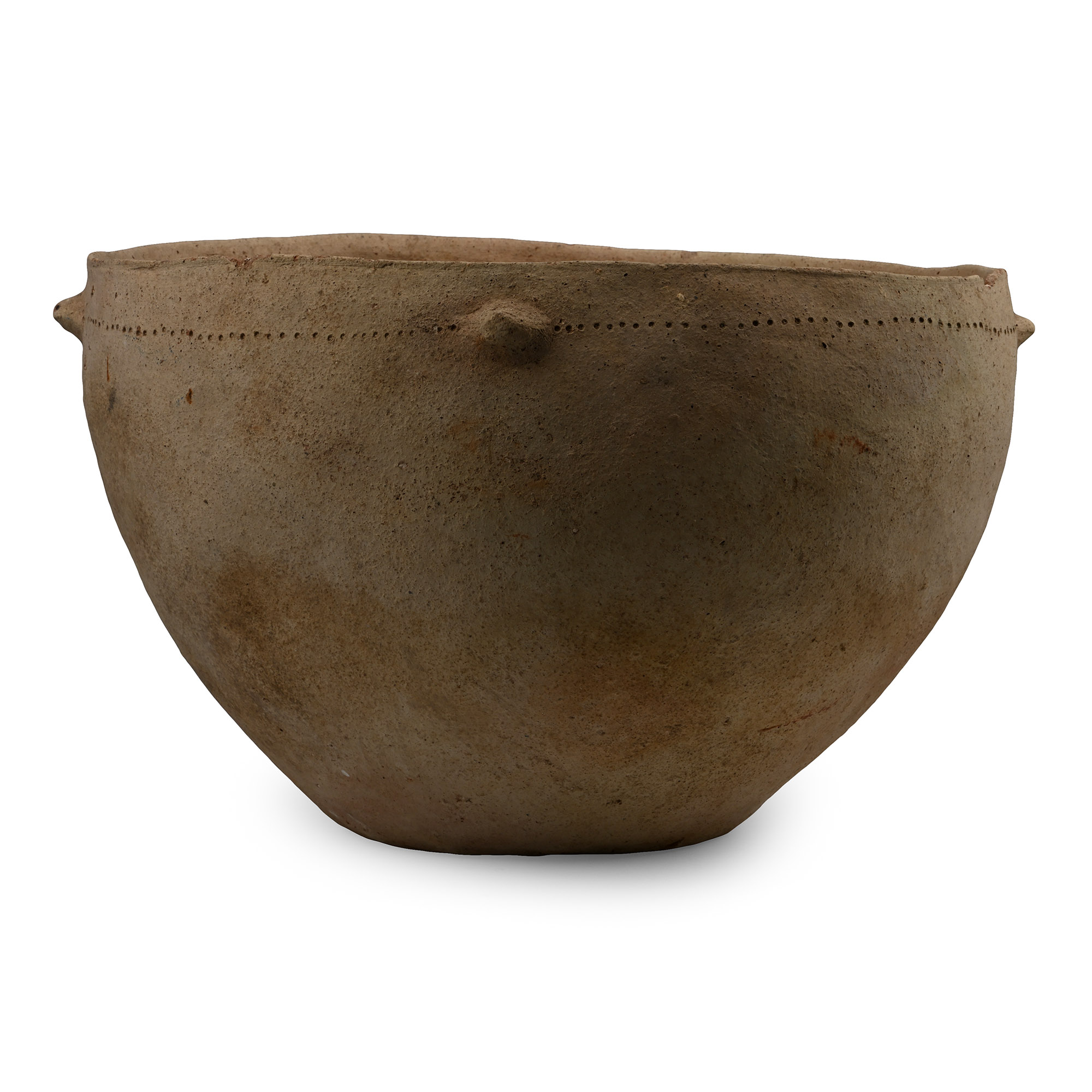
Bronze Age Terracotta Decorated Bowl
TRANS-JORDAN EBI, 3RD MILLENNIUM B.C.
14 1/8 in. (3.35 kg, 36 cm wide).
With wide body and low foot, decorative impressed-point band with four low lugs below the rim.
ProvenanceFrom an important collection of pottery formed prior to 1988, London and Geneva.
This lot has been cleared against the Art Loss Register database, and is accompanied by an illustrated lot declaration signed by the Head of the Antiquities Department, Dr Raffaele D'Amato.
TimeLine Auctions follows a vetting process to ensure the authenticity and legality of all items, reinforcing our commitment to integrity and responsible trading. Each antiquity, antique, and coin lot undergoes thorough examination by a vetting committee of at least ten external specialists, professional trade association members, scientists, and archaeologists: Our Vetting Process
AUCTIONS:
TimeLine is a leading auction house specialising in antiquities, ancient art, collectables, natural history, coins, medals, and books. Our auctions offer museums, collectors, historians, and enthusiasts the opportunity to acquire unique and historically significant pieces.
-
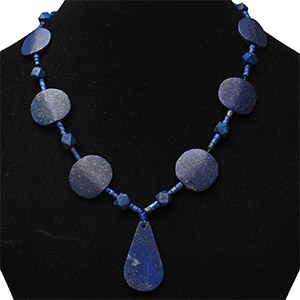
Western Asiatic Lapis Lazuli Bead Necklace String
20th century A.D.Sold for (Inc. bp): £72
Composed of coin-shaped beads interspersed with small cylindrical and larger cornerless cube bead, central feature a large discoid teardrop-shaped pendant; restrung. 71 grams, 39.5 cm
From the London, UK, art market in the 1990s. This lot has been cleared against the Art Loss Register database, and is accompanied by an illustrated lot declaration signed by the Head of the Antiquities Department, Dr Raffaele D'Amato. -
.jpg)
Western Asiatic Stone Macehead
3rd-2nd millennium B.C.Sold for (Inc. bp): £143
Piriform with vertical socket expanding towards the narrower end. 452 grams, 87 mm
Ex London, UK, collection, 1990-2000s. This lot has been cleared against the Art Loss Register database, and is accompanied by an illustrated lot declaration signed by the Head of the Antiquities Department, Dr Raffaele D'Amato. -
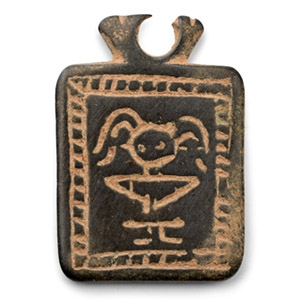
Umayyad Bronze Inscribed Pendant
7th-8th century A.D.Sold for (Inc. bp): £468
Rectangular in plan with triangular suspension plaque, obverse with geometric design within a billetted border, reverse with five lines of Kufic script. 7.56 grams, 29 mm
From the collection of a gentleman, acquired on the London art market in the 1990s. This lot has been cleared against the Art Loss Register database, and is accompanied by an illustrated lot declaration signed by the Head of the Antiquities Department, Dr Raffaele D'Amato.
