
Loading, please wait...
LOT 1810
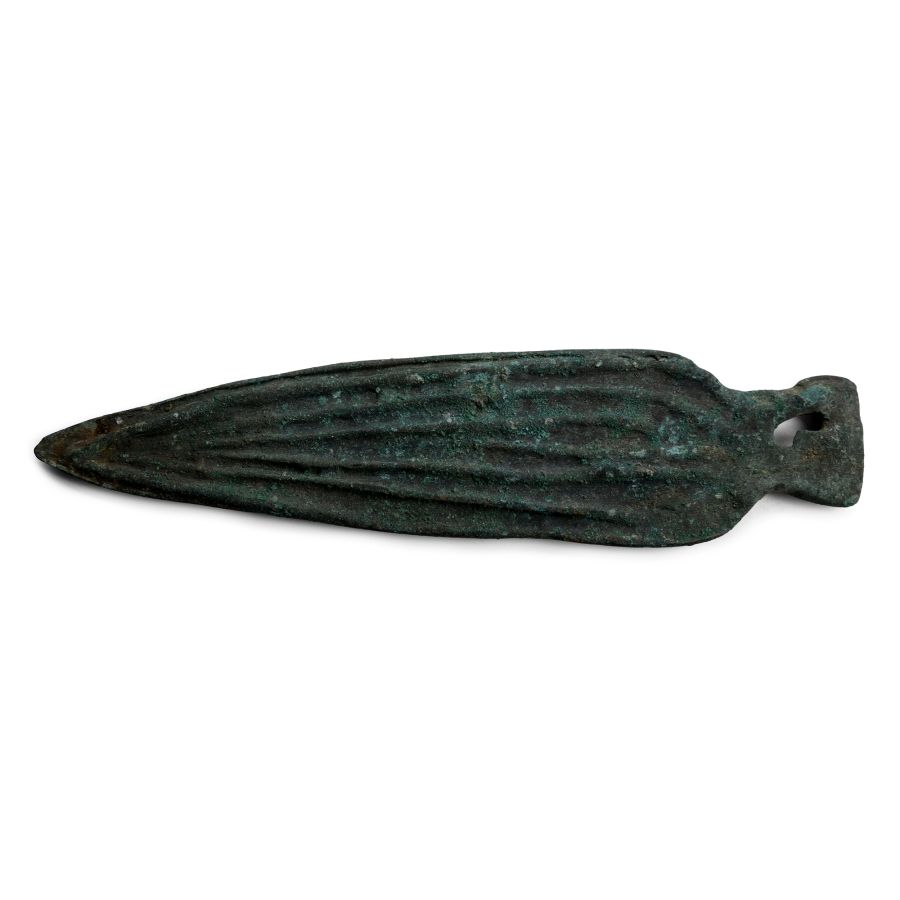
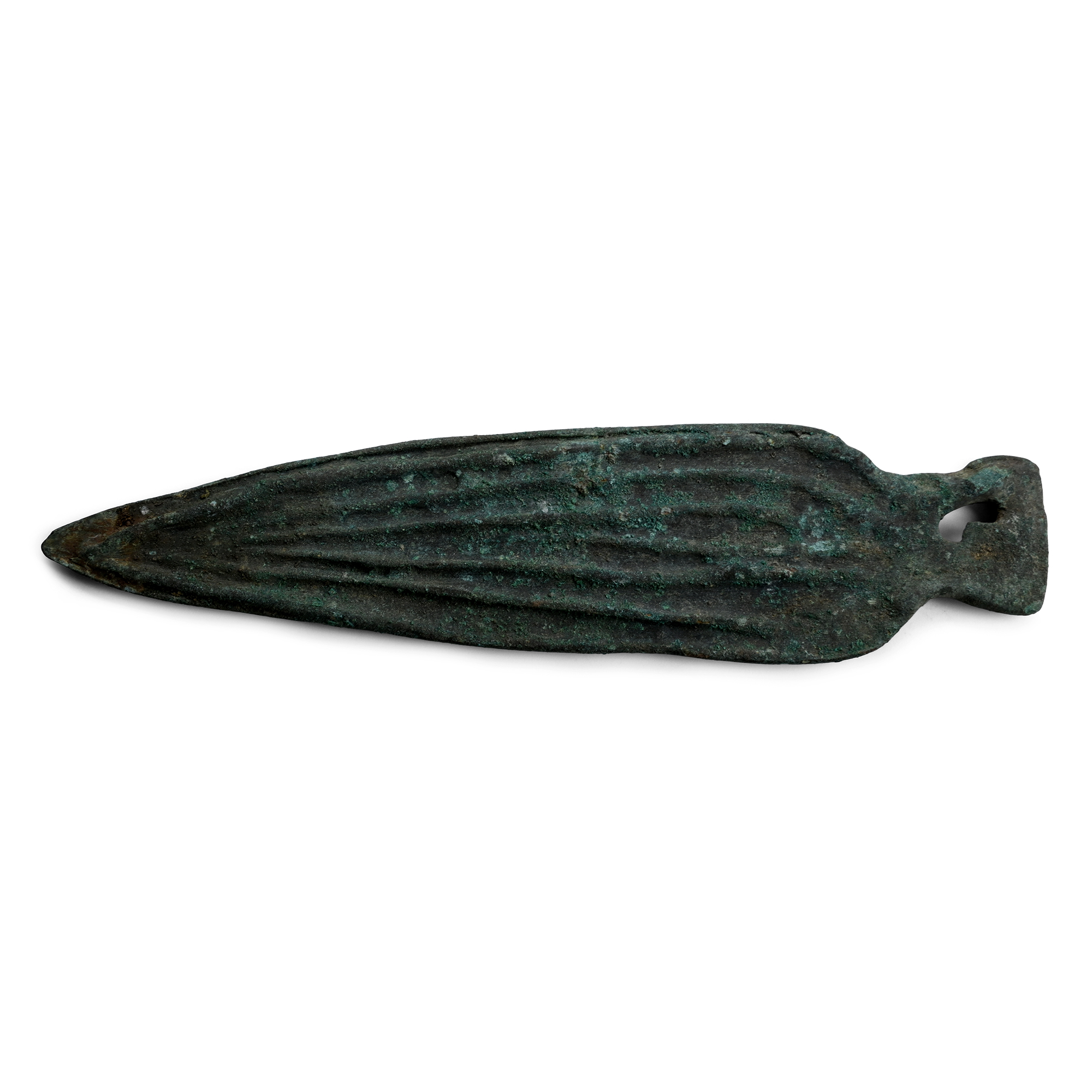
Bronze Age Sword-Shaped Pendant
KOBAN CULTURE, CIRCA 1300-400 B.C.
4 3/4 in. (41 grams, 12.2 cm).
Formed as a leaf-shaped blade with raised ribs on both sides, pierced through the tang. [No Reserve]
ProvenanceFrom an ancient art collection, formerly acquired in the UK, European, and USA art markets from pre-2000 collections.
Property of a West Northamptonshire, UK, gentleman.
TimeLine Auctions follows a vetting process to ensure the authenticity and legality of all items, reinforcing our commitment to integrity and responsible trading. Each antiquity, antique, and coin lot undergoes thorough examination by a vetting committee of at least ten external specialists, professional trade association members, scientists, and archaeologists: Our Vetting Process
AUCTIONS:
TimeLine is a leading auction house specialising in antiquities, ancient art, collectables, natural history, coins, medals, and books. Our auctions offer museums, collectors, historians, and enthusiasts the opportunity to acquire unique and historically significant pieces.
-
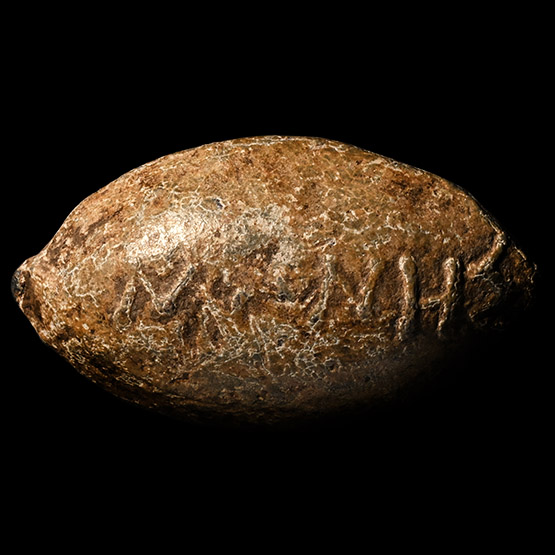
Greek Lead Slingshot with Inscriptions
4th-3rd century B.C.Sold for (Inc. bp): £156
Lenticular type with casting seam to the rim, raised 'Μ...ΝΗΣ' legend. 25.5 grams, 28 mm
Ex German art market, 2000s. Acquired from an EU collector living in London. From the collection of a Surrey, UK, gentleman.
The leaden bullets, which were thrown from slings, were called in Greek Molivdainai (μολύβδαιναι), and in Latin glandes; the former indicating the material ‘lead’, the latter the shape ‘acorns’. These bullets were cast in a mould and bore letters or devices, or both, on two sides or on only one. In form, they were more like an almond than an acorn, but many are pointed at both ends; in size, they are generally about one and a half inches in maximum length, and under one inch in maximum width. -
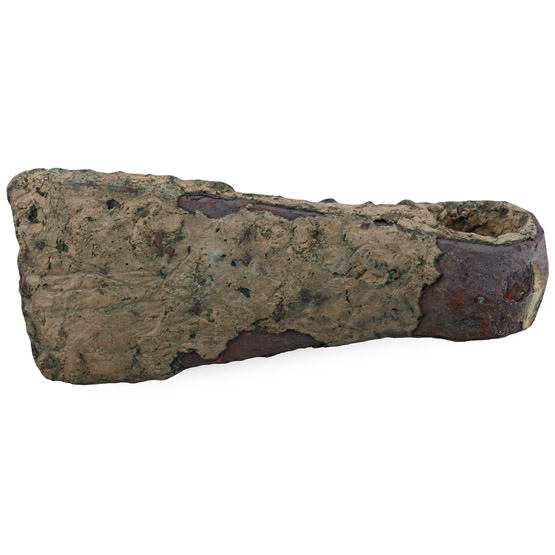
Luristan Bronze Socketted Axehead
2nd-1st millennium B.C.Sold for (Inc. bp): £85
With a triangular tapering blade and a flat cutting edge, oval socket. 997 grams, 17 cm
Ex Abelita family collection, 1980s-2000s. -
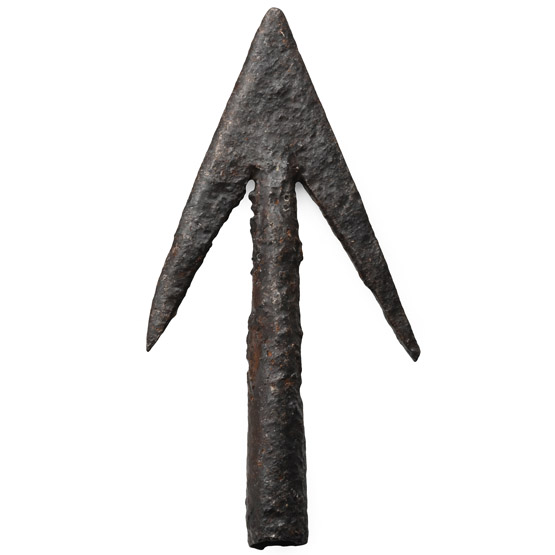
Large Medieval Socketted Iron Arrowhead
Circa 13th-15th century A.D.Sold for (Inc. bp): £208
With swept lateral barbs and deep conical socket. 20.66 grams, 88 mm
Acquired from a USA private collector in the 1990s. Ex Buckinghamshire, UK, collection.
