
Loading, please wait...
LOT 1155
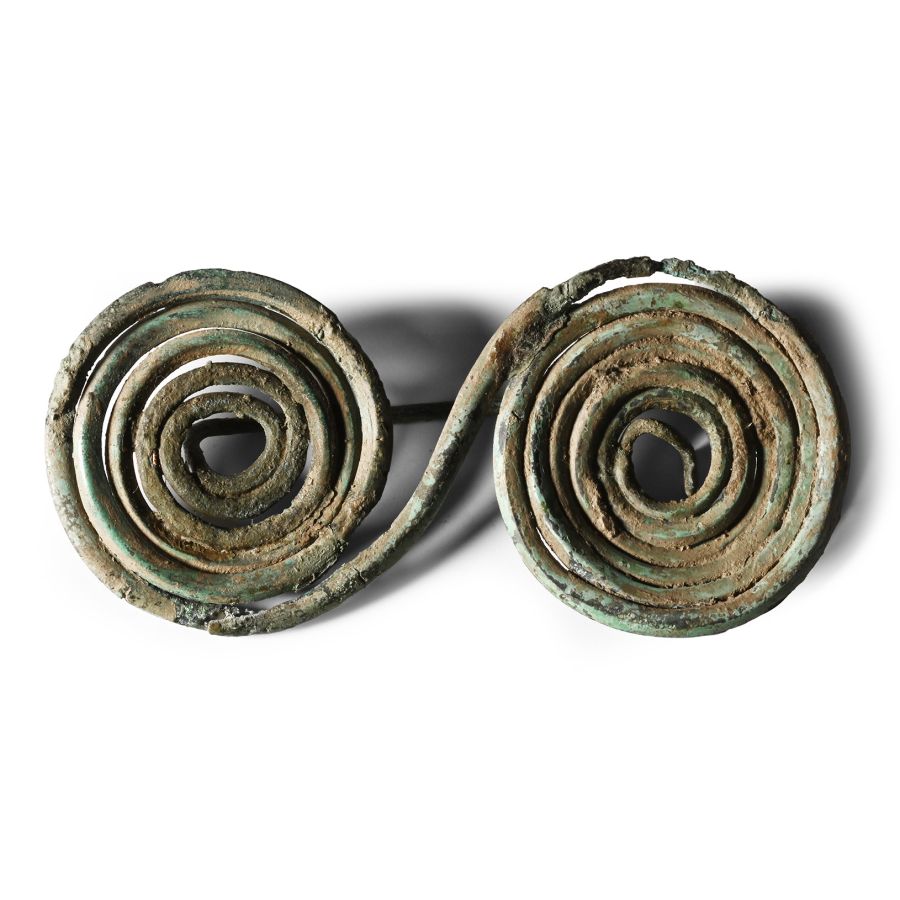
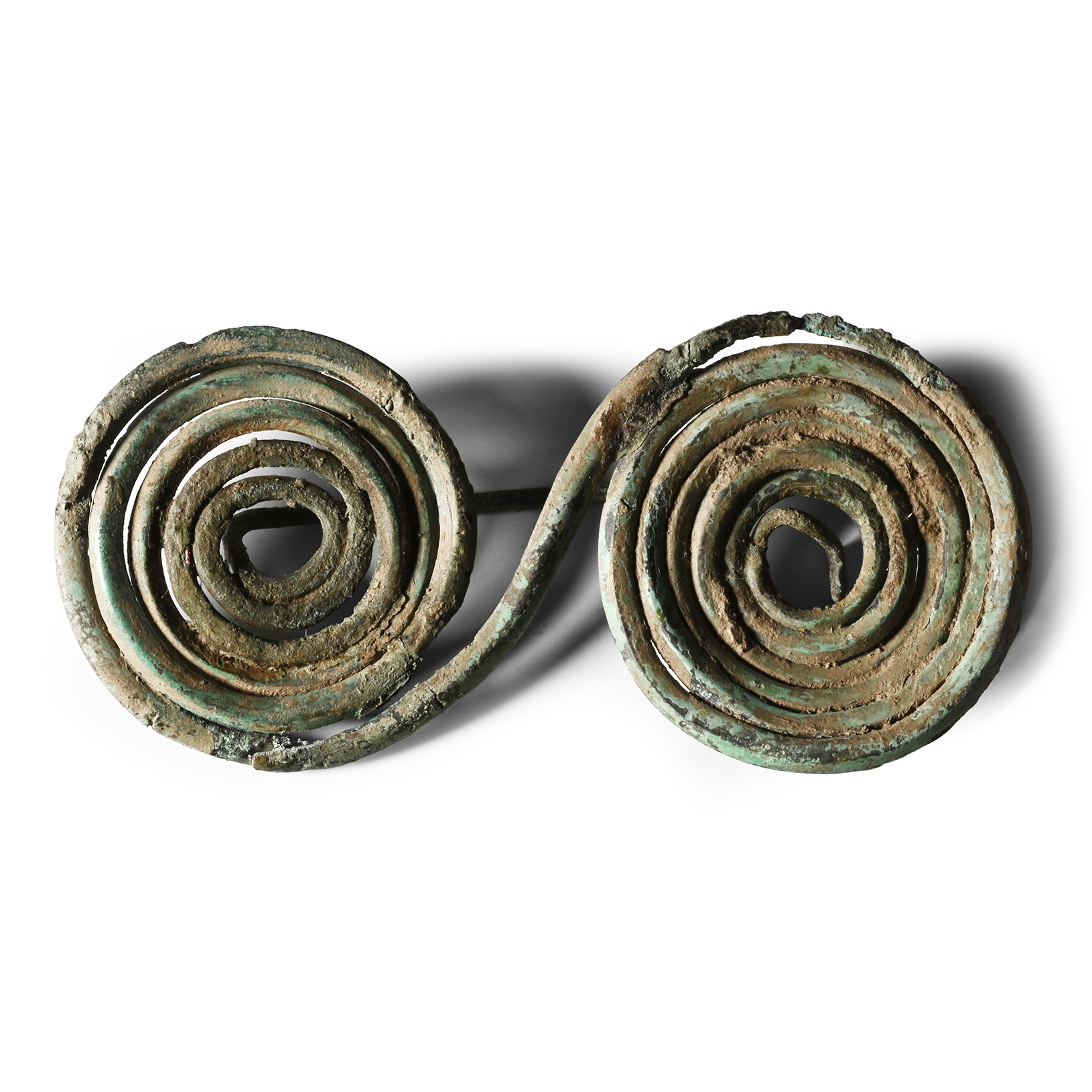
Bronze Age Spectacle Brooch
CIRCA 10TH-6TH CENTURY B.C.
3 1/8 in. (15.4 grams, 80 mm).
Composed of two coiled wire discs with integral loop between; repaired. [No Reserve]
ProvenanceAcquired on the UK art market before 2000.
Property of a Surrey, UK, collector.
Cf. Hattatt, R., Ancient and Romano-British Brooches, Sherborne, 1982, item 186.
CONDITIONTimeLine Auctions follows a vetting process to ensure the authenticity and legality of all items, reinforcing our commitment to integrity and responsible trading. Each antiquity, antique, and coin lot undergoes thorough examination by a vetting committee of at least ten external specialists, professional trade association members, scientists, and archaeologists: Our Vetting Process
AUCTIONS:
TimeLine is a leading auction house specialising in antiquities, ancient art, collectables, natural history, coins, medals, and books. Our auctions offer museums, collectors, historians, and enthusiasts the opportunity to acquire unique and historically significant pieces.
-
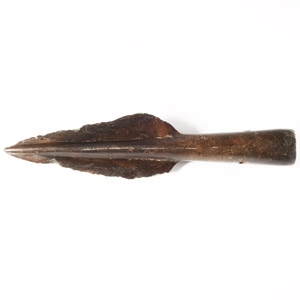
British Late Bronze Age Socketted Spearhead
Circa 1100-800 B.C.Sold for (Inc. bp): £124
Davis Group 11 type, comprising a leaf shaped blade with a chamfered edge, and two circular peg holes on both sides of the socket. 130 grams, 16.9 cm
Found whilst searching with a metal detector near Rylstone, North Yorkshire, UK, circa 2018. Accompanied by a copy of the British Museum's Portable Antiquities Scheme (PAS) report no.YORYM-E5C837. -
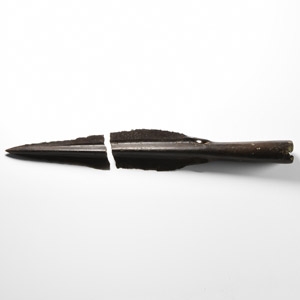
British Middle Bronze Age Basal-Looped Socketted Spearhead
Circa 1400-1125 B.C.Sold for (Inc. bp): £182
Leaf-shaped with loops incorporated into the base, the blade in two pieces, the centre of the blade divided by an expanding lozenge-sectioned midrib, conjoined at the base of the blade are two oval-shaped loops, the socket conical in shape with remains of the wood shaft inside. 250 grams total, 9.7-17.2 cm
Found whilst searching with a metal detector near Rylstone, North Yorkshire, UK, circa 2018. Accompanied by a copy of the British Museum's Portable Antiquities Scheme (PAS) report no.YORYM-7A5023.
Middle Bronze Age spearheads have been categorised by Davis (2017) and this example falls into Group 8, and are dated to the Taunton and Penard phases (1400 B.C.-1125 B.C.). -
.jpg)
Bronze Age Ribbed Ring
Circa 10th-6th century B.C.Estimate: £200 - 300 (+bp*)
Opening Bid: £100
Substantial biconvex hoop with flared rims, reverse narrowing to a flat base. 41.03 grams, 36.38 mm overall, 21.99 mm internal diameter (approximate size British P 1/2 , USA 7 3/4 , Europe 16.86, Japan 16)
Acquired on the French art market before 2000. From an EU collection before 2020.
