
Loading, please wait...
LOT 1679
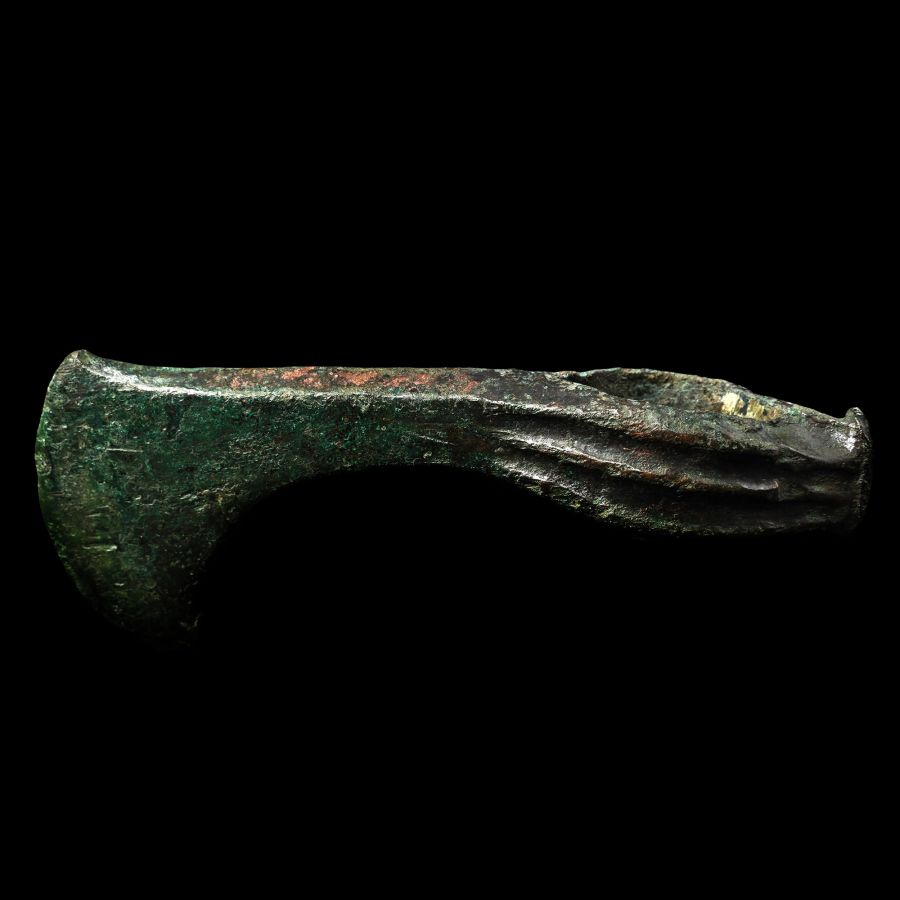
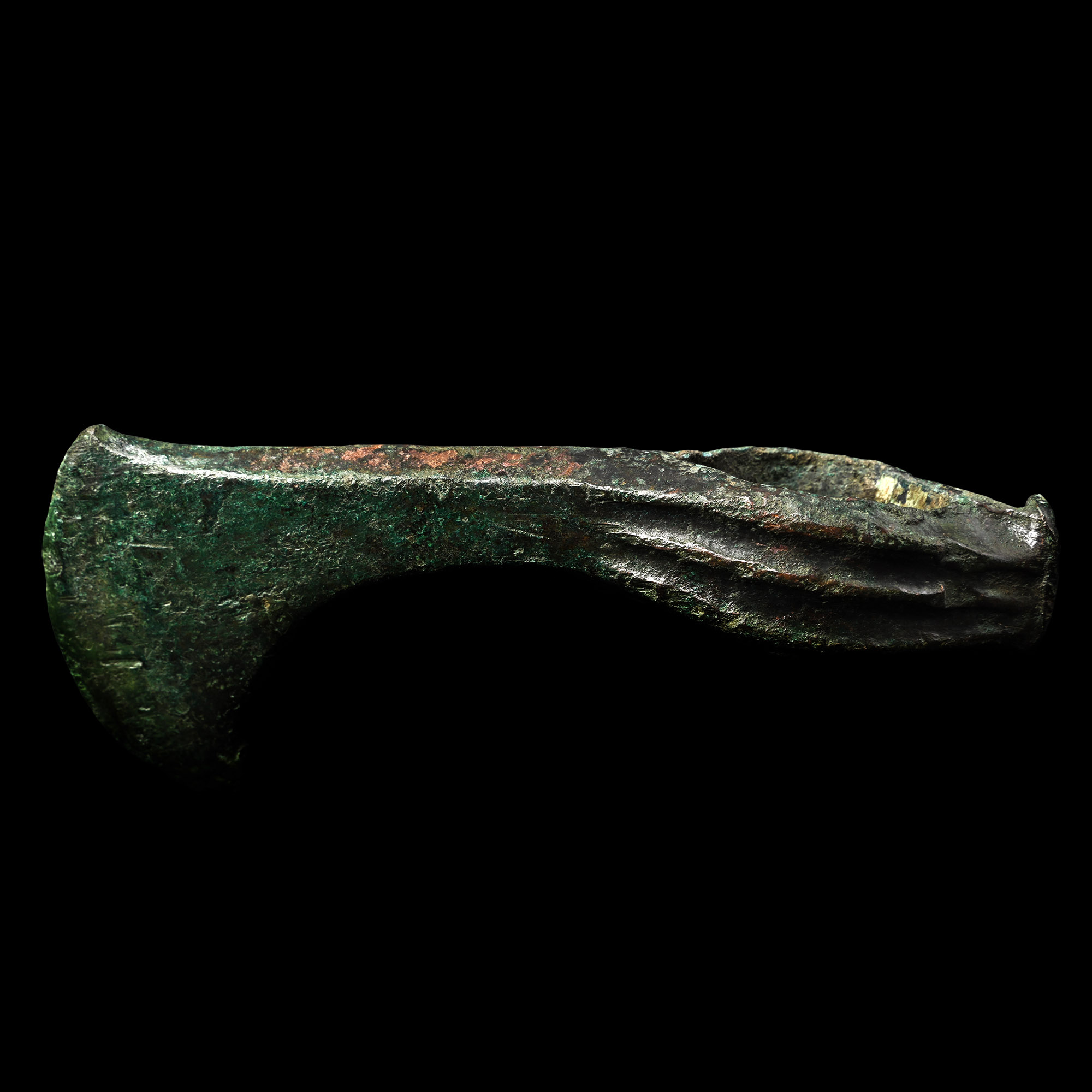
Bronze Age Socketted Axehead
KOBAN CULTURE, 12TH-8TH CENTURY B.C.
5 1/2 in. (350 grams, 14 cm).
Comprising a hexagonal-section neck developing to a thick blade with a rounded edge and scooped underside; ellipsoid-section socket with three lateral ribs to each face, hammer-face to rear.
ProvenancePrivate European collection, 1990s.
Private collection, London, UK.
TimeLine Auctions follows a vetting process to ensure the authenticity and legality of all items, reinforcing our commitment to integrity and responsible trading. Each antiquity, antique, and coin lot undergoes thorough examination by a vetting committee of at least ten external specialists, professional trade association members, scientists, and archaeologists: Our Vetting Process
AUCTIONS:
TimeLine is a leading auction house specialising in antiquities, ancient art, collectables, natural history, coins, medals, and books. Our auctions offer museums, collectors, historians, and enthusiasts the opportunity to acquire unique and historically significant pieces.
LOT 1679
Bronze Age Socketted Axehead
Estimate £400 - 600€460 - 700 (for guidance only)$540 - 810 (for guidance only)
-
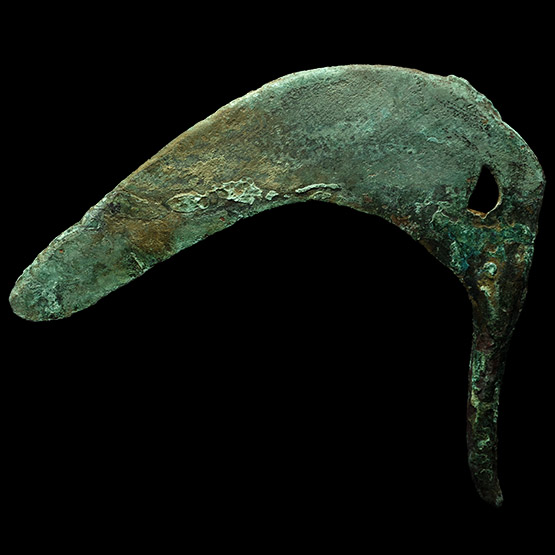
Large Bronze Age Tanged Sickle Blade
Koban Culture, 12th-8th century B.C.Estimate: £400 - 600 (+bp*)
Opening Bid: £200
Of crescentic form with thickening to the outer edge, spur and void to neck, attachment spike. 110 grams, 15.7 cm
Private European collection, 1990s. Private collection, London, UK. -
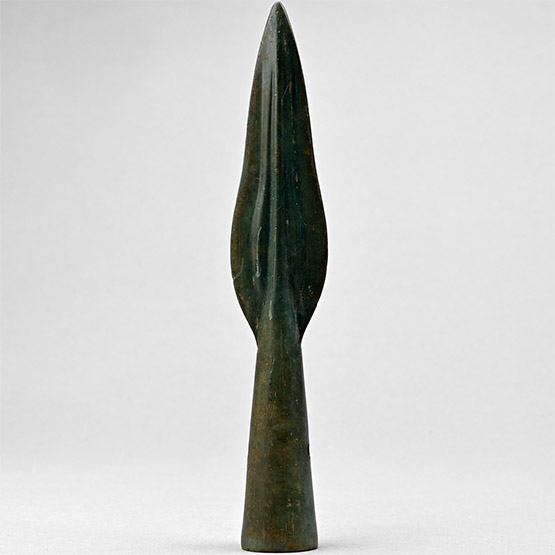
Bronze Age Socketted Spearhead
11th-10th century B.C.Sold for (Inc. bp): £351
With flared socket developing to a midrib with scooped lateral ribbing in a leaf-shaped blade; opposed lateral holes to accept attachment pegs. 109 grams, 16 cm
Acquired in Germany in 2000. Acquired by the present owner from the above. -
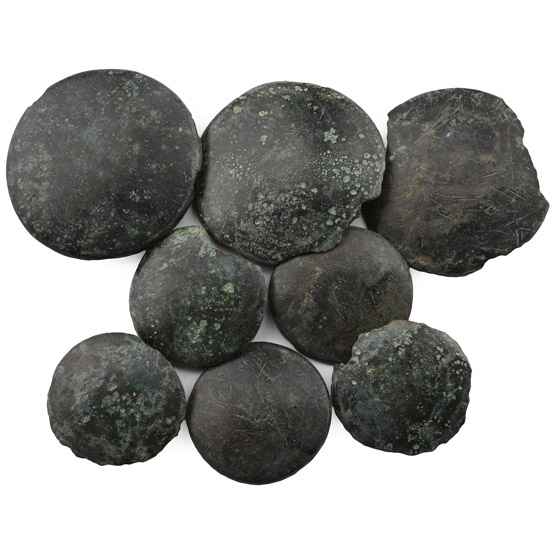
Bronze Age Boss Mount Group
2nd-1st millennium B.C.Sold for (Inc. bp): £20
Mixed group of discoid mounts in various sizes, each with mounting stud to reverse. 50 grams total, 27-40 mm
Ex German art market, 2000s. Acquired from an EU collector living in London. From the collection of a Surrey, UK, gentleman.
