
Loading, please wait...
LOT 1148
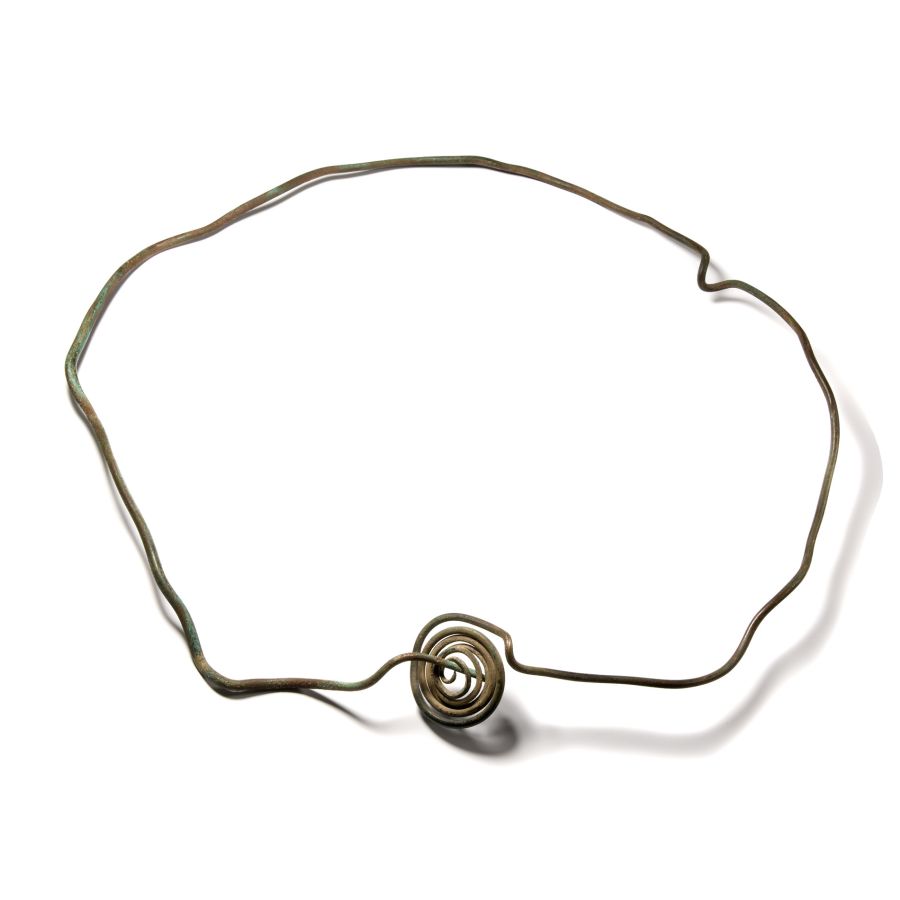
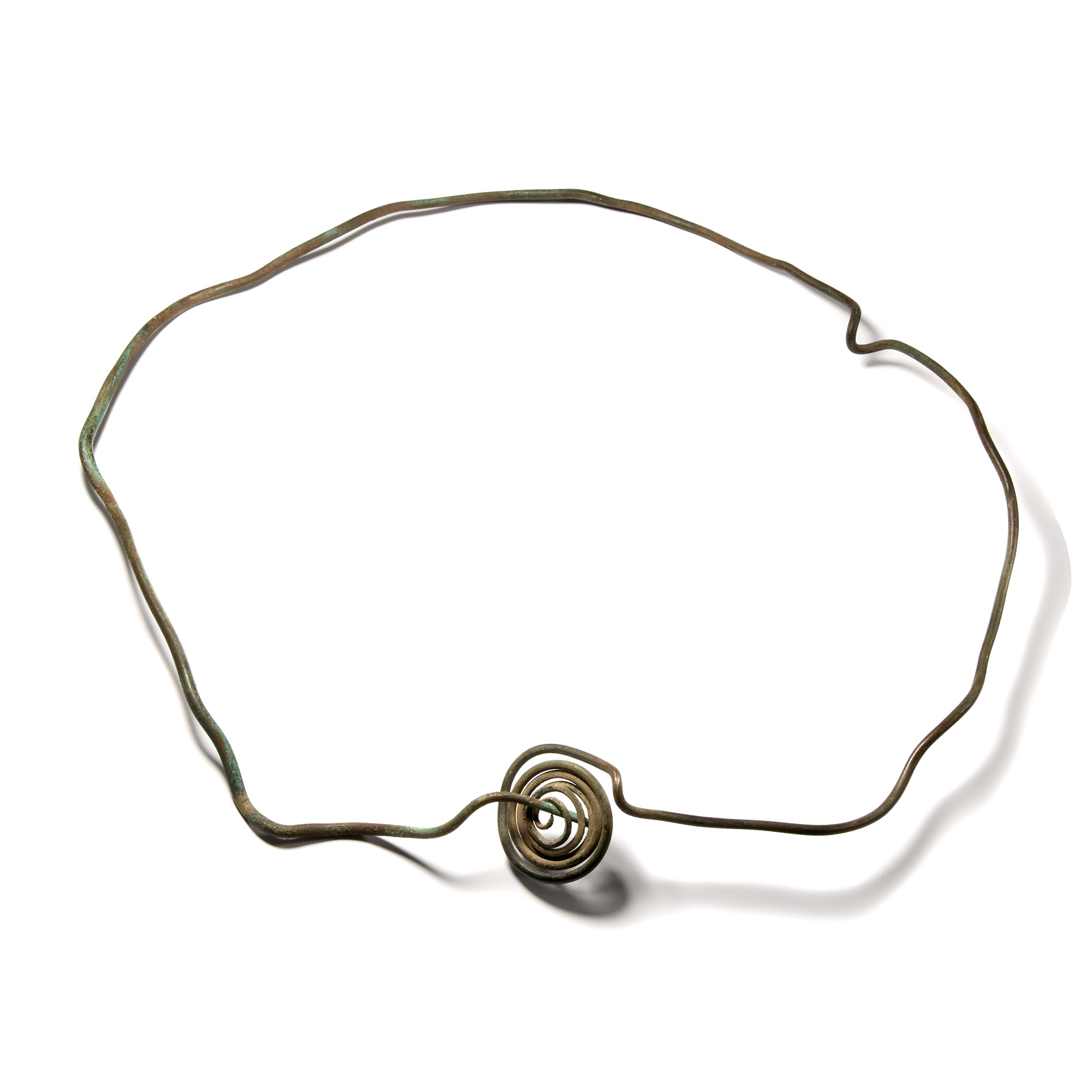
Bronze Age Sacrificed Spectacle Brooch
8TH-7TH CENTURY B.C.
17 3/4 in. (320 grams, 45 cm wide).
The round-section body with incised herringbone and linear decoration; sacrificially unravelled and now forming a large loop with one coiled end. [No Reserve]
ProvenanceUK private collection, 1990s.
Property of a Nottinghamshire gentleman.
Cf. Bietti-Sestieri, A.M. and Macnamara, E., Prehistoric Metal Artefacts from Italy (3500–720 BC) in the British Museum, London, 2008, fig.615, for similar; Hambleton, J.M., Fibulae of the ninth through seventh centuries BC in Central Italy, Florida, 2008, fig.2-2b.
FootnotesThe spectacle fibula was widely distributed from the Balkans and northern Greece to southern Italy. Seven variations occur under this type with modifications made to the discs of the fibulae as well as the central connecting device. In the first and second variations the discs are coiled, whereas in the third and fourth the centre of the coil is left open. The figure eight loop also becomes shorter and wider in the fourth variant.
CONDITIONTimeLine Auctions follows a vetting process to ensure the authenticity and legality of all items, reinforcing our commitment to integrity and responsible trading. Each antiquity, antique, and coin lot undergoes thorough examination by a vetting committee of at least ten external specialists, professional trade association members, scientists, and archaeologists: Our Vetting Process
AUCTIONS:
TimeLine is a leading auction house specialising in antiquities, ancient art, collectables, natural history, coins, medals, and books. Our auctions offer museums, collectors, historians, and enthusiasts the opportunity to acquire unique and historically significant pieces.
-
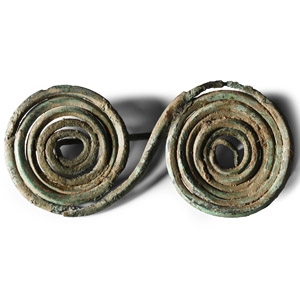
Bronze Age Spectacle Brooch
Circa 10th-6th century B.C.Sold for (Inc. bp): £130
Composed of two coiled wire discs with integral loop between; repaired. 15.4 grams, 80 mm
Acquired on the UK art market before 2000. Property of a Surrey, UK, collector. -
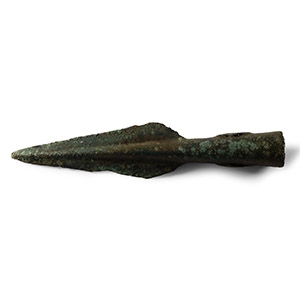
Bronze Age British Looped and Socketted Spearhead
1500-900 B.C.Sold for (Inc. bp): £169
A small leaf-shaped blade with lozenge-section midrib; two small lateral loops. 64 grams, 13.5 cm
Found Cambridgeshire, UK, 2000s. Property of an Essex gentleman. -
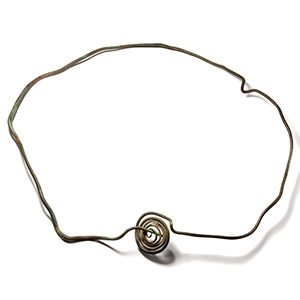
Bronze Age Sacrificed Spectacle Brooch
8th-7th century B.C.Sold for (Inc. bp): £52
The round-section body with incised herringbone and linear decoration; sacrificially unravelled and now forming a large loop with one coiled end. 320 grams, 45 cm wide
UK private collection, 1990s. Property of a Nottinghamshire gentleman.
The spectacle fibula was widely distributed from the Balkans and northern Greece to southern Italy. Seven variations occur under this type with modifications made to the discs of the fibulae as well as the central connecting device. In the first and second variations the discs are coiled, whereas in the third and fourth the centre of the coil is left open. The figure eight loop also becomes shorter and wider in the fourth variant.
