
Loading, please wait...
LOT 2004
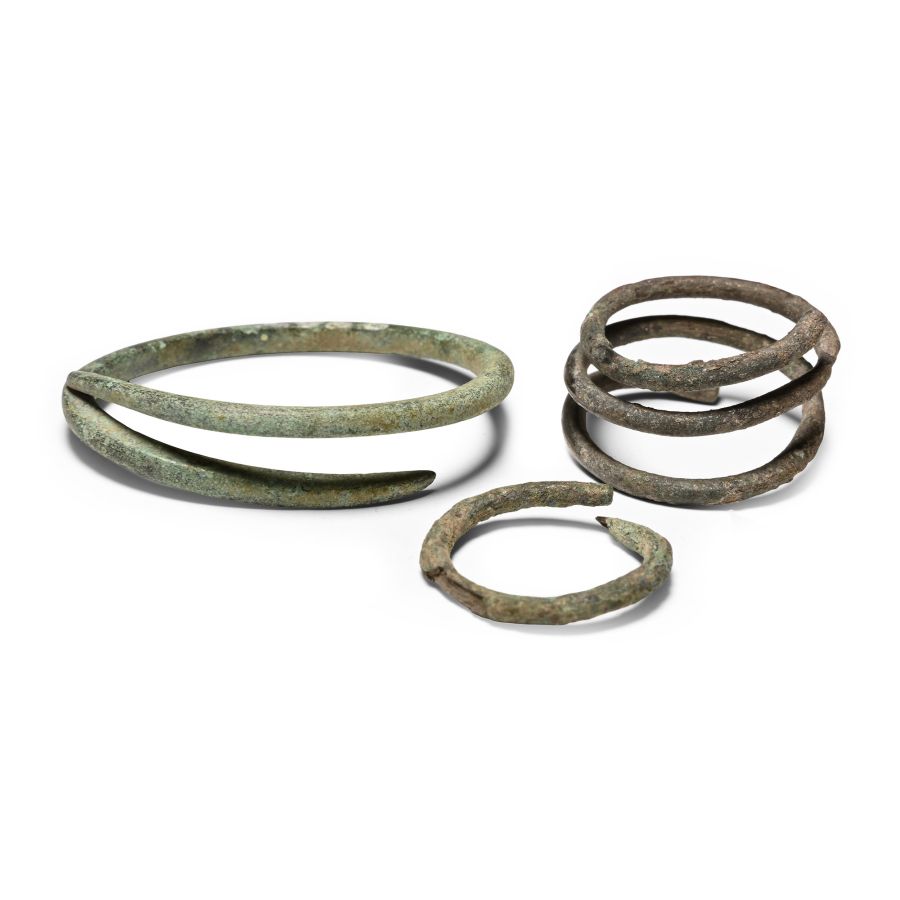
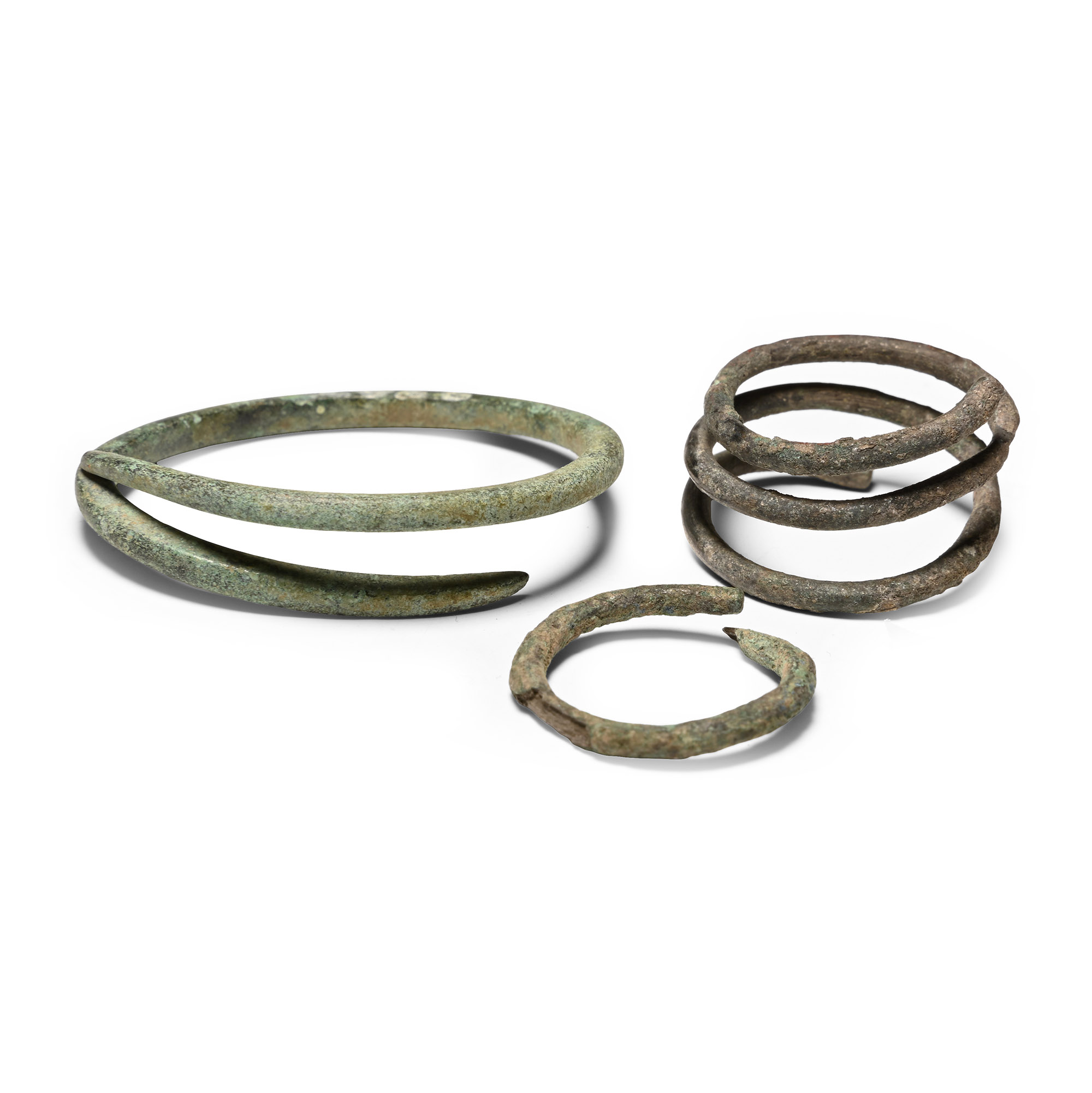
Bronze Age Ring and Bracelet Group
2ND-1ST MILLENNIUM B.C.
7/8 - 1 3/4 in. (20.86 grams total, 23.50-43.82 mm).
Comprising: round-section spiral type; flat-section overlapped type. [3, No Reserve]
ProvenanceFrom the private collection of a European gentleman (1942-2024), formed since the 1970s.
CONDITIONTimeLine Auctions follows a vetting process to ensure the authenticity and legality of all items, reinforcing our commitment to integrity and responsible trading. Each antiquity, antique, and coin lot undergoes thorough examination by a vetting committee of at least ten external specialists, professional trade association members, scientists, and archaeologists: Our Vetting Process
AUCTIONS:
TimeLine is a leading auction house specialising in antiquities, ancient art, collectables, natural history, coins, medals, and books. Our auctions offer museums, collectors, historians, and enthusiasts the opportunity to acquire unique and historically significant pieces.
-
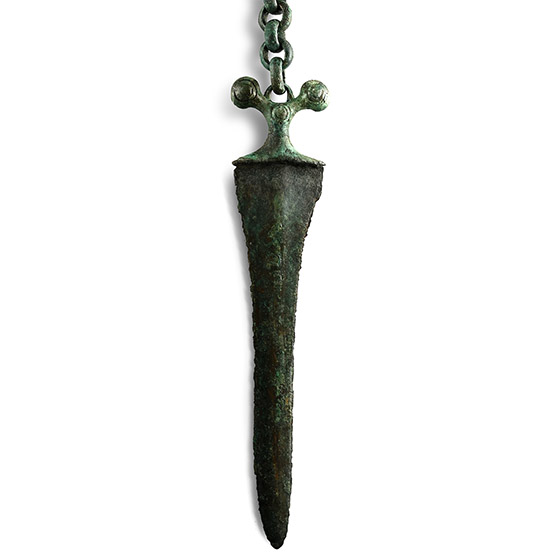
Bronze Age Ceremonial Dagger with Chain Attachment
Eastern Europe, 1st millennium B.C.Sold for (Inc. bp): £1,040
Comprising: a long triangular blade with scooped shoulders, lentoid in section and with rounded tip; integral waisted hilt formed as three conjoined lobes and loop between the upper arms; short length of bronze chain formed from D-section forged and butted links. 526 grams, 51 cm including chain
From the private collection of a London gentleman, from his grandfather's collection formed before the early 1970s. -
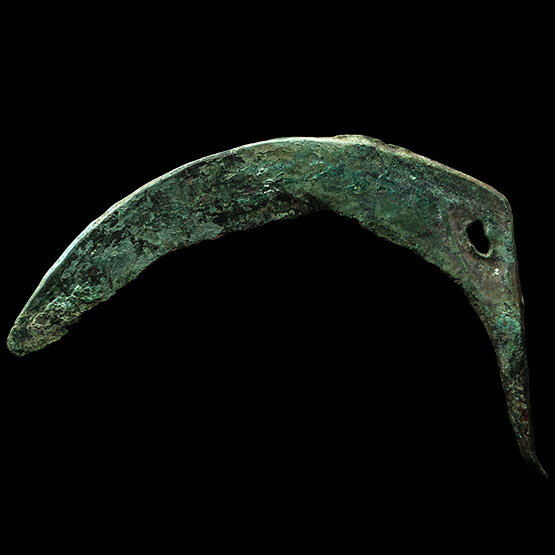
Large Bronze Age Tanged Sickle Blade
Koban Culture, 12th-8th century B.C.Estimate: £350 - 450 (+bp*)
Opening Bid: £175
Of crescentic form with thickening to the outer edge, void to neck, attachment spike. 135 grams, 18.5 cm
Private European collection, 1990s. Private collection, London, UK. -
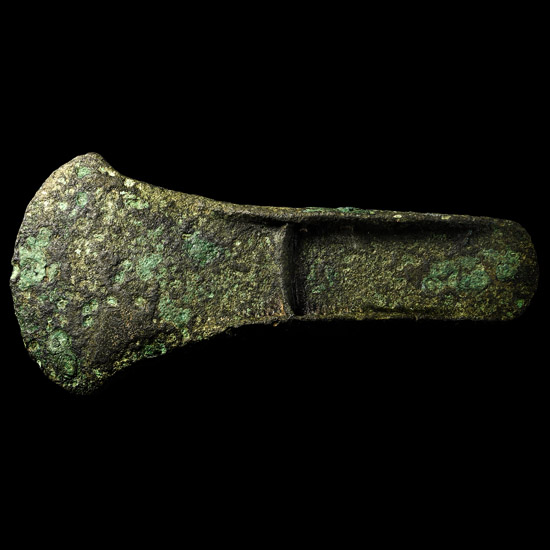
British Bronze Age 'Bannockburn Type' Palstave Axehead
Circa 1800-1200 B.C.Sold for (Inc. bp): £520
With a short square-ended butt, lateral flanges to both sides, a firm stop-ledge, broad curved edge with spur ends. 329 grams, 12.13 cm
From the private collection of the late Mr W. Magee, Hartlepool, County Durham, UK, 1960s-1990s, thence by descent.
