
Loading, please wait...
LOT 1268
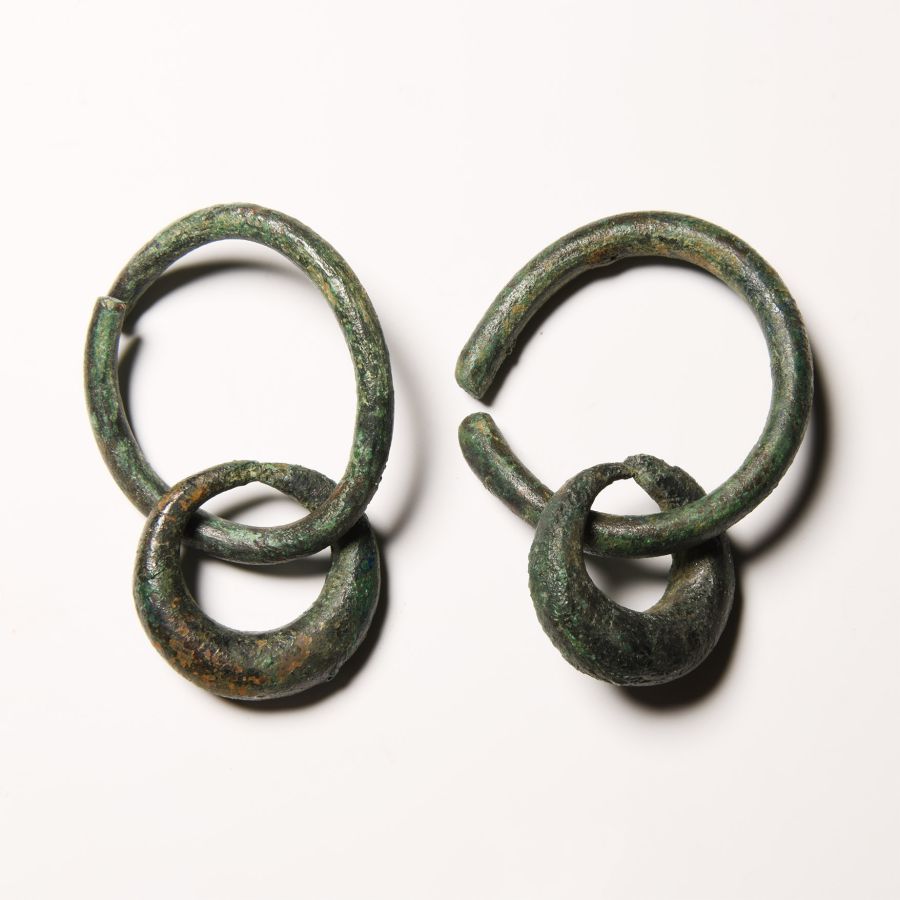
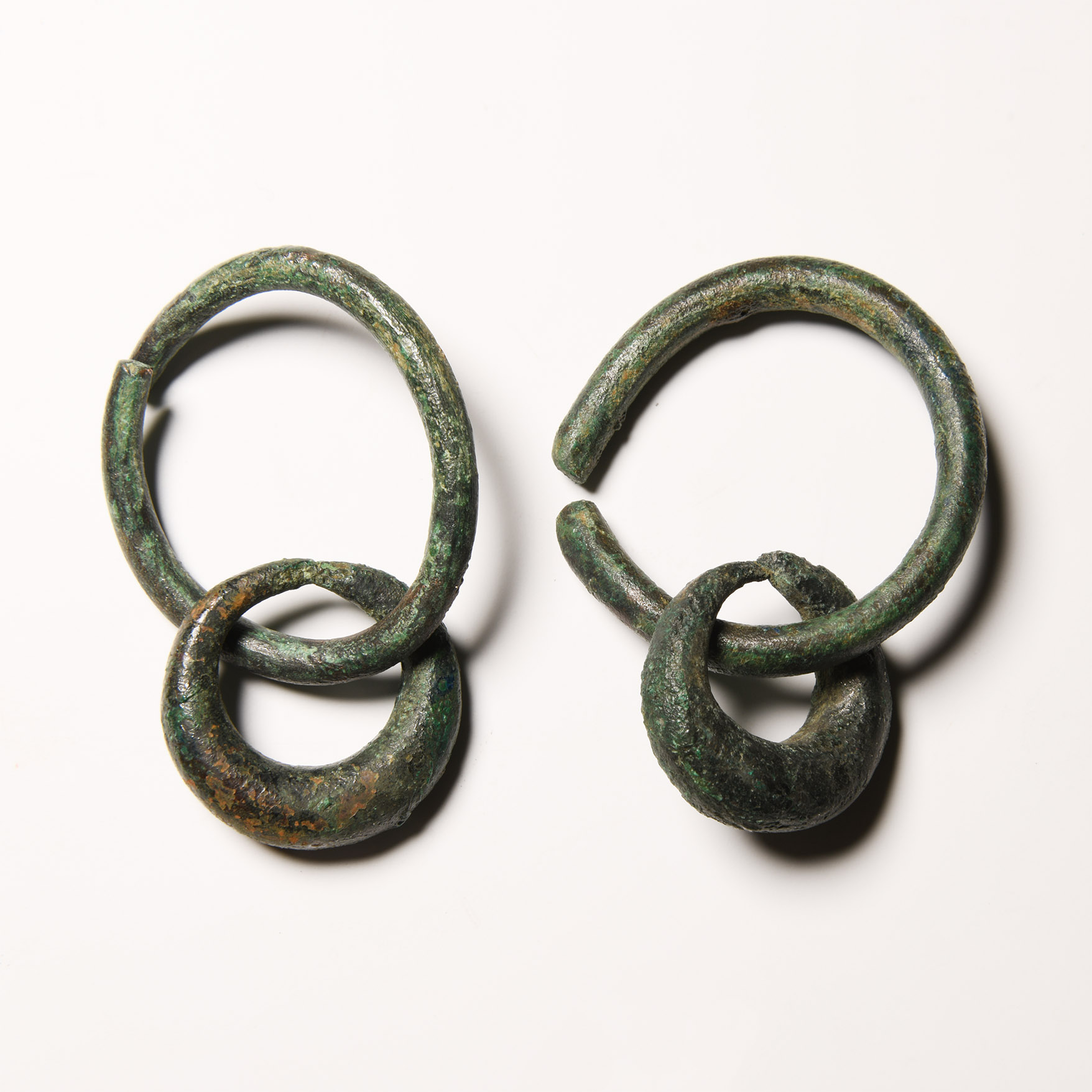
Bronze Age Pendant Pair
10TH-6TH CENTURY B.C.
2 1/2 in. (84 grams total, 62-63 mm).
Comprising a pair of heavy crescent-shaped penannular rings each attached to a split ring. [2, No Reserve]
ProvenanceEx old English collection.
London art market, 1980s.
TimeLine Auctions follows a vetting process to ensure the authenticity and legality of all items, reinforcing our commitment to integrity and responsible trading. Each antiquity, antique, and coin lot undergoes thorough examination by a vetting committee of at least ten external specialists, professional trade association members, scientists, and archaeologists: Our Vetting Process
AUCTIONS:
TimeLine is a leading auction house specialising in antiquities, ancient art, collectables, natural history, coins, medals, and books. Our auctions offer museums, collectors, historians, and enthusiasts the opportunity to acquire unique and historically significant pieces.
-
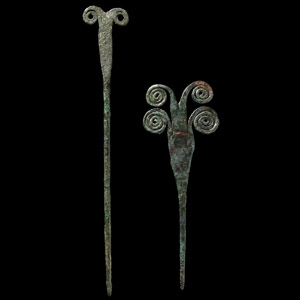
Bronze Age Spectacle Head Pin Group
10th-6th century B.C.Sold for (Inc. bp): £208
Comprising one with single spectacle head, and another with two pairs of spectacles forming the head. 44 grams total, 13-18 cm
Ex old English collection. London art market, 1980s. -
.jpg)
Bronze Age Socketted Axehead Fragment
2nd-1st millennium B.C.Sold for (Inc. bp): £26
Featuring a convex cutting edge and wedge-shaped cheeks with crescentic blade; socket damaged in antiquity. 159 grams, 71 mm
UK gallery, early 2000s. -
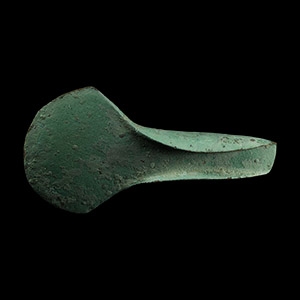
'The Stainmore' Bronze Age Flat Axe with Exceptional Crystalline Patina
2nd millennium B.C.Sold for (Inc. bp): £3,380
Composed of a fan-shaped head with bevelled face and convex cutting edge, flanges creating two elliptical side faces. 424 grams, 15.5 cm
Found whilst searching with a metal detector in Stainmore, Cumbria, UK, in 2012. Ex private U.K. collection.
