
Loading, please wait...
LOT 1292
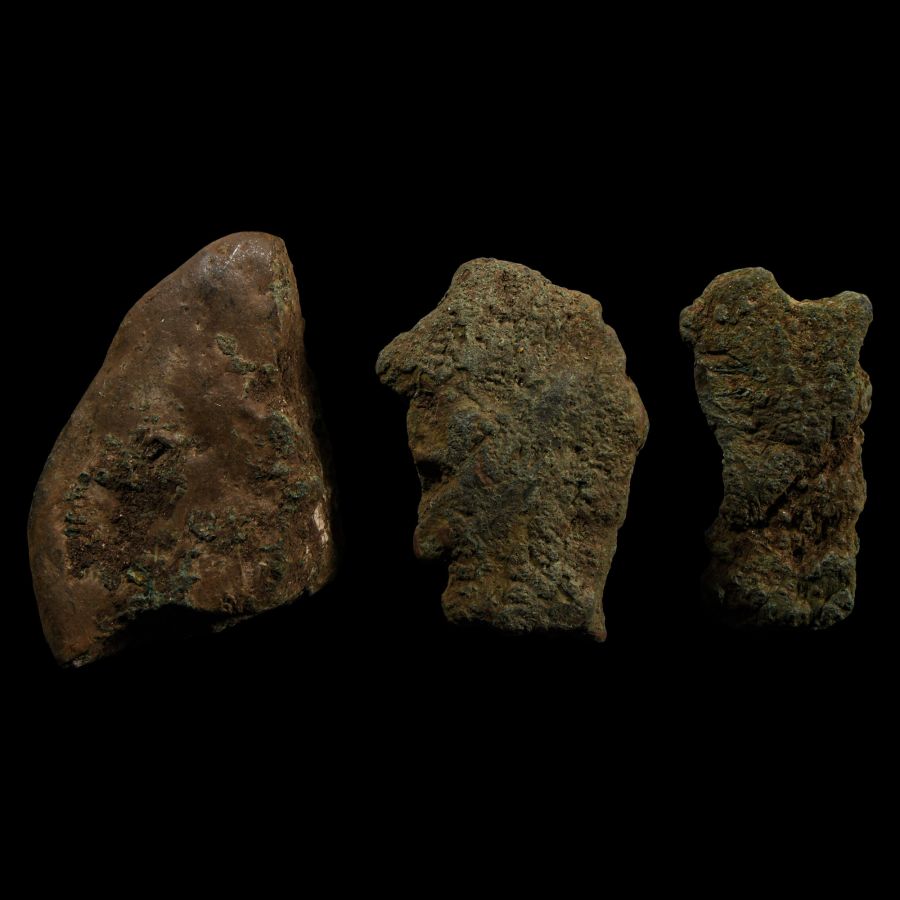
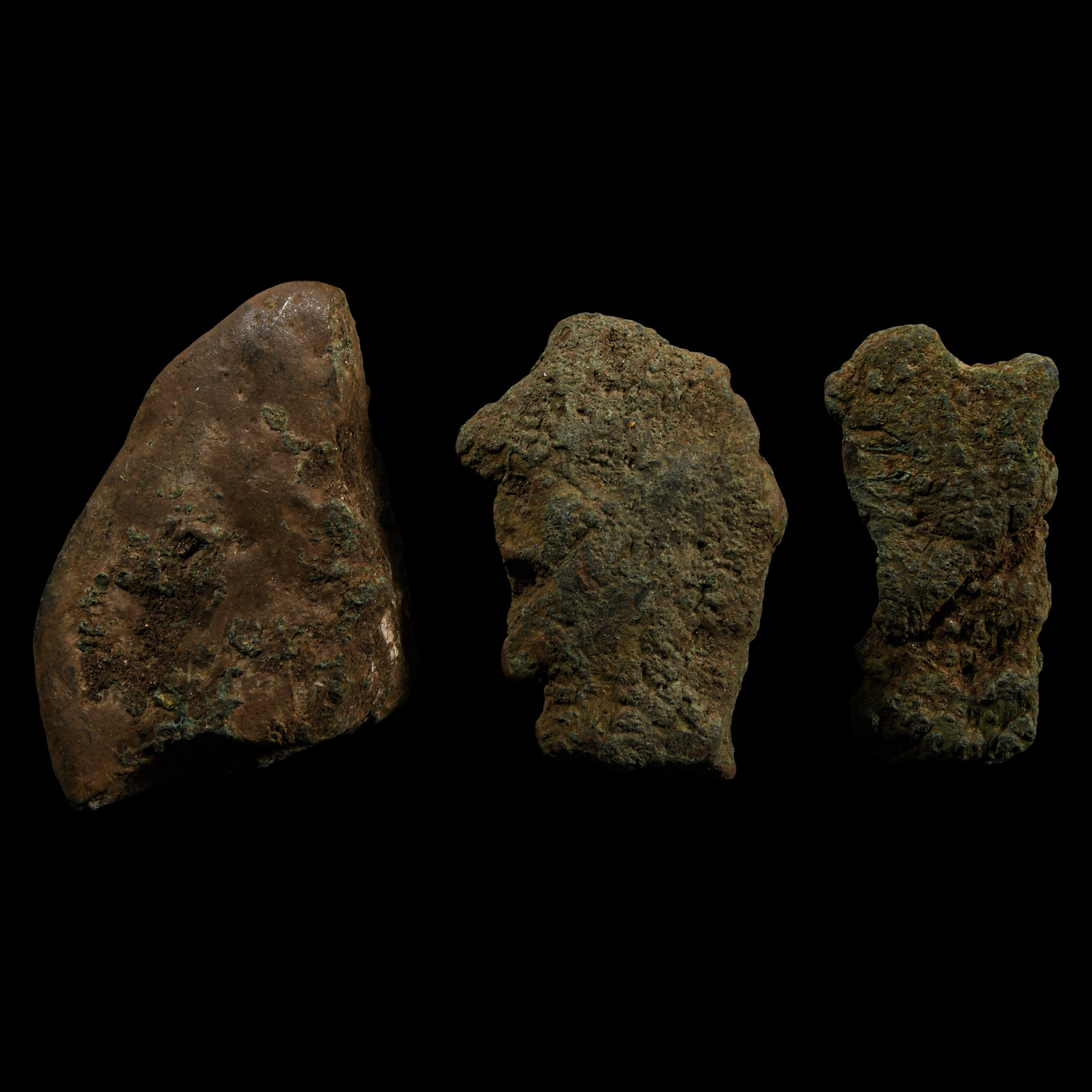
Bronze Age Pancake Ingot Fragment Group
2ND-1ST MILLENNIUM B.C.
2 1/8 - 2 3/4 in. (508 grams total, 54-69 mm).
Comprising three pieces of copper 'bun' ingot, one showing the characteristic edge cross-section. [3, No Reserve]
ProvenanceUK gallery, early 2000s.
FootnotesThese bun ingots were cast in shallow saucer depressions cut into rock where the copper ore was mined and smelted; they were then carried and traded across Europe before being broken up, melted down and having tin added to form bronze alloy; fragments such as these are frequently found as part of smith's hoards of, usually, worn out tools, weapons and raw material from the Late Bronze Age.
CONDITIONTimeLine Auctions follows a vetting process to ensure the authenticity and legality of all items, reinforcing our commitment to integrity and responsible trading. Each antiquity, antique, and coin lot undergoes thorough examination by a vetting committee of at least ten external specialists, professional trade association members, scientists, and archaeologists: Our Vetting Process
AUCTIONS:
TimeLine is a leading auction house specialising in antiquities, ancient art, collectables, natural history, coins, medals, and books. Our auctions offer museums, collectors, historians, and enthusiasts the opportunity to acquire unique and historically significant pieces.
-
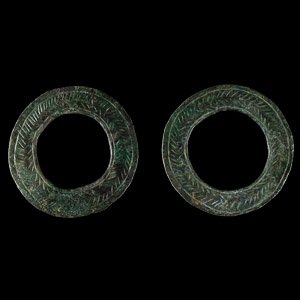
Bronze Age Decorated Horse Harness Loop Pair
10th-6th century B.C.Sold for (Inc. bp): £78
Each with laurel wreath design between two concentric circles. 149 grams total, 79 mm wide
Ex old English collection. London art market, 1980s. -
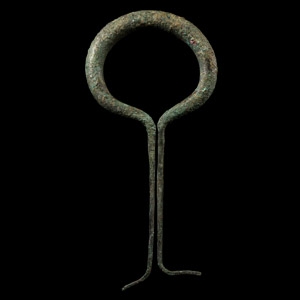
Large Bronze Age Chariot Terret Ring
10th-6th century B.C.Sold for (Inc. bp): £46
A heavy duty oval-shaped ring the ends tapering either side into fixing spikes. 354 grams, 21 cm
Ex old English collection. London art market, 1980s. -
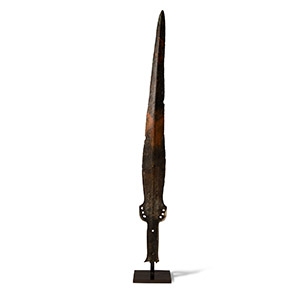
Bronze Age 'Axel Guttman' European Bronze Rapier with Spirals
16th-14th century B.C.Sold for (Inc. bp): £3,380
With swollen tapering blade, finely incised with concentric rings and spirals at the top of the blade and extended parallel lines; pierced hilt for the fastening of an organic hilt; accompanied by a custom-made display stand. 520 grams total, 43.5 cm high including stand
Ex Axel Guttmann collection, AG 1033. The Axel Guttmann Collection of Ancient Arms and Armour, Part 2, 28 April 2004, lot 17. This lot has been checked against the Interpol Database of stolen works of art and is accompanied by search certificate number no. 11829-207734.
From the middle of the 2nd millennium B.C., the bronze sword became the most efficient and feared weapon, as well as the symbol of an aristocratic warrior.
