
Loading, please wait...
LOT 1118
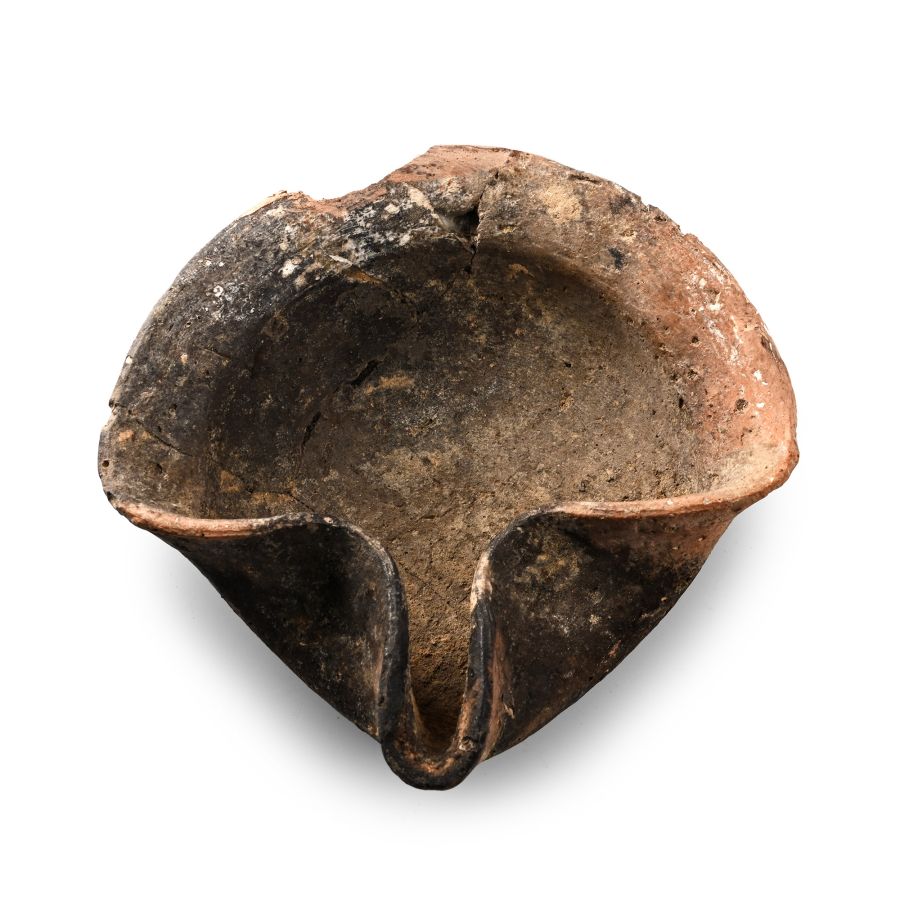
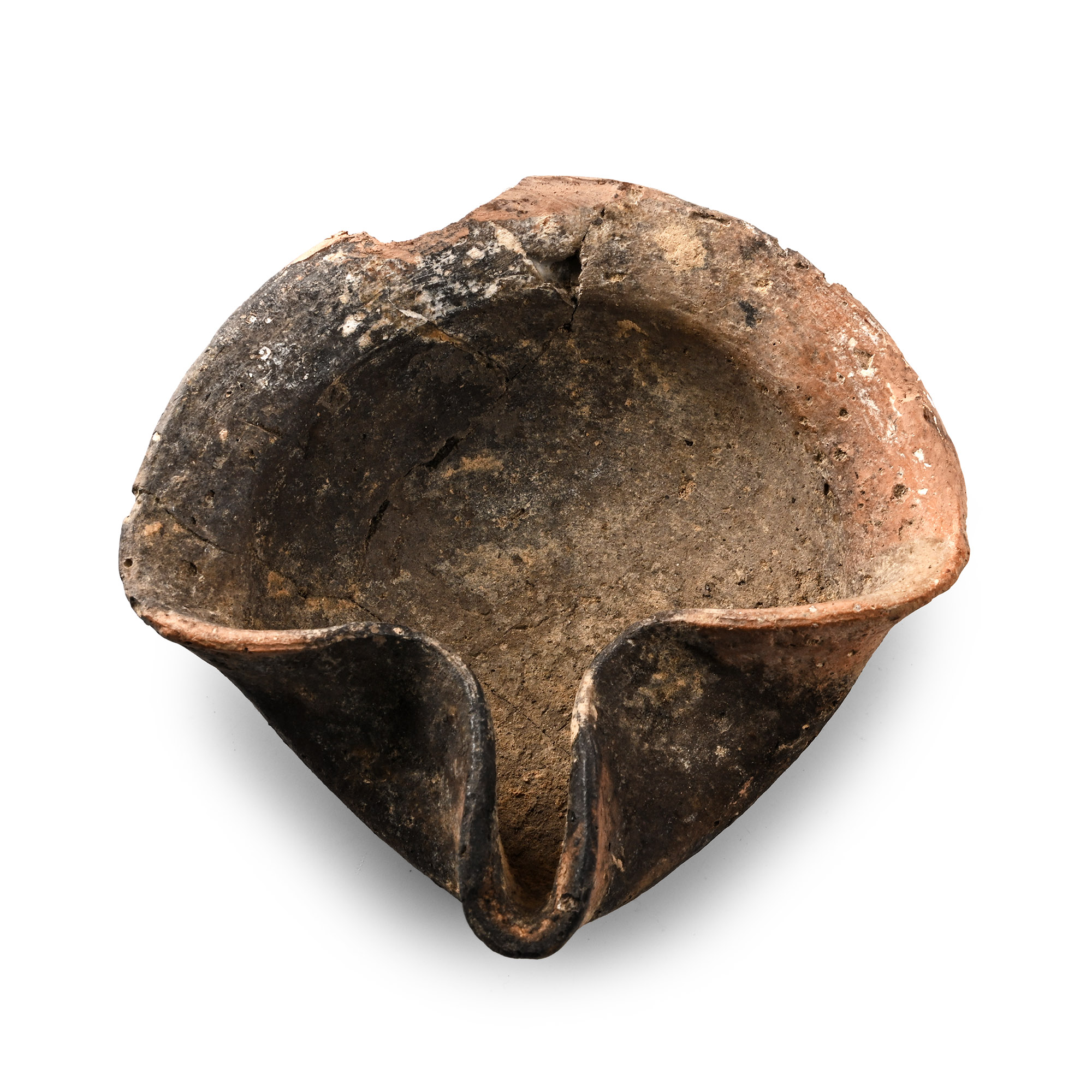
Bronze Age Holy Land Terracotta Pinched Rim Oil Lamp
KINGDOM OF JUDAH, CIRCA 930-700 B.C.
3 3/4 in. (69 grams, 97 mm).
Discoid in plan with flange rim and sidewall pinched to form a nozzle. [No Reserve]
ProvenanceFrom the Lloyd and Jeanne Raport collection, Washington, D.C. and Florida, USA, formed between 1972-2000.
Acquired through Bonhams, London, UK.
TimeLine Auctions follows a vetting process to ensure the authenticity and legality of all items, reinforcing our commitment to integrity and responsible trading. Each antiquity, antique, and coin lot undergoes thorough examination by a vetting committee of at least ten external specialists, professional trade association members, scientists, and archaeologists: Our Vetting Process
AUCTIONS:
TimeLine is a leading auction house specialising in antiquities, ancient art, collectables, natural history, coins, medals, and books. Our auctions offer museums, collectors, historians, and enthusiasts the opportunity to acquire unique and historically significant pieces.
-
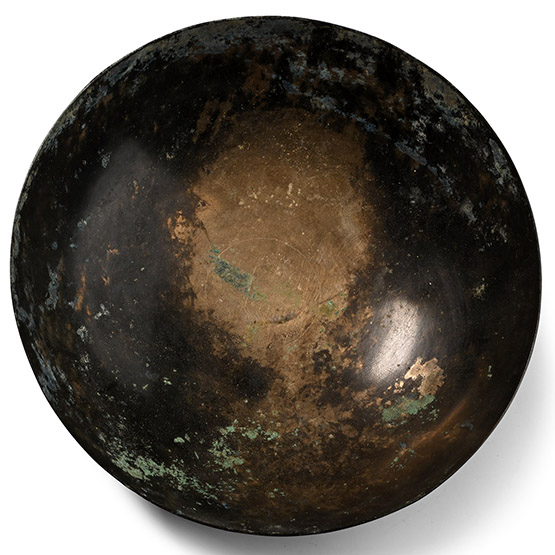
Western Asiatic Bronze Bowl with Concentric Circles
Late 1st millennium B.C.Sold for (Inc. bp): £52
Broad and shallow with incised ring to the inner centre. 121 grams, 14.3 cm wide
Ex 1990s collection and with a central London gallery. -
.jpg)
Elamite Bronze Spouted Vessel with Decorative Design
3rd-2nd millennium B.C.Estimate: £1,500 - 2,000 (+bp*)
Opening Bid: £750
With hollow-formed bulbous body, a tiered rim and spout, diagonal fluting to the body, and a trumpet-shaped stepped base. 218 grams, 13 cm
Acquired before 1983. Ex London gallery, 1990s. Private collection, London, UK. -
.jpg)
Sumerian Ceramic Administrative Cuneiform Tablet
Akkadian, circa 2300-2200 B.C.Sold for (Inc. bp): £624
Square in plan, accompanied by a copy of an old scholarly note, typed by W.G. Lambert, late Professor of Assyriology, University of Birmingham, 1970-1993, which states: 'Clay tablet, 34 x 32 mm., with a total of 8 lines of Sumerian cuneiform on obverse and reverse. Some surface corrosion but much of the script clear. An administrative document with many figures, from Sumer from the Akkadian period, c. 2300-2200 B.C.' 22.22 grams, 35 mm
London, UK, art market, 1980s. Private collection, London, UK. Accompanied by a scholarly note (11.), typed and unsigned by Professor Wilfrid George Lambert, with a copy of the note with notes to verso, including 'offered to JPR (J.P. Rosen) at $190 '(19)86.
