
Loading, please wait...


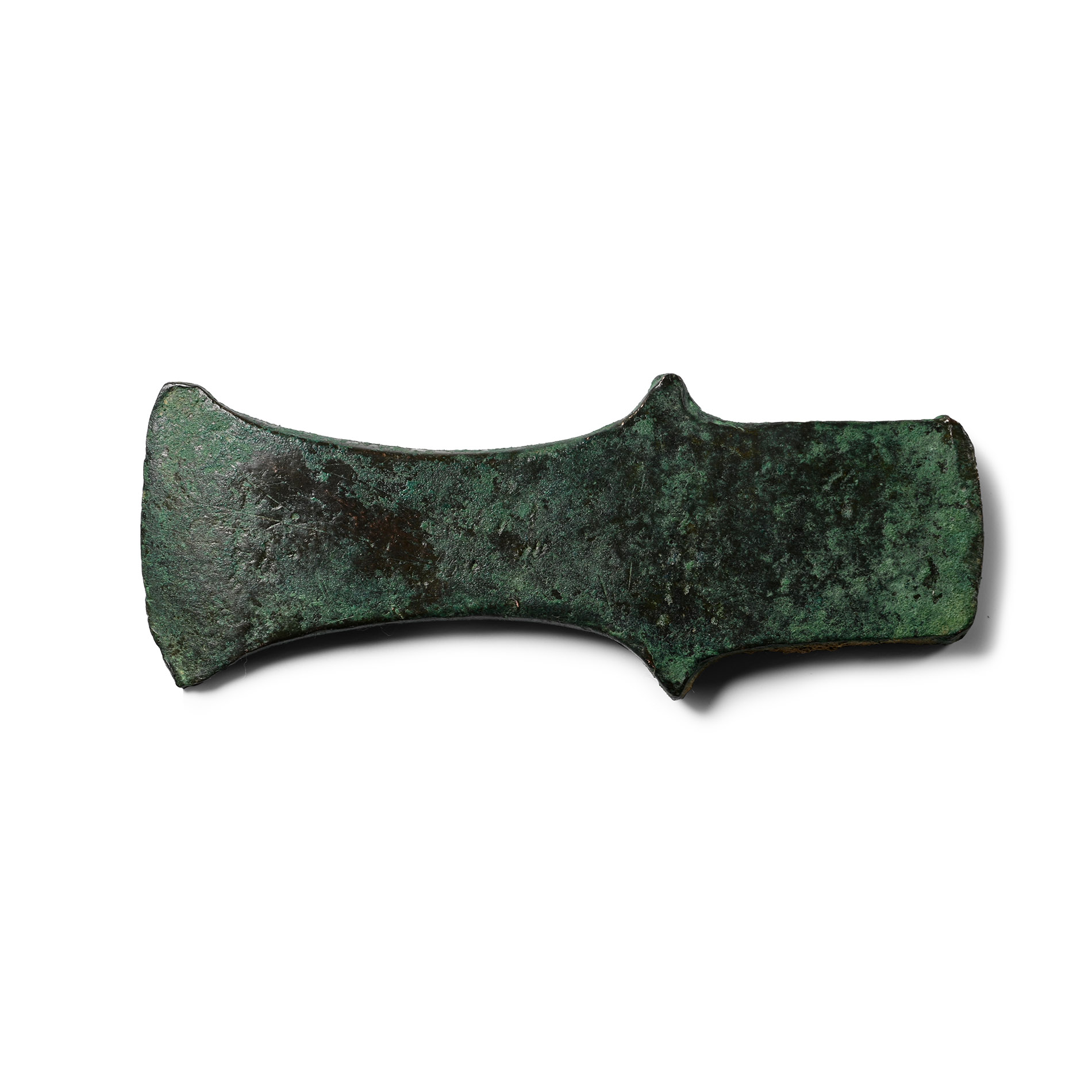
LOT 1662
Bronze Age Flanged Flat Axe
CENTRAL EUROPE, 2ND MILLENNIUM B.C.
5 3/8 in. (340 grams, 13.5 cm).
With a curved blade, two flanges to the outer edge, crescentic-shaped butt.
ProvenanceAcquired in Europe before 1992.
Ex Swiss collection.
TimeLine Auctions follows a vetting process to ensure the authenticity and legality of all items, reinforcing our commitment to integrity and responsible trading. Each antiquity, antique, and coin lot undergoes thorough examination by a vetting committee of at least ten external specialists, professional trade association members, scientists, and archaeologists: Our Vetting Process
AUCTIONS:
TimeLine is a leading auction house specialising in antiquities, ancient art, collectables, natural history, coins, medals, and books. Our auctions offer museums, collectors, historians, and enthusiasts the opportunity to acquire unique and historically significant pieces.
-

Very Large Decorated Bronze Age Fibula
Circa 8th century B.C.Sold for (Inc. bp): £442
Comprising of leech-shaped bow, body decorated with transverse bands of diagonal hatched lines and three lines to slightly raised ends, flat rectangular catch-plate; tapering round-section pin. 211 grams, 12 cm
From the private collection of a London gentleman, from his grandfather's collection formed before the early 1970s. -
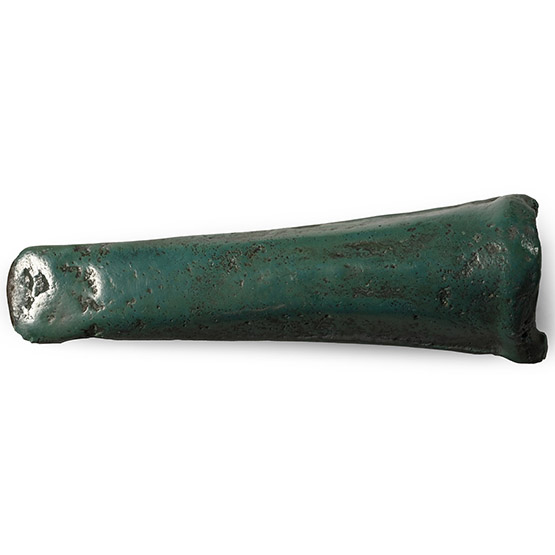
Bronze Age Socketted Chisel
Central Europe, 2nd-1st millennium B.C.Estimate: £100 - 140 (+bp*)
Opening Bid: £50
With a straight blade and long tubular socket; carination to the collar. 30 grams, 67 mm
Ex German collection, 1990s. -
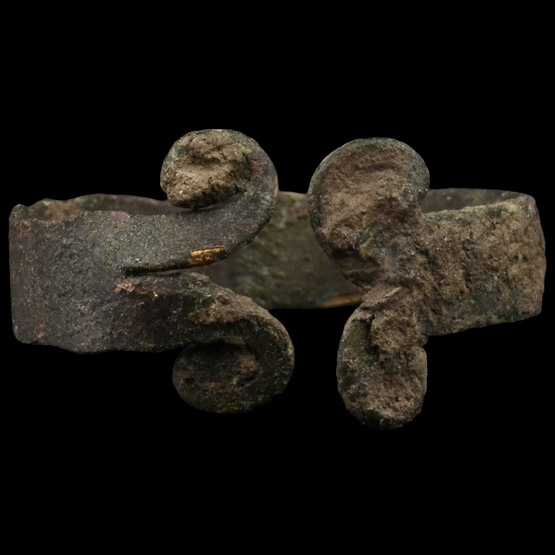
Bronze Age Ring with Scrolled Terminals
Early 1st millennium B.C.Sold for (Inc. bp): £65
Comprising a flat-section penannular hoop with scrolled finials. 1.57 grams, 19.40 mm overall, 17.92 mm internal diameter (approximate size British I 1/2, USA 4 1/2, Europe 8.07, Japan 7)
Acquired on the UK and EU art market before 2000. From the private collection of a Surrey, UK, gentleman.
Such rings, made of a twisted bar with smooth or spiral-shaped ends, are quite rare and are typically found in men’s graves. They may have been a sign of chieftainship. However, the small dimensions of the ring may suggest that the ring once belonged to an aristocratic child.
